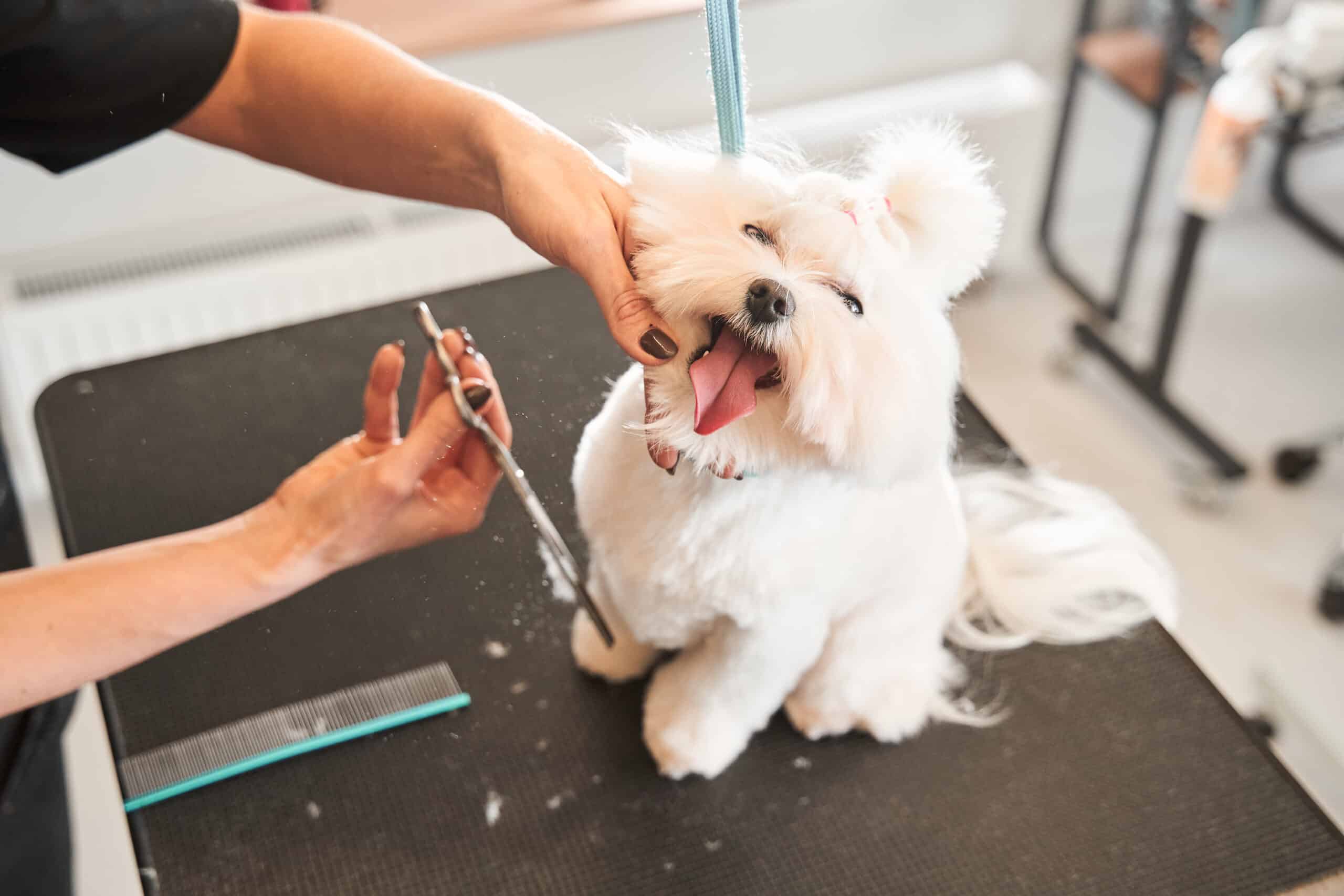
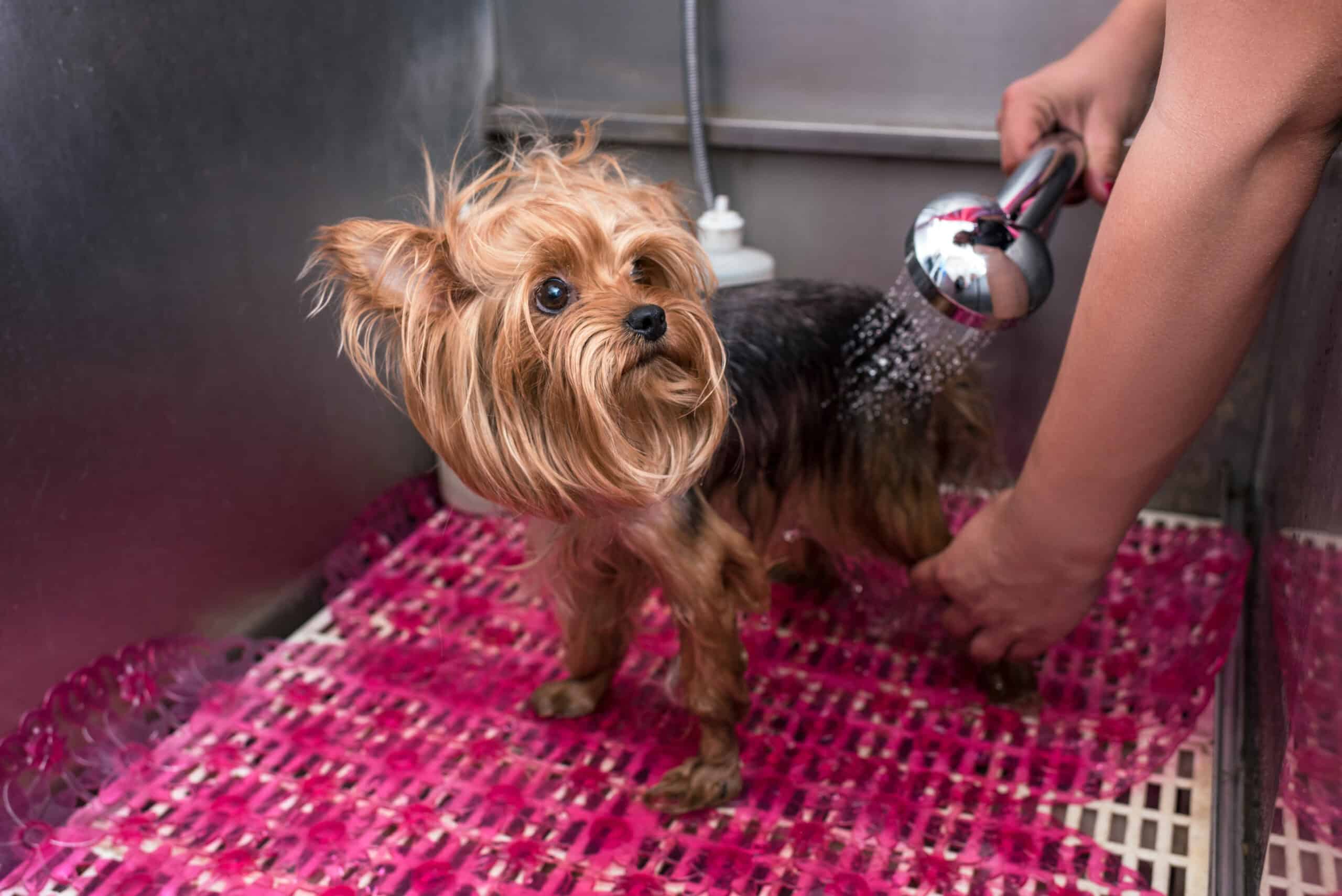
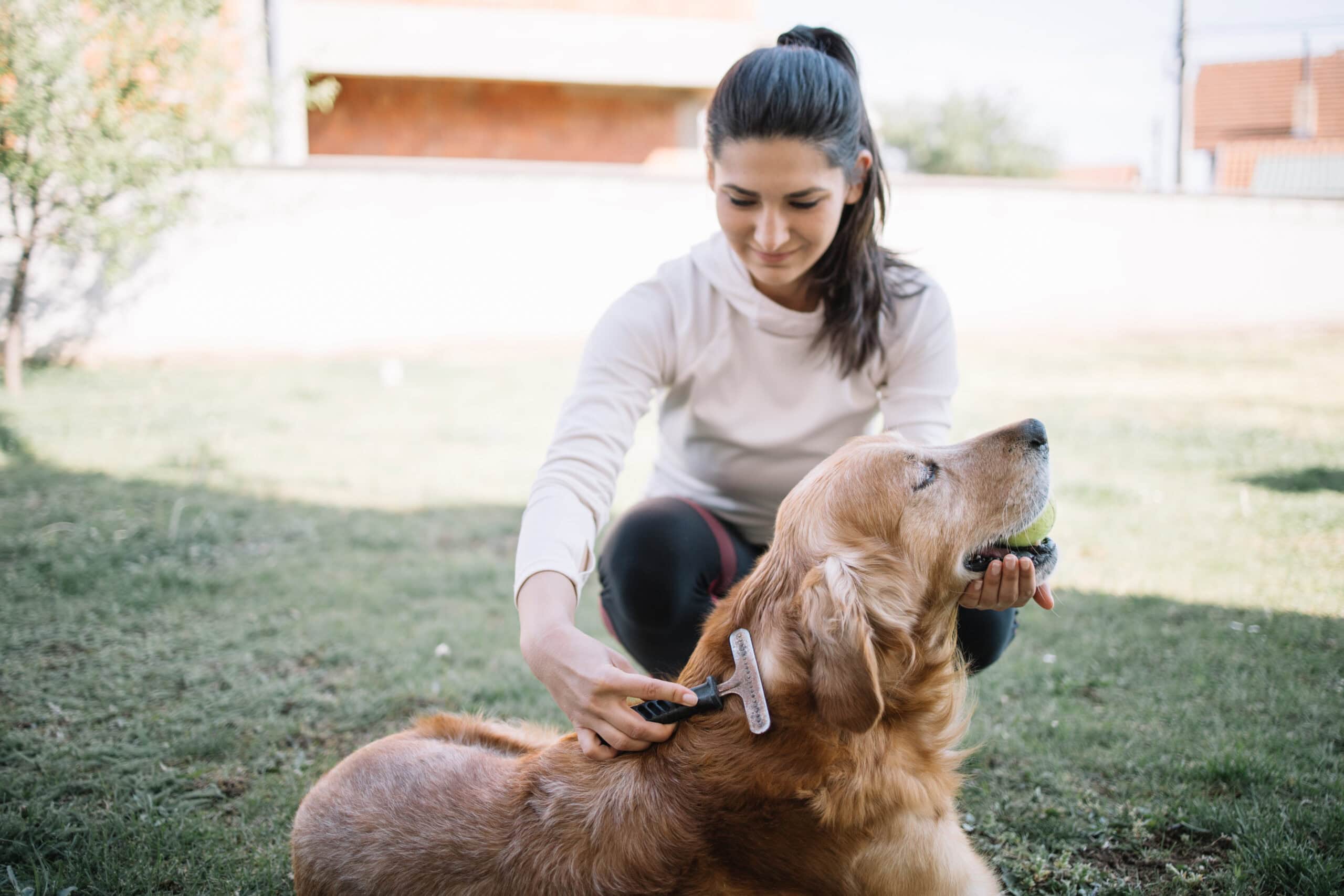
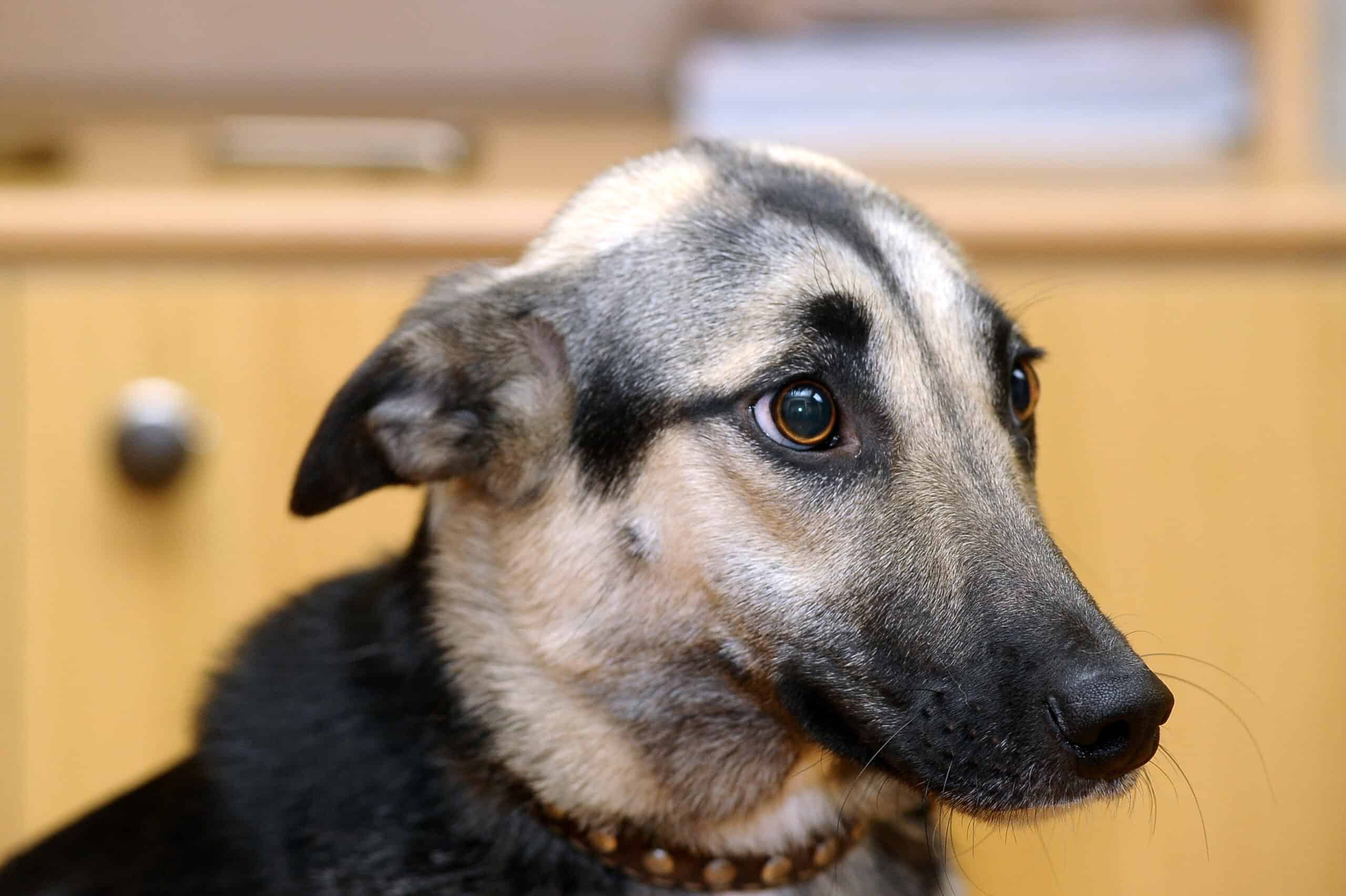
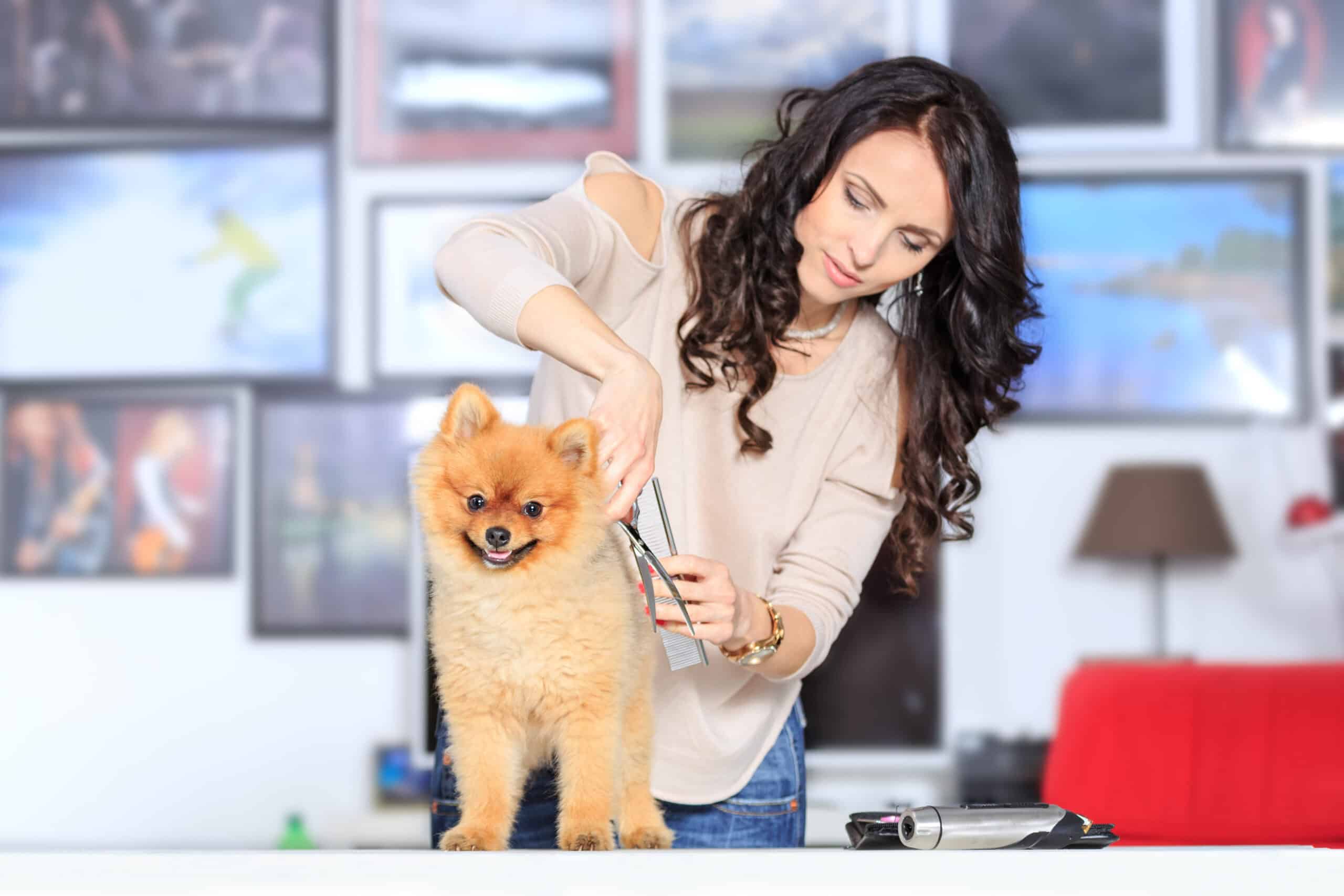
For many dogs, their first professional grooming appointment is not just about getting their coat clean and tidy. It is a learning experience – one that can shape how they feel about grooming, handling, touch, restraint, novelty, and even unfamiliar people for years to come.
That first appointment matters. It matters more than most groomers and dog owners realise…
A dog does not walk into a grooming salon and instantly know the process and the expectations – they do not know what the sound of a clipper should sound like, they don’t understand why parts of their body is overly handled and manipulated for prolonged periods of time. They arrive with only their nervous system, their previous experiences, and their current ability to cope with stress in the moment.
So the question is not, “how quickly can I get the grooming session done?”, but rather, “how successfully can I introduce grooming tasks to the dog without causing unnecessary distress?”.
Dogs are ALWAYS learning, even when we are not intentionally teaching
Every interaction during a grooming appointment will create a subsequent association.
A puppy who is gently introduced to handling, given choice where possible, allowed time to process at their own pace, and supported through new experiences may learn:
- This human and the environment around is safe
- Handling is predictable and gentle
- I can cope with processes here
- I do not need to be afraid
But a puppy who is overwhelmed, restrained too quickly (or too much), pushed beyond their individual, emotional threshold, or repeatedly exposed to fear without relief may learn something entirely different:
- My needs don’t matter
- I cannot escape
- This human ignores my communication cues
- Grooming is frightening
- This environment is a threat to my safety
- I need to fight, freeze, or shut down to survive this
This is where we need to talk honestly about how conventional grooming culture risks prioritising the completion of a task often at the expense of a dog’s emotional wellbeing.
The problem with “just getting the job done”
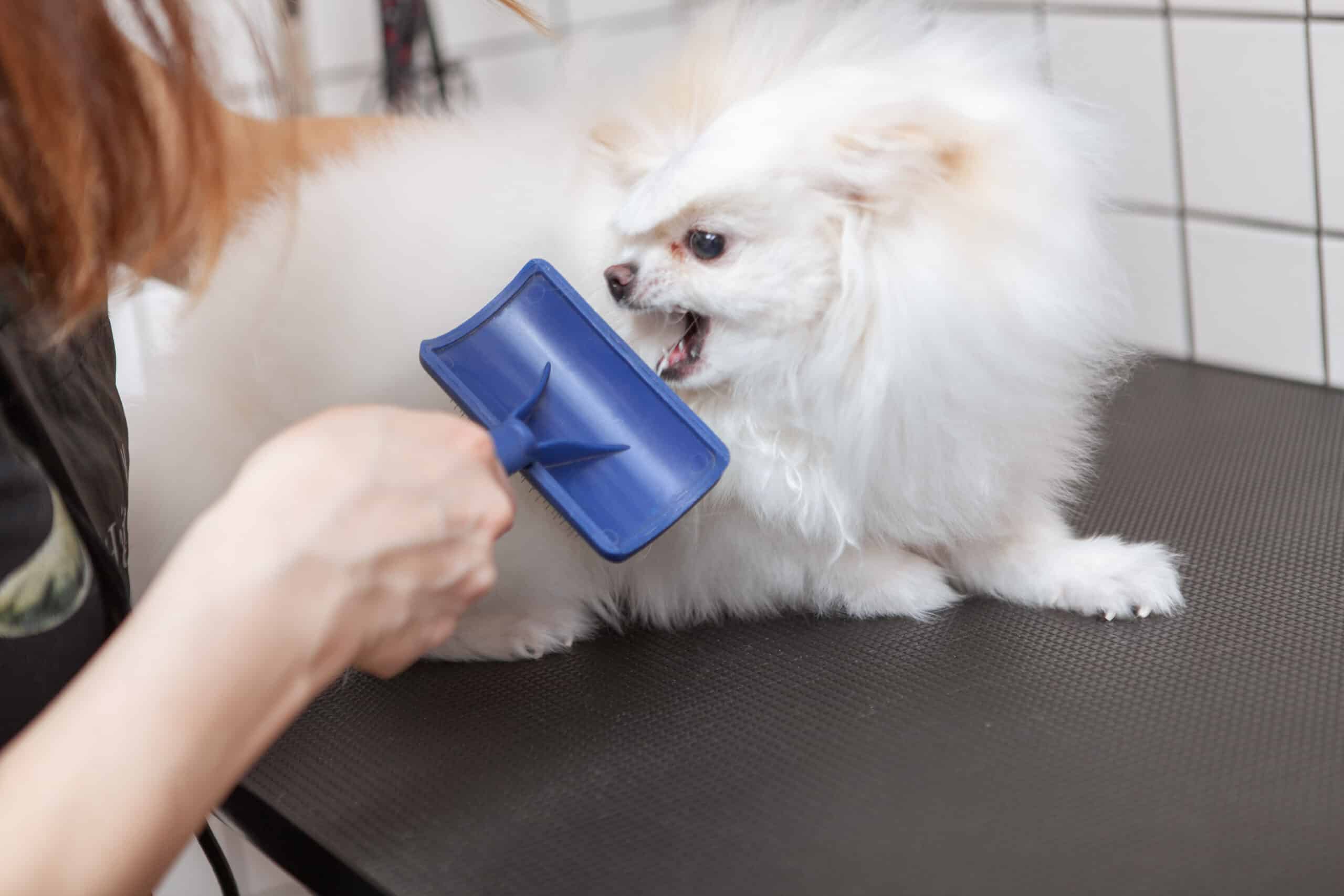
Many traditional grooming approaches unintentionally rely on flooding.
Flooding happens when a dog is over-exposed to an overwhelming experience without the ability to escape, opt out, or recover. The assumption is often that repeated exposure to high-stress stimuli will teach the dog to tolerate it long-term.
And, sometimes, the dog will appear to “settle”.
But externally compliant behaviours do not necessarily mean that a dog is comfortable, or that significant, psychological and emotional damage is not being done internally.
A dog who freezes, shuts down, appears consensual may not be coping at all – they may simply have learned that their communication will not change the outcome. The problem with flooding into compliancy is that underneath the surface, the unresolved emotional turmoil the dog is unable to express, causes a range of physiological, and also, physical consequences as well.
Things like:
- chronic stress and anxiety
- compulsive disorders
- muscle tension
Are all common side-effects of the prolonged exposure to acute stress, common in environments like grooming salons.
A first grooming experience that is too much, too fast, or too intense can create lasting negative associations that become harder to relieve and/or resolve later.
Examples where flooding is common include:
- forcing restraint before trust is established and positive associations to the tool has been formed
- introducing dryers at full intensity immediately and without gradual desensitisation
- pushing through visible stress signals because it’s considered an unavoidable expectation
- expecting dogs to adapt within one session alone
- repeatedly overriding avoidance and escape attempts without adaption and/or rest breaks
- assuming “they’ll get over it”
The reality is that many dogs will never get over it, and go on to develop more advanced fear-related behavioural issues in later life, within grooming environments and beyond!
They become increasingly defensive, fearful, shut down, hyper vigilant, and/or reactive around grooming because their nervous system has learned that grooming predicts overwhelm and a “threat to life”, and is it any wonder?
Just think about this for a short while, and put yourself in their paws:
Stephanie zikmann – the magic of holistic grooming
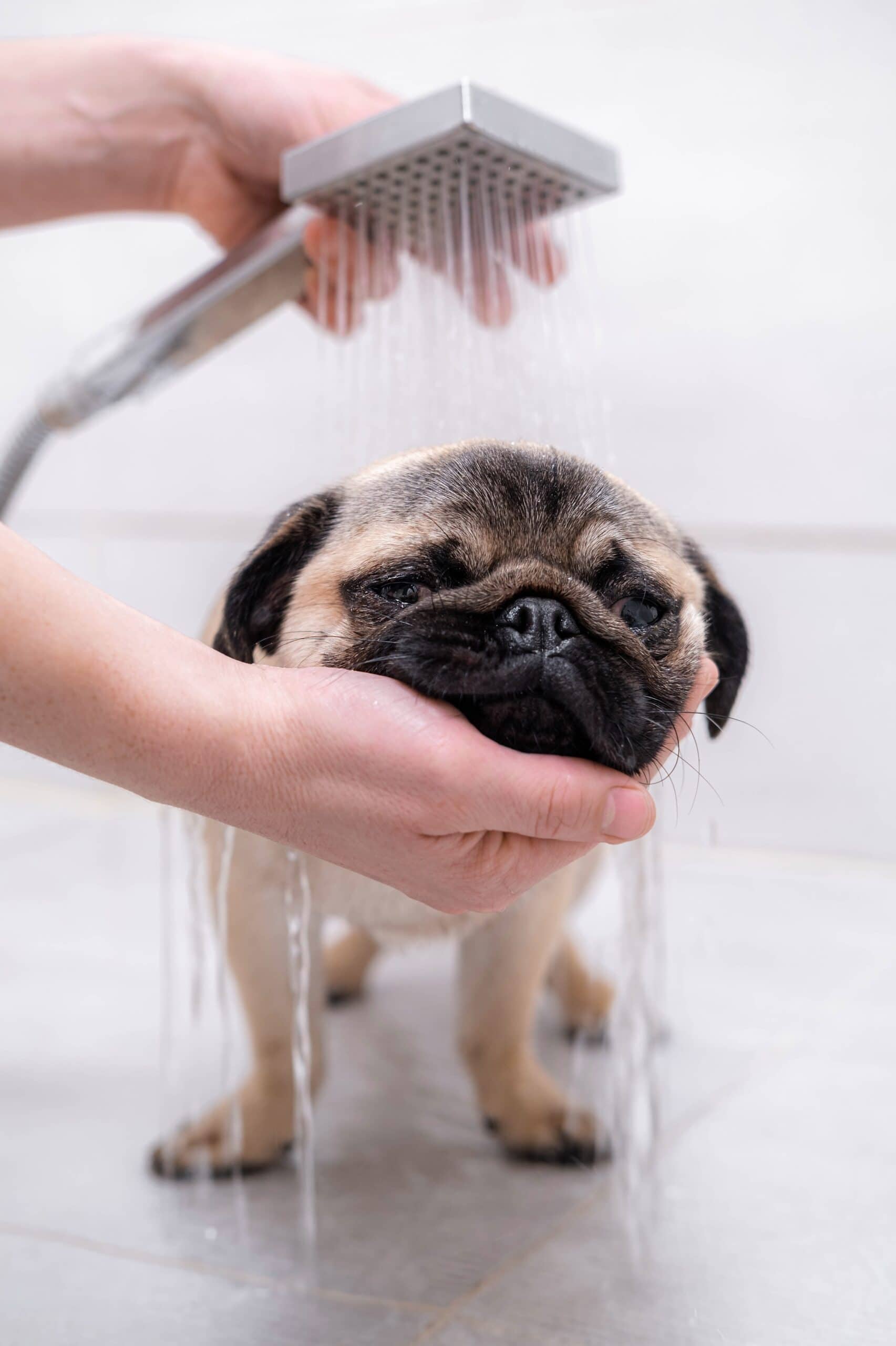
Imagine being taken to a strange place with hundreds of strange smells, sounds and sights. Imagine being lifted onto an unknown device and restrained while a complete stranger touches you in every part of your body, without explanation and without warning. Imagine being punished if you make a noise, or try to resist touch. Imagine being made to endure this experience for anything from an hour to three hours…
Overstimulation is not the same as learning
Professional grooming environments are intense sensory experiences.
Even a calm salon contains:
- unfamiliar smells
- unfamiliar humans
- unfamiliar equipment and tools
- unfamiliar sounds
- an element of force
- an element of restraint
- human expectations
For a dog entering a grooming salon for the very first time, this can become extremely overwhelming, very quickly if not instantly.
When a dog’s nervous system moves into survival mode, learning changes. The brain shifts away from curiosity and protection and defence takes its place – this means the dog is far less able to form positive associations or build resiliency to the environment around them.
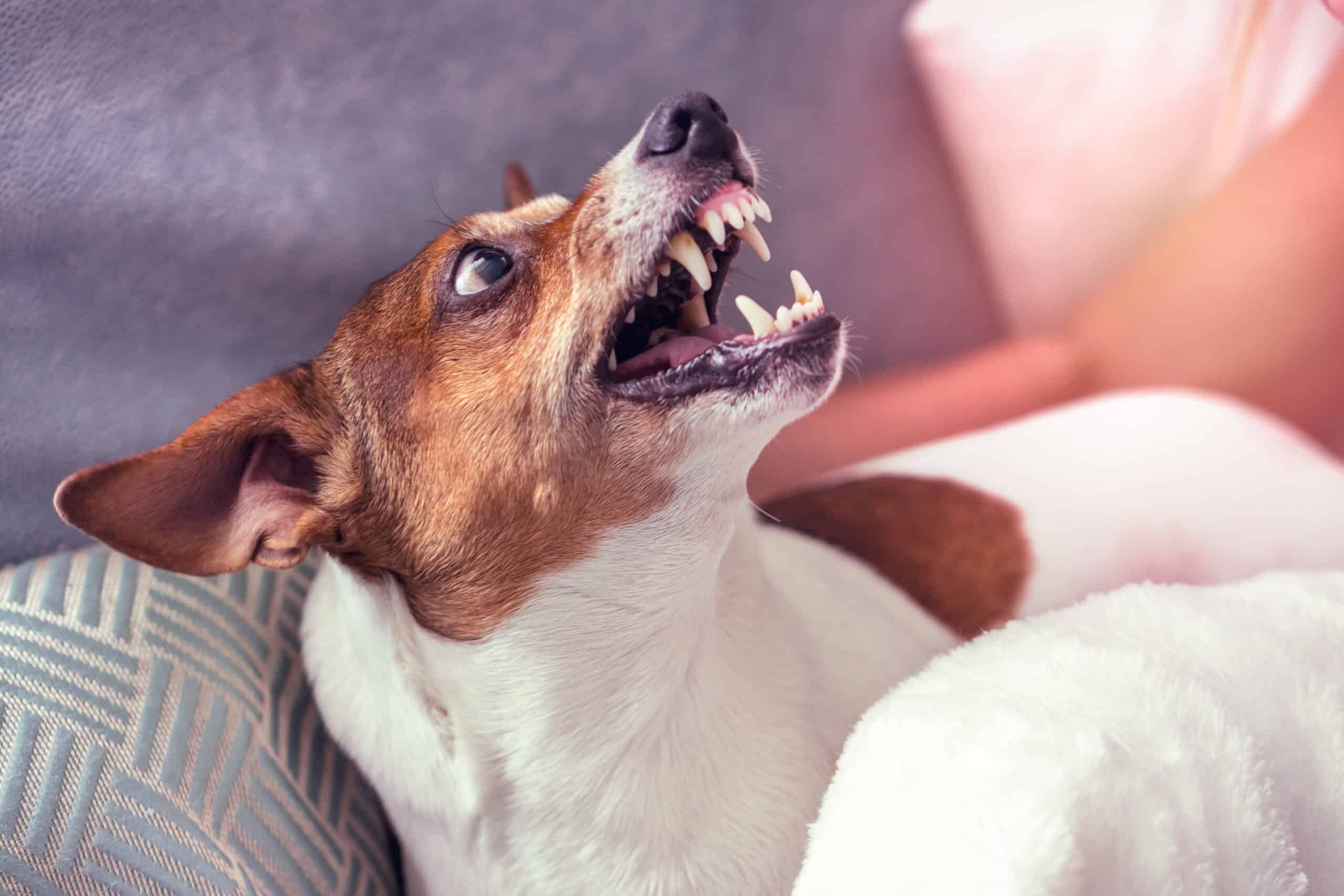
What often looks like “bad behaviour” is merely a reflection of how the dog is suffering internally…
In the majority of instances, dog resistance means:
- the dog is over their emotional threshold
- the environment does not feel safe
- the pace is too fast and too intense
- the dog needs more support, predictability and recovery
My approach puts experience over expectations
My goal is not to achieve a specific grooming style.
My goal is to help the dog in front of me feel safe with the grooming environment and process first.
That means I work with the understanding that cooperation, trust, and emotional wellbeing matter more than the finished, aesthetic result (because they do).
That means:
- slowing sessions down
- breaking grooming tasks into smaller, more frequent sessions
- allowing decompression time
- prioritising trust-building before procedures ensue
- adapting handling and approach techniques
- reducing sensory load where possible
- ending on a successful moment to avoid ending on a negative one
Especially with puppies and dogs with unknown history (rescues), first appointments are often less about achieving any sort of groom at all, and more about forming strong, positive foundations.
Ultimately, I want dogs to leave learning:
- they were heard
- they were safe
- they were respected
- grooming is predictable
- I am a secure base
- communication matters
Building a strong foundation early creates better long-term outcomes where grooming sessions can absolutely become enjoyable to experience.
Consent and cooperation is not being a “snowflake”
There is a HUGE misconception that emotionally aware grooming means permissiveness, or even, a lack of boundaries.
In reality, it requires more skill, more observation, more patience, and a deeper understanding of canine behaviour and nervous system regulation.
Supporting a dog through grooming without overwhelming them is not about avoiding all stress entirely – some level of stress is necessary and healthy – it is about ensuring the dog remains within a range they can still process, recover, and feel safe enough to learn.
There is a profound difference between:
“This is new and slightly uncomfortable, but I feel supported and safe through it”
And
“I am trapped, overwhelmed, and nobody is listening”
Dogs may not understand what is happening or what it means, but they FEEL the difference.
The first grooming appointment should build trust not endurance
The grooming industry is slowly evolving with, thankfully, more professionals recognising and speaking out about the emotional impact of grooming experiences, and how this actually does matter.
For many of us, we know that a dog who trusts the process does not only become easier (and more enjoyable) to groom, but the environment itself also becomes safer, and calmer. Additionally, the dog becomes more resilient, more confident and more emotionally stable.
When trust is established, and a groomer works with the dog during grooming processes, they are able to embrace the benefits of touch-based therapy as well, where interaction also helps to induce serotonin which, in turn, helps to enhance the dog’s overall wellbeing.
A groomer can end a session feeling proud that they have achieved an outcome without intimidation, force and control.
And the dog goes home feeling unaffected, calm and a whole lot cleaner too.