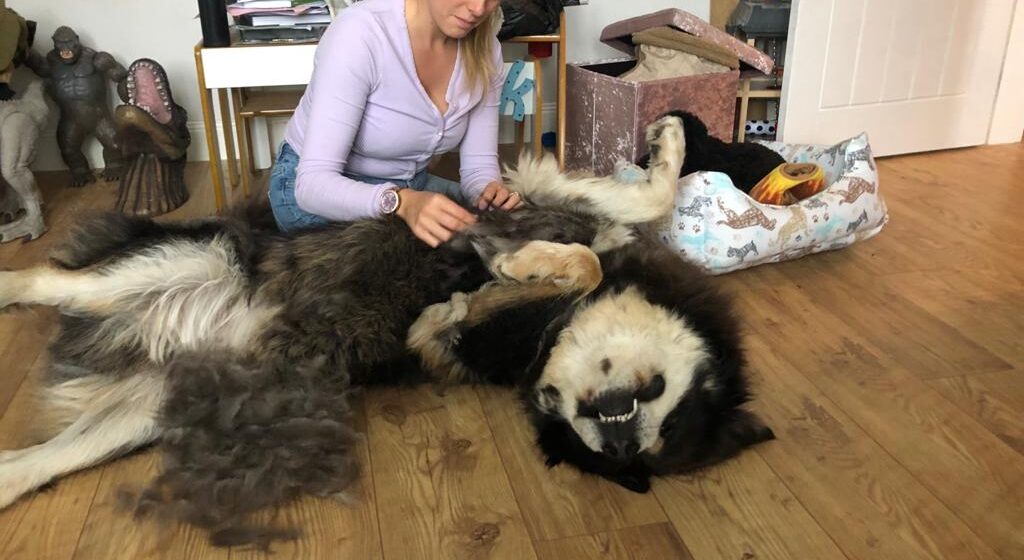
Grooming is often regarded as a routine part of canine care, yet beneath the surface of many conventional practices lies a cycle of escalating stress, tension, and ultimately pain for countless dogs. As the pet care industry evolves, it’s time to challenge outdated approach and embrace a welfare-first one instead – one that recognises complex interplay between behaviour, physical health, and emotional well-being.
This blog post explores how conventional grooming can inadvertently contribute to canine suffering and how the HGA Behaviour Grooming philosophy offers a groundbreaking roadmap to recovery.
The Cycle of Pain: Where Conventional Grooming Goes Wrong

Let’s begin by unpacking the cycle outlines in the HGA Grooming Contributory to Pain in Dogs infographic.
This cycle illustrates how a single stressful grooming session can spark a downward spiral:
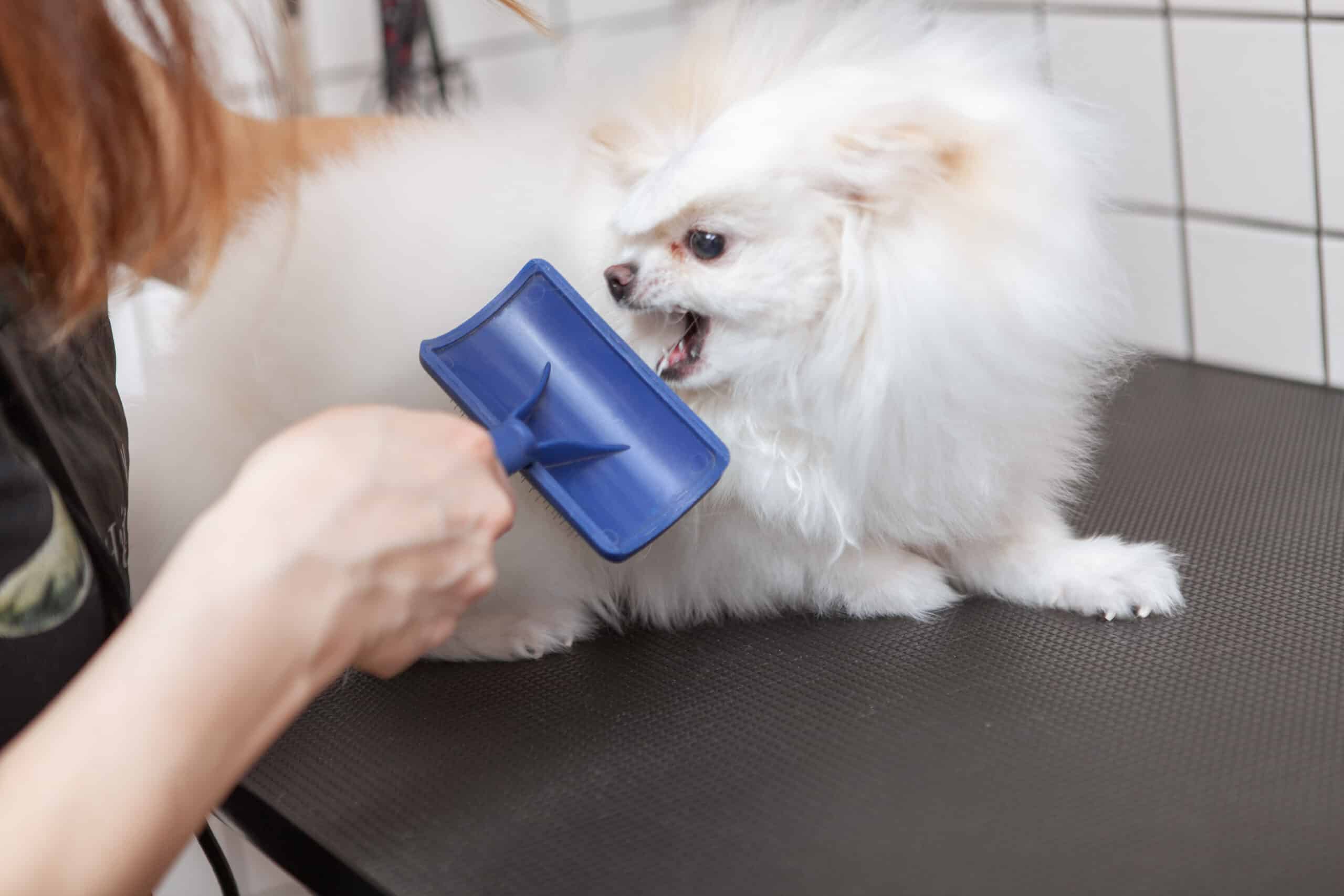
- Stressful Sessions: it starts with a dog experiencing anxiety or fear during grooming. This may be due to unfamiliar environments, rough handling, or a lack of positive associations.
- Physical Tension: the dog’s body tenses up in response, a natural reaction to perceived threat.
- Increased Resistance: tension leads to resistance – dogs may pull away, vocalise, or attempt to escape.
- Escalating Force: conventional responses often involve increased restraint or force, which only heightens the resistance and stress.
- Chronic Tension & Pain: over time, repeated exposure to stressful handling can establish chronic tension patterns, leading to musculoskeletal pain.
- Escalating Behaviour: the dog’s behaviour deteriorates, with increased aggression or fear responses. Groomers may label the dog as ‘difficult’ rather than recognising signs of pain.
- Suppression & Restraint: more restraints are used, further suppressing the dog’s communication and masking pain.
- Pain Symptoms Advance: eventually, pain symptoms escalate to the point where veterinary intervention is required. By this stage, grooming is traumatic, and rehabilitation is often necessary.
- Medical Intervention: pain medication may be trialled, and grooming becomes limited.
- Compromised Health: the dog’s skin and coat may sugar, and their quality of life diminishes.
You may want to read over this again to let it sink in!
Why Conventional Grooming Harms Dogs
Lack of Behavioural Understanding and Recognition
Traditional grooming often overlooks the importance of reading canine body language and understanding stress signals.
Many groomers are taught to prioritise efficiency and aesthetics over the dog’s emotional state, leading to missed opportunities for early intervention (Yin, 2009).
Force-Based Handling
Conventional methods may rely on physical restraint or force to achieve compliance but research shows that aversive handling increases cortisol levels and can result in long-term behavioural issues (Hiby et al., 2004).
Suppression of Communication
Dogs are frequently punished or restrained for communicating discomfort, rather than being listened to. This suppression leads to learned helplessness and increased risk of injury (Overall, 2013).
Repeated Exposure to Stress
Chronic exposure to stressful environments creates a feedback loop – dogs who have negative grooming experiences are more likely to react defensively in the future.
Delayed Medical Intervention
Signs of pain are often mislabelled as ‘bad behaviour’, delaying veterinary assessment. By the time intervention occurs, the dog may require extensive rehabilitation (Casey et al., 2014).
The Science Behind Stress and Pain in Grooming
Research has consistently demonstrated the link between stress, tension, and chronic pain in animals.
Stress activates the hypothalamic-pituitary-adrenal (HPA) axis, increasing cortisol and sensitising the nervous system to pain (Moberg, 2000).
Meanwhile, chronic stress also impairs immune function and can exacerbate existing medical conditions (McEwen, 2006).
Furthermore, studies have shown that cooperative care techniques (where dogs are given choice and control during handling) reduce stress and improve outcomes (Feng et al., 2017).
Positive reinforcement and gradual desensitisation fosters trust and resilience, enabling dogs to cope better with grooming and veterinary procedures (Yin, 2009).
The HGA Roadmap to Recovery – The Welfare-First Approach

The HGA Behaviour Grooming philosophy is designed to disrupt the conventional cycle and prioritise the holistic well-being of every dog.
Early Intervention (Steps 1-4):
- Know What’s Normal: document baseline behaviour and physical health for each dog.
- Cooperative Care from Day One: build trust and positive associations with grooming environment, equipment and processes.
- Recognise the Link: understand how anxiety, tension, and pain are interconnected.
Behaviour & Communication Education (Steps 5-6):
- Shift the Mindset: move from blaming ‘bad behaviour’ to understanding communication.
- Identify Early Signs: learn to spot subtle signs of stress and pain.
- Embrace Flexibility: be prepared to pause or stop sessions to prevent escalation.
Collaborative Care (Steps 7-8):
- Early Veterinary Involvement: refer to vets at the first sign of pain.
- Teamwork: foster collaboration between groomers, vets, other pet care providers and dog carers for bespoke holistic care plans.
- Acknowledge Trauma: recognise grooming trauma as a legitimate medical concern.
HGA Pain-Aware Protocols (Steps 9-10):
- Work With, Not Against, Medication: adapt grooming protocols to accommodate pain management.
- Prioritise Welfare: maintain coat and skin health whilst respecting the dog’s limitations and boundaries.
- Prevent Further Harm: modify growing processes to avoid akin and coat compromise.
Practical Tools for Groomers: Putting Philosophy into Practice
- Learning Canine Body Language: invest in ongoing, reputable education to recognise the subtle stress signals dogs express every day.
- Implementing Consent-Based handling: allow dogs to ‘opt-out’ of tasks and provide rest breaks.
- Regular Documentation: Keep detailed records of behaviour and physical health changes (remember I have my ‘Bespoke Holistic Grooming Planners’).
- Collaborative Partnerships: build relationships with local vets and other pet care providers responsible for the care of dogs.
- Continuous Professional Development: engage in reputable courses and workshops on cooperative care and pain management, especially those focusing on the grooming environment specifically.
Change Starts Now
The time has cone for groomers to lead the way in animal welfare. By adopting a behaviour-first, holistic approach, we can break the cycle of pain and stress, and set new standards for compassionate care.
The HGA Behaviour Grooming philosophy is a movement towards a kinder, more ethical grooming industry.
If you’re ready to upskill and improve standards, while making a real difference in the lives of dogs, you can begin with downloading the Grooming Contributory to Pain in Dogs and Groomer’s Roadmap to Recovery Infographics to learn more today!
Want To Learn More?
If you are enjoying reading my posts and would like to subscribe for updates on other published articles, consider subscribing today!
Alternatively, if you would like to be a part of a free community away from the negativity of Facebook, why not join the HGA Skool space here.
References
Beerda, B., Schilder, M.B. H., van Hooff, J. A. R. A. M., de Vries, H. W., & Mol, J. A. (1997). Behavioural, saliva cortisol and heart rate responses to different types of stimuli in dogs. Applied Animal Behaviour Science, 58(3-4), 365-381.
Casey, R. A., Loftus, B., Bolster, C., Richards, G. J., & Blackwell, E. J., (2014). Human directed aggression in domestic dogs (Canis familiaris): Occurrence in different contexts and risk factors. Applied Animal Behaviour Science, 152, 52-63.
Cooper, J. J., Cracknell, N., Hardiman, J., Wright, H., & Mills, D. S. (2007). The Welfare Consequences and Efficacy of Training Pet Dogs with Remote Electronic Training Collars in Comparison to Reward Based Training. PLoS ONE, 9(9), e102104.
Feng, L. C., Howell, T. J., & Bennett, P. C. (2017). How clicker training works: Comparing two hypotheses. Applied Animal Behaviour Science, 189, 1-10.
Hiby, E. F., Rooney N. J., & Bradshaw, J. W. S. (2004). Dog training methods: their use, effectiveness and interaction with behaviour and welfare. Animal Welfare, 13(1), 63-69.
McEwen, B. S. (2006). Protective and damaging effects of stress mediators: central role of the brain. Dialogues in Clinical Neuroscience, 8(4), 367-381.
Mills, D. S., Karagiannis, C. L., & Zhu, X. (2014). Stress – its effects on health and behaviour: a guide for practitioners. Veterinary Clinics: Small Animal Practice, 44(3), 525-541.
Moberg, G. P. (2000). Biological response to stress: implications for animal welfare. In the biology of animal stress: basic principles and implications for animal welfare (pp. 1-21). CABI Publishing.
Overall, K. L. (2013). Manual of Clinical Behavioural Medicine for Dogs and Cats. Elsevier Health Sciences.
Yin, S. (2009). Low Stress Handling, Restraint and Behaviour Modification of Dogs & Cats. CattleDog Publishing.