All right friends, it’s myth-slaying time!
I can’t count the number of times I’ve come across a video compilation of dogs struggling in the grooming environment under captions like “why I charge as much as I do” and “dogs from Hell,” and it’s only getting worse.
What I see are dogs in grooming salons all over the world really, really struggling whilst their groomer continues to force, restrain, and punish them for being “difficult” or “drama queens.” And what I found even more disturbing about these videos is how many positive emoji reactions they generate and how widespread this ignorance actually seems to be.
Groomers, many of which have THOUSANDS of followers, don’t seem to be identifying that the real issue is their lack of understanding of even the most basic canine behaviour and communication concepts. It truly is scary, and incredibly frustrating.
These people are spreading across their platforms so many toxic myths about dog grooming and dogs that we all must break away from in order to get to the real problem and I’ve taken a back seat long enough. I think it’s time to stand up and speak out for the truth, even though it might not be well received…
Grooming Myth #1: A Resisting Dog Is Being Difficult and Dramatic
This is not true. In fact, it burns me up every time I hear people say it.
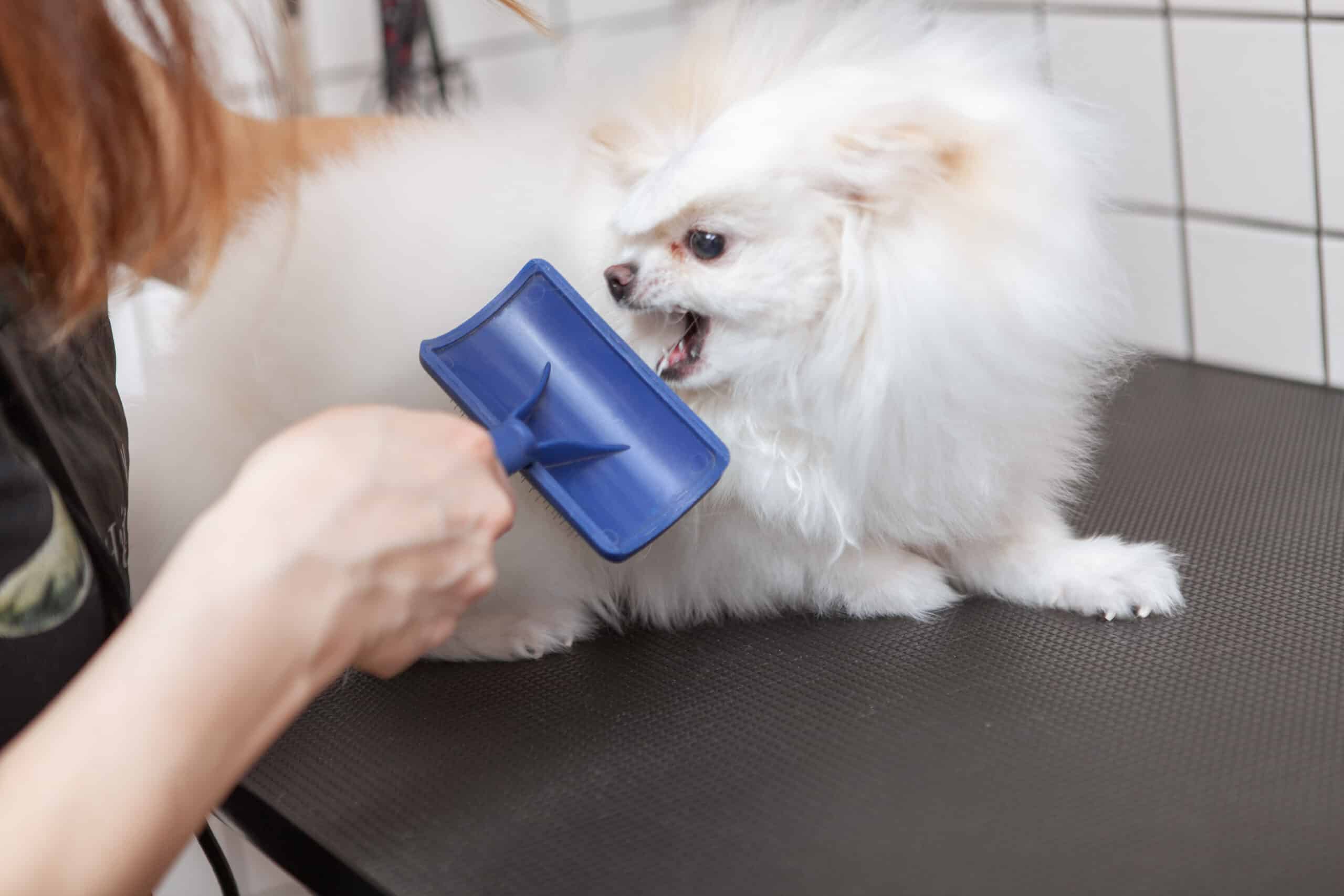
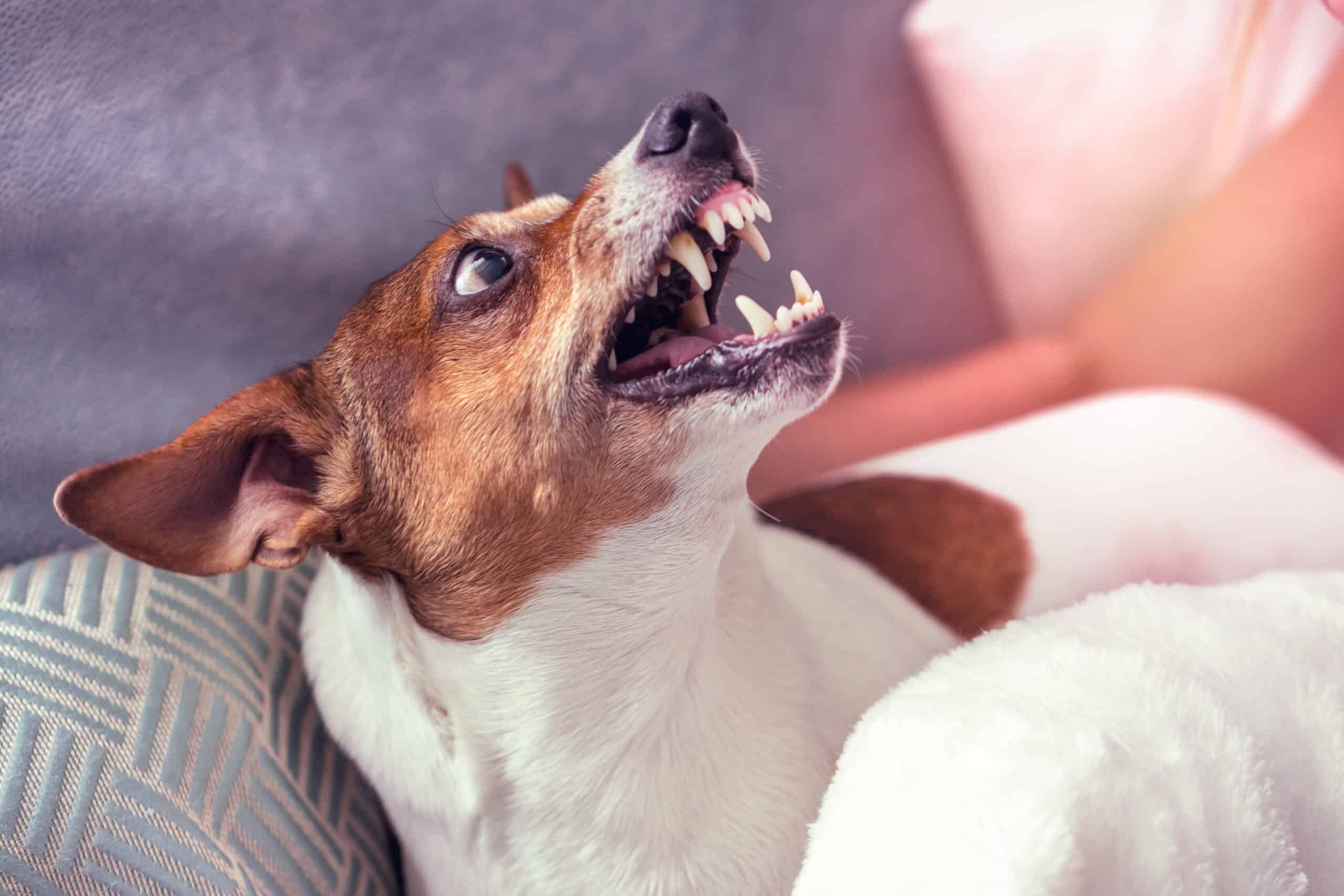
When a dog is thrashing about the grooming table trying everything in his power to avoid the groomer and any of the tools that are presented to him, he might just find himself on a video of shame for the world to point and laugh at. Not cool.
Yet groomers are so quick to blame the dog for not cooperating in the grooming salon, in fact, many are taught that grooming is never going to be pleasant for a dog which then normalises fear-based behaviours as “something to expect no matter what you do”.
Rather than being encouraged to dig into the reasons why dogs tend not to enjoy grooming processes, groomers use this expectation to shield them from having to do more than what they feel their job entails. Being ignorant to the real reason why dogs resist grooming tasks is easier than having to reassess everything you were taught back when you first began your training, however many moons ago that was.
The Truth: Resistance Is a Stress Response, Not Defiance
The truth is that a resisting dog is a dog who is struggling to cope with the environment and/or grooming process.
Unlike adult humans who can quite easily take a conscious step back and logically assess their environment, dogs do not have that luxury. Much like children, dogs rely on feeling safe and therefore must be given time to adjust to new experiences at a pace that suits them, with encouragement and praise.
The Neuroscience of Canine Stress Responses
Research in canine cognition demonstrates that dogs process threatening stimuli through the limbic system, the emotional centre of the brain, before the prefrontal cortex (responsible for rational thought) can engage (Berns et al., 2012). This means that when a dog perceives a grooming tool, restraint, or unfamiliar sensation as threatening, their emotional response precedes any cognitive processing.
Studies using functional MRI scans show that dogs experiencing fear or stress exhibit heightened activity in the amygdala, the brain region responsible for processing threats and triggering the fight-or-flight response (Berns et al., 2015). This neurological reality means that a dog cannot “choose” to be cooperative when their brain is in survival mode.
Whilst a groomer might consider fear-induced behaviours as being “difficult” because it taps into the time they have to achieve a specific trim, a dog doesn’t think about their behaviour at all. How a dog behaves on the outside is a reflection of how he is feeling on the inside, and groomers must remember that both are connected and simultaneous, which means there is no premeditative act at play.
The Polyvagal Theory and Canine Behaviour
Research in polyvagal theory, a theory that was originally developed for humans but has been increasingly applied to animal behaviour in recent times, demonstrates that mammals have three distinct nervous system states: social engagement (safe and calm), mobilisation (fight or flight), and immobilisation (freeze or shutdown) (Porges, 2011).
When dogs are resisting grooming, they are operating from the sympathetic nervous system’s mobilisation state. Physiologically, their body is flooded with cortisol and adrenaline, their heart rate increases, and all non-essential functions (including learning and cooperation) are suppressed (Beerda et al., 1998).
I repeat: this is not defiance. This is biology.
Furthermore, studies demonstrate that dogs in high-stress situations show elevated cortisol levels that can remain elevated for hours after the stressful event, impacting their overall health and future responses to similar situations (Dreschel, 2010). It’s worthwhile noting here, that this prolonged state of high-arousal can often lead to quicker escalation times in scenarios out-with the grooming salon, especially if a session has been particularly traumatic. For example, it’s not uncommon for family members to be bitten by their dog shortly after a stressful grooming session has occurred.
Equally, each time we force a dog through a grooming session whilst they’re in this state, we’re reinforcing the fear response rather than building cooperation.
Blaming a dog for a groomer’s lack of experience in observing, communicating, and safely handling a dog is unhelpful and unfair.
The Evidence-Based Alternative
To prevent a dog from resisting grooming tasks, groomers must implement a blend of positive training techniques and cooperative-based exercises to help build a dog’s confidence in the environment around him. It may take a little extra time to start with, but it is ethically moral and has more effective, longer-lasting results.
Research demonstrates that dogs trained using positive reinforcement methods show lower cortisol levels, reduced fear responses, and increased willingness to engage in cooperative behaviours compared to dogs subjected to aversive methods (Deldalle and Gaunet, 2014).
Want to help your dog overcome grooming fears at home? My book Help! My Dog Hates Grooming provides you with the exact step-by-step protocols I use to transform fearful, resistant dogs into confident, cooperative partners. You’ll learn how to read your dog’s stress signals, implement systematic desensitisation, and build positive associations with every grooming task without force and drama. The approach I use involves science-backed methods that actually work.
Grooming Myth #2: Dogs Require a Firm Approach and an Alpha Leader
This one may be surprising if you have ever watched some of the mainstream dog trainers on television because you have probably heard similar statements being thrown around by them.
However, being firm and being forceful are very closely linked, and it’s incredibly difficult to know where to draw the line between reasonable boundaries and a punitive approach to dog care.
The terms “firm” and “alpha” fall under the umbrella of Dominance Theory – a training concept that was made worldly famous by wolf expert and researcher, Dr. David Mech. However, years later, Mech retracted his beliefs in Dominance Theory and has since mentioned several times that wolves and dogs are not the same, and that even in wolf packs, dominance theory is barking up the wrong tree (Mech, 1999).
Where does this leave grooming myth number two?
Sadly, many people still believe in a firm, punitive approach to dog care because it does seem to get quick-fix results. Because most humans are lazy and want to see the results they expect yesterday, the use of punishment is undeniably appealing, but alas, not helpful long-term by any means.
The Truth: Dominance Theory Is Scientifically Debunked
Long-term, the consequences of such a damaging approach are incredibly telling, not only in the dog’s general health (dogs are more susceptible to chronic health disorders including stress, anxiety, insomnia, and pain) but also temperament, since Dominance Theory principles have been shown to lead to more advanced behavioural problems, including a quicker escalation of fear-based behaviours and often, a quicker bite response.
The Research on Aversive Training Methods
A landmark study published in Applied Animal Behaviour Science surveyed dog carers who used confrontational training methods (including physical corrections, alpha rolls, and intimidation) and found that 25% of dogs responded with aggression to these techniques (Herron et al., 2009). The study concluded that confrontational methods are associated with a high risk of fear and aggression.
Further research demonstrates that dogs trained using aversive methods show increased cortisol levels, reduced problem-solving abilities, and impaired welfare compared to dogs trained with positive reinforcement (Rooney and Cowan, 2011).
While, a comprehensive review of training methods found that punishment-based techniques consistently produce poorer welfare outcomes and increased behavioural problems (Ziv, 2017).
Need I go on?
What Dogs Actually Need: The Science of Trust and Agency
My point is, dogs don’t require a firm approach, least of all within the grooming environment.
Instead, they need compassion, time, and a bespoke care plan that considers their individual likes/dislikes, fears, experiences, health considerations, and everything else in between.
What’s more, dogs thrive in trust-building exercises that are designed to empower them into making their own decisions, assessing their own environments freely, and having the emotional freedom to express how they are feeling without being suppressed.
The Neuroscience of Choice and Control
Research in animal welfare science demonstrates that providing animals with choice and control over their environment significantly reduces stress and improves wellbeing (Bassett and Buchanan-Smith, 2007). Studies show that dogs who are given agency—the ability to opt in or out of interactions—show lower stress responses and increased cooperation (Stellato et al., 2021).
Brain imaging studies reveal that dogs who experience predictable, controllable environments show reduced amygdala activation and increased activity in brain regions associated with positive emotions (Cook et al., 2018). This neurological evidence confirms that empowerment, not domination, creates confident, cooperative dogs.
When a dog is guided by a groomer who can successfully observe and communicate with him, together they can begin to really enjoy grooming tasks or, at very least, find them a lot less stressful.
If you’re a groomer ready to move beyond outdated dominance-based methods, or a dog carer wanting to advocate for your dog’s wellbeing, both Help! My Dog Hates Grooming and The Magic of Holistic Grooming will show you exactly how to implement trust-based, science-backed approaches that respect your dog’s emotional needs whilst achieving brilliant grooming results. You’ll discover how to create choice, build confidence, and transform the grooming experience from a battle into a partnership. Plus, The Magic of Holistic Grooming is an official CPD Resource totally to 32 CEU’s via The CPD Group.
Grooming Myth #3: I Should Charge More If a Dog Poops in My Salon!
I can totally understand why someone would be quick to get a little bit angry at this, especially if you think that a dog carer hasn’t bothered taking their dog out for toileting before a grooming appointment (it does happen). After hours of meticulous grooming, you find yourself having to re-bath a dog and start from the very beginning, which is nothing short of frustrating.
It’s true that defecating and urinating in the salon are often chargeable offences (and I say offences because groomers often hold so much resentment towards the dog for these inconveniences), without considering any other potential cause.
The Truth: Elimination Is a Stress Signal, Not Typically Misbehaviour
The truth is there are many reasons why a dog might defecate or urinate in the salon, including:
- Health Issues
Some medical conditions might prevent a dog from even knowing that he needs the toilet until it’s too late, or result in dogs suddenly needing the toilet without much warning.
Research demonstrates that numerous medical conditions can affect bladder and bowel control in dogs, including urinary tract infections, gastrointestinal disorders, diabetes, kidney disease, and cognitive dysfunction syndrome (Chew et al., 2011).
Punishing or charging extra for a symptom of illness is not only unethical—it’s potentially dangerous if it delays veterinary diagnosis. - Age-Specific Factors
Depending on the age of a dog, he may need toilet opportunities more regularly than the average healthy adult dog. Puppies will require frequent breaks to not only rest and refresh but also pee in a safe and secure outdoor space. The same goes for geriatric dogs who also have weaker bladder control.
Studies show that senior dogs experience age-related decline in sphincter control and cognitive function, making accidents more likely (Landsberg et al., 2012). Puppies under six months have limited bladder capacity and control, requiring toileting opportunities every 1-2 hours (Horwitz and Neilson, 2007). - Fear and Stress—The Most Common Cause
Let’s not forget that a leading cause of urination and defecation in the grooming environment is actually significant psychological and emotional distress!
When the sympathetic nervous system has engaged, all other systems are disrupted, including the digestive system. Fear can cause a dog to “empty” suddenly, which, of course, is a big indicator that something in the grooming process has gone terribly wrong!
Research in veterinary behaviour demonstrates that acute stress triggers the sympathetic nervous system, which inhibits normal digestive function and can cause involuntary elimination (Overall, 2013). This response is mediated by the release of stress hormones (cortisol and adrenaline) that redirect blood flow away from the digestive system and toward muscles needed for escape.
Studies show that dogs experiencing high levels of fear or anxiety commonly exhibit stress-related elimination, including urination, defecation, and anal gland expression (Landsberg et al., 2013). This is an involuntary physiological response, not a behavioural choice.
A study examining stress signals in dogs found that elimination in unfamiliar or stressful environments is one of the most reliable indicators of significant distress (Beerda et al., 1998). When a dog eliminates during grooming, it’s their body’s way of saying, “I am overwhelmed, and I cannot cope.”
Therefore, defaulting blame to a dog carer can miss opportunities to identify potential health concerns that may require a vet referral and/or potential problems in your existing grooming regime.
No dog should ever feel so afraid in the grooming environment that they empty their bladder and/or bowels.
Why Is It Dangerous to Believe These 3 Myths?
Believing in these myths can lead to welfare implications and ultimately harm dogs in a grooming environment.
The Ripple Effect of Outdated Beliefs
When groomers operate from these myths, the consequences extend far beyond a single grooming session, we must also consider:
- Chronic Stress and Health Implications
Research demonstrates that repeated exposure to stressful grooming experiences creates chronic stress in dogs, leading to elevated baseline cortisol levels, suppressed immune function, and increased susceptibility to illness (Dreschel, 2010). Studies show that chronic stress in dogs is associated with shorter lifespans and increased risk of behavioural disorders (Serpell and Hsu, 2005). - Escalating Fear and Aggression
When dogs are forced through grooming procedures whilst in a state of fear, the fear response becomes conditioned and intensifies over time (Levine et al., 2007). Research shows that dogs subjected to aversive handling are significantly more likely to develop aggressive responses, including biting (Casey et al., 2014). - Erosion of the Human-Animal Bond
Studies demonstrate that negative grooming experiences damage the trust relationship between dogs and humans, affecting not only the grooming environment but the dog’s overall quality of life and relationship with their carer (Mariti et al., 2012). - Professional and Legal Liability
Groomers who fail to recognise and respond appropriately to stress signals face increased risk of dog bites, injuries, and legal liability (Patronek et al., 2013). Understanding canine behaviour and communication is not just ethical—it’s essential for professional safety and business sustainability.
The Better Way Forward
When I see those videos on social media, I can’t help but get hot and flustered—they do groomers like me no favours, but they do even less for the poor dogs that are in them!
When we fail to really read between the lines when it comes to what is happening in front of us with dogs, we fail to live up to our duty of care to safeguard and tend to the wellbeing of dogs.
I’ve seen so many groomers turn it around for the better, who have gone from spending hours each day literally fighting against “difficult” dogs to suddenly looking forward to going to work each day because they now know how to make grooming processes more dog-centred.
There’s nothing mysterious or “woo-woo” about holistic grooming protocol at all, it works because it’s based on the very biology and psychology of dogs.
Key Takeaways: What the Science Really Says
- Resistance is a stress response, not defiance—dogs in fear cannot access the cognitive functions needed for cooperation (Berns et al., 2012, 2015).
- Dominance theory is scientifically debunked—even its originator retracted it; punishment-based methods increase fear and aggression (Mech, 1999; Herron et al., 2009; Ziv, 2017).
- Elimination is a stress signal, not misbehaviour—fear-induced elimination indicates the dog is overwhelmed and cannot cope (Overall, 2013; Beerda et al., 1998).
- Choice and agency reduce stress—dogs given control over their environment show lower stress responses and increased cooperation (Stellato et al., 2021; Bassett and Buchanan-Smith, 2007).
- Positive reinforcement produces better outcomes—science consistently shows that reward-based methods result in lower stress, better welfare, and more reliable cooperation (Deldalle and Gaunet, 2014; Rooney and Cowan, 2011).
- Chronic stress has serious health consequences—repeated negative grooming experiences can shorten lifespan and increase disease risk (Dreschel, 2010; Serpell and Hsu, 2005).
Your Next Steps: Moving Beyond the Myths
It might be uncomfortable hearing the words from this blog post, but I would encourage you to try and use it as inspiration to learn more about how I do things differently.
For professional groomers: If you would like to learn more, you can sign up to The Holistic Grooming & Behaviour Theory Course anytime and join a close community of students who are actively benefiting from learning more about the concepts I mentioned earlier. Click here to learn more today.
For dog carers: If you’re concerned about your dog’s grooming experiences or want to help them overcome fear and anxiety around grooming tasks, Help! My Dog Hates Grooming is your complete guide to understanding what your dog is really communicating and how to build positive, cooperative grooming experiences at home.
You’ll learn:
- How to recognise stress signals before they escalate
- Step-by-step desensitisation protocols for every grooming task
- How to advocate for your dog’s needs with professional groomers • Science-backed techniques to build confidence and reduce fear
- Practical solutions for common grooming challenges
References
Bassett, L. and Buchanan-Smith, H.M. (2007) ‘Effects of predictability on the welfare of captive animals’, Applied Animal Behaviour Science, 102(3-4), pp. 223-245. doi: 10.1016/j.applanim.2006.05.029.
Beerda, B., Schilder, M.B.H., Van Hooff, J.A.R.A.M., De Vries, H.W. and Mol, J.A. (1998) ‘Behavioural, saliva cortisol and heart rate responses to different types of stimuli in dogs’, Applied Animal Behaviour Science, 58(3-4), pp. 365-381. doi: 10.1016/S0168-1591(97)00145-7.
Berns, G.S., Brooks, A.M. and Spivak, M. (2012) ‘Functional MRI in awake unrestrained dogs’, PLoS ONE, 7(5), p. e38027. doi: 10.1371/journal.pone.0038027.
Berns, G.S., Brooks, A.M. and Spivak, M. (2015) ‘Scent of the familiar: An fMRI study of canine brain responses to familiar and unfamiliar human and dog odors’, Behavioural Processes, 110, pp. 37-46. doi: 10.1016/j.beproc.2014.02.011.
Casey, R.A., Loftus, B., Bolster, C., Richards, G.J. and Blackwell, E.J. (2014) ‘Human directed aggression in domestic dogs: Occurrence in different contexts and risk factors’, Applied Animal Behaviour Science, 152, pp. 52-63. doi: 10.1016/j.applanim.2013.12.003.
Chew, D.J., DiBartola, S.P. and Schenck, P.A. (2011) Canine and Feline Nephrology and Urology. 2nd edn. St. Louis: Elsevier Saunders.
Cook, P.F., Prichard, A., Spivak, M. and Berns, G.S. (2018) ‘Jealousy in dogs? Evidence from brain imaging’, Animal Sentience, 3(22), p. 1. doi: 10.51291/2377-7478.1283.
Deldalle, S. and Gaunet, F. (2014) ‘Effects of 2 training methods on stress-related behaviors of the dog and on the dog–owner relationship’, Journal of Veterinary Behavior, 9(2), pp. 58-65. doi: 10.1016/j.jveb.2013.11.004.
Dreschel, N.A. (2010) ‘The effects of fear and anxiety on health and lifespan in pet dogs’, Applied Animal Behaviour Science, 125(3-4), pp. 157-162. doi: 10.1016/j.applanim.2010.04.003.
Herron, M.E., Shofer, F.S. and Reisner, I.R. (2009) ‘Survey of the use and outcome of confrontational and non-confrontational training methods in client-owned dogs showing undesired behaviors’, Applied Animal Behaviour Science, 117(1-2), pp. 47-54. doi: 10.1016/j.applanim.2008.12.011.
Horwitz, D.F. and Neilson, J.C. (2007) Blackwell’s Five-Minute Veterinary Consult Clinical Companion: Canine and Feline Behavior. Ames, IA: Blackwell Publishing.
Landsberg, G.M., DePorter, T., Araujo, J.A., Ragen, B. and Milgram, N.W. (2012) ‘Diagnosis and management of behavior problems in the elderly dog’, Veterinary Clinics: Small Animal Practice, 42(4), pp. 637-651. doi: 10.1016/j.cvsm.2012.04.004.
Landsberg, G.M., Hunthausen, W. and Ackerman, L. (2013) Behavior Problems of the Dog and Cat. 3rd edn. Edinburgh: Saunders Elsevier.
Levine, E.D., Ramos, D. and Mills, D.S. (2007) ‘A prospective study of two self-help CD based desensitization and counter-conditioning programmes with the use of Dog Appeasing Pheromone for the treatment of firework fears in dogs’, Applied Animal Behaviour Science, 105(4), pp. 311-329. doi: 10.1016/j.applanim.2006.11.006.
Mariti, C., Gazzano, A., Moore, J.L., Baragli, P., Chelli, L. and Sighieri, C. (2012) ‘Perception of dogs’ stress by their owners’, Journal of Veterinary Behavior, 7(4), pp. 213-219. doi: 10.1016/j.jveb.2011.09.004.
Mech, L.D. (1999) ‘Alpha status, dominance, and division of labor in wolf packs’, Canadian Journal of Zoology, 77(8), pp. 1196-1203. doi: 10.1139/z99-099.
Overall, K.L. (2013) Manual of Clinical Behavioral Medicine for Dogs and Cats. St. Louis: Elsevier.
Patronek, G.J., Sacks, J.J., Delise, K.M., Cleary, D.V. and Marder, A.R. (2013) ‘Co-occurrence of potentially preventable factors in 256 dog bite-related fatalities in the United States’, Journal of the American Veterinary Medical Association, 243(12),
pp. 1726-1736. doi: 10.2460/javma.243.12.1726.
Porges, S.W. (2011) The Polyvagal Theory: Neurophysiological Foundations of Emotions, Attachment, Communication, and Self-regulation. New York: W.W. Norton & Company.
Rooney, N.J. and Cowan, S. (2011) ‘Training methods and owner–dog interactions: Links with dog behaviour and learning ability’, Applied Animal Behaviour Science, 132(3-4), pp. 169-177. doi: 10.1016/j.applanim.2011.03.007.
Serpell, J.A. and Hsu, Y.A. (2005) ‘Effects of breed, sex, and neuter status on trainability in dogs’, Anthrozoös, 18(3), pp. 196-207. doi: 10.2752/089279305785594135.
Stellato, A.C., Flint, H.E., Widowski, T.M., Serpell, J.A. and Niel, L. (2021) ‘Assessment of fear-related behaviours displayed by companion dogs in response to social and non-social stimuli’, Applied Animal Behaviour Science, 234, p. 105177. doi: 10.1016/j.applanim.2020.105177.
Ziv, G. (2017) ‘The effects of using aversive training methods in dogs—A review’, Journal of Veterinary Behavior, 19, pp. 50-60. doi: 10.1016/j.jveb.2017.02.004.