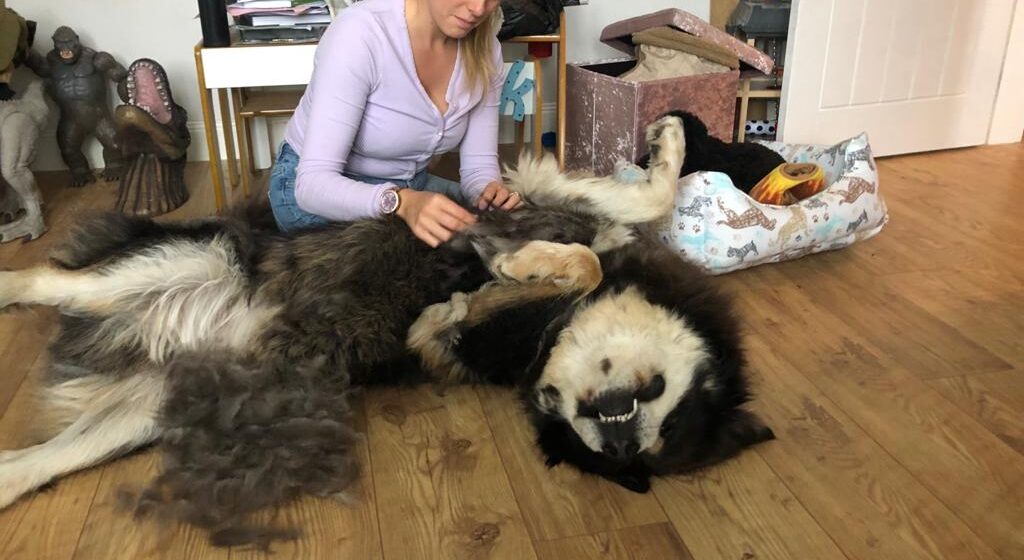
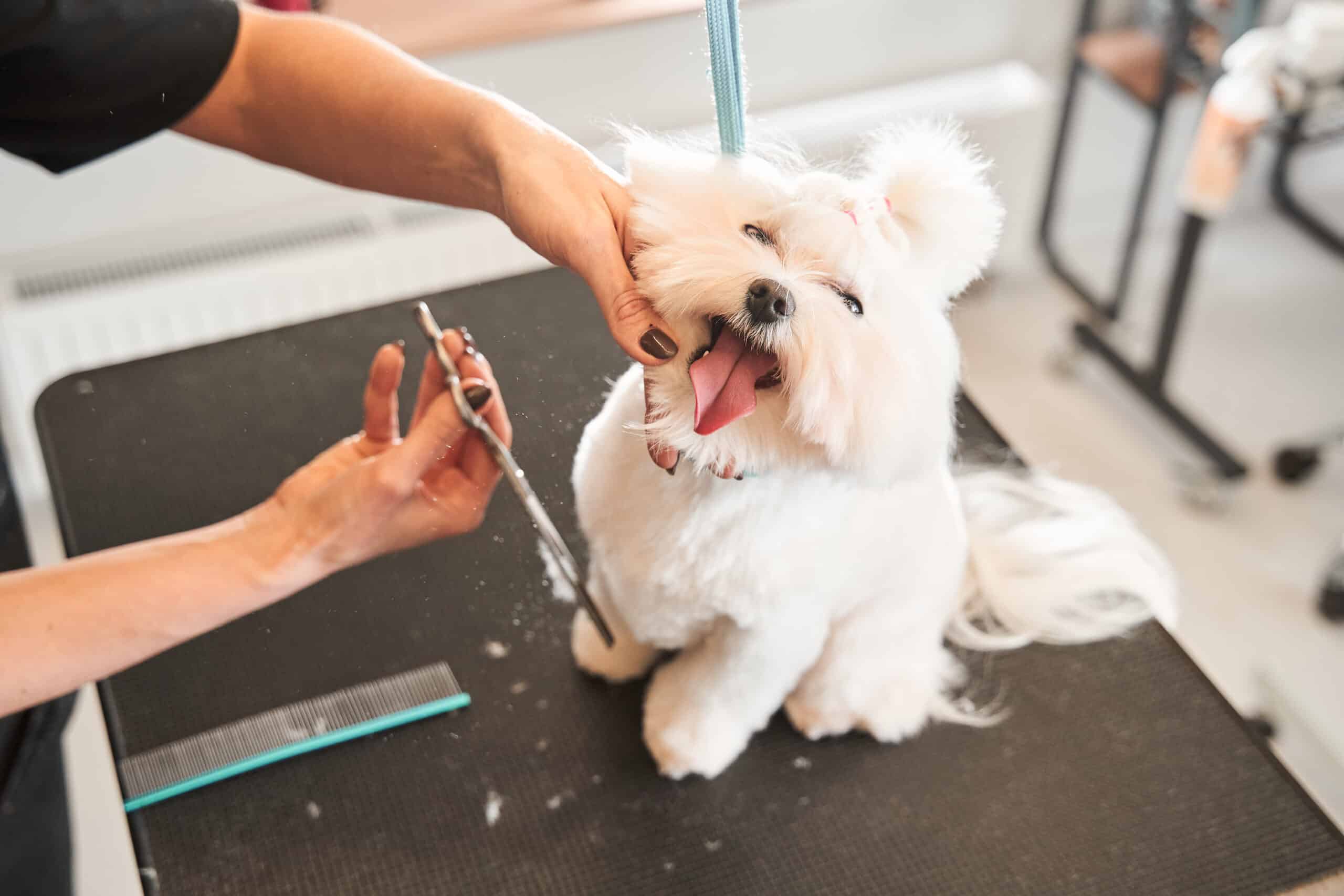
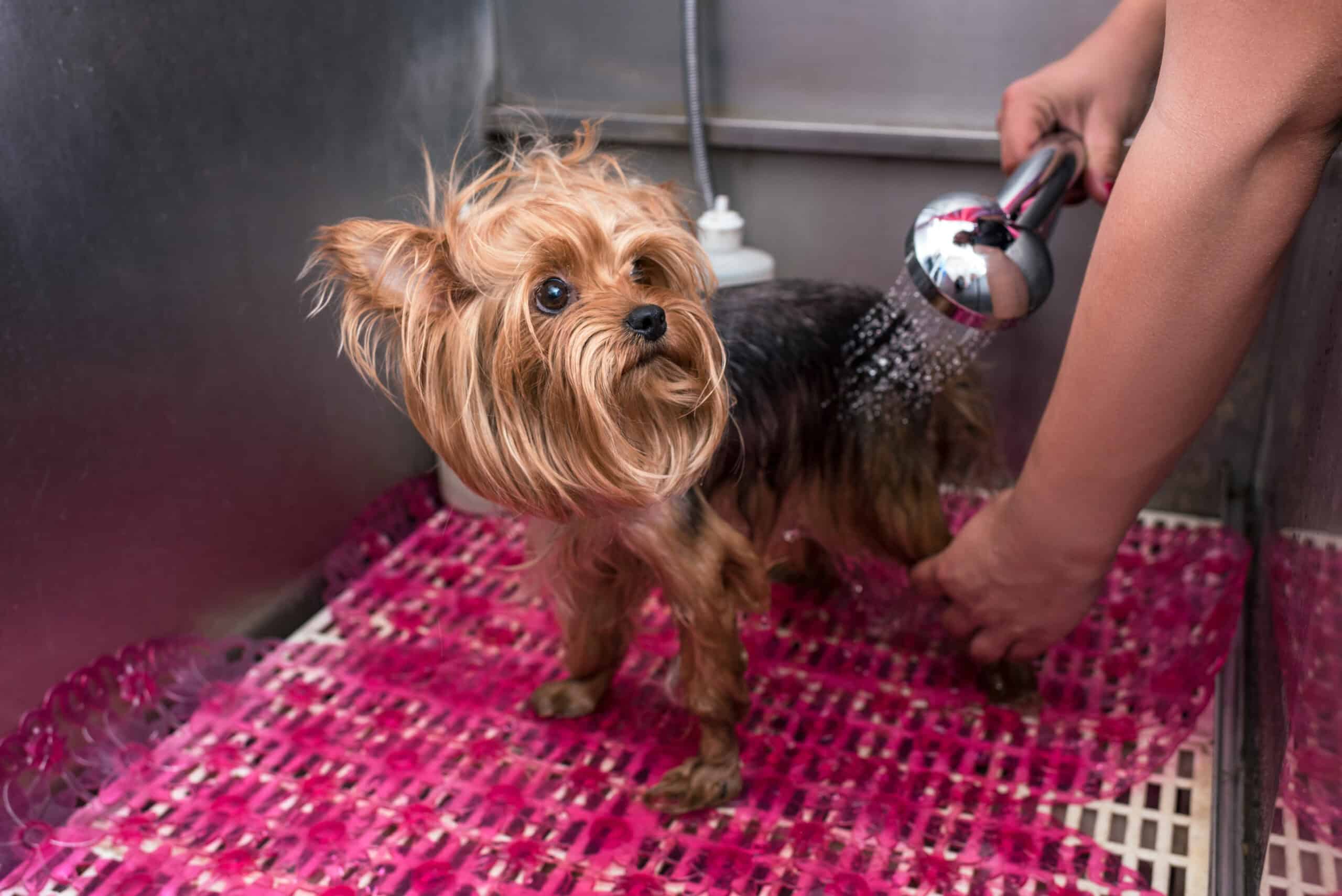
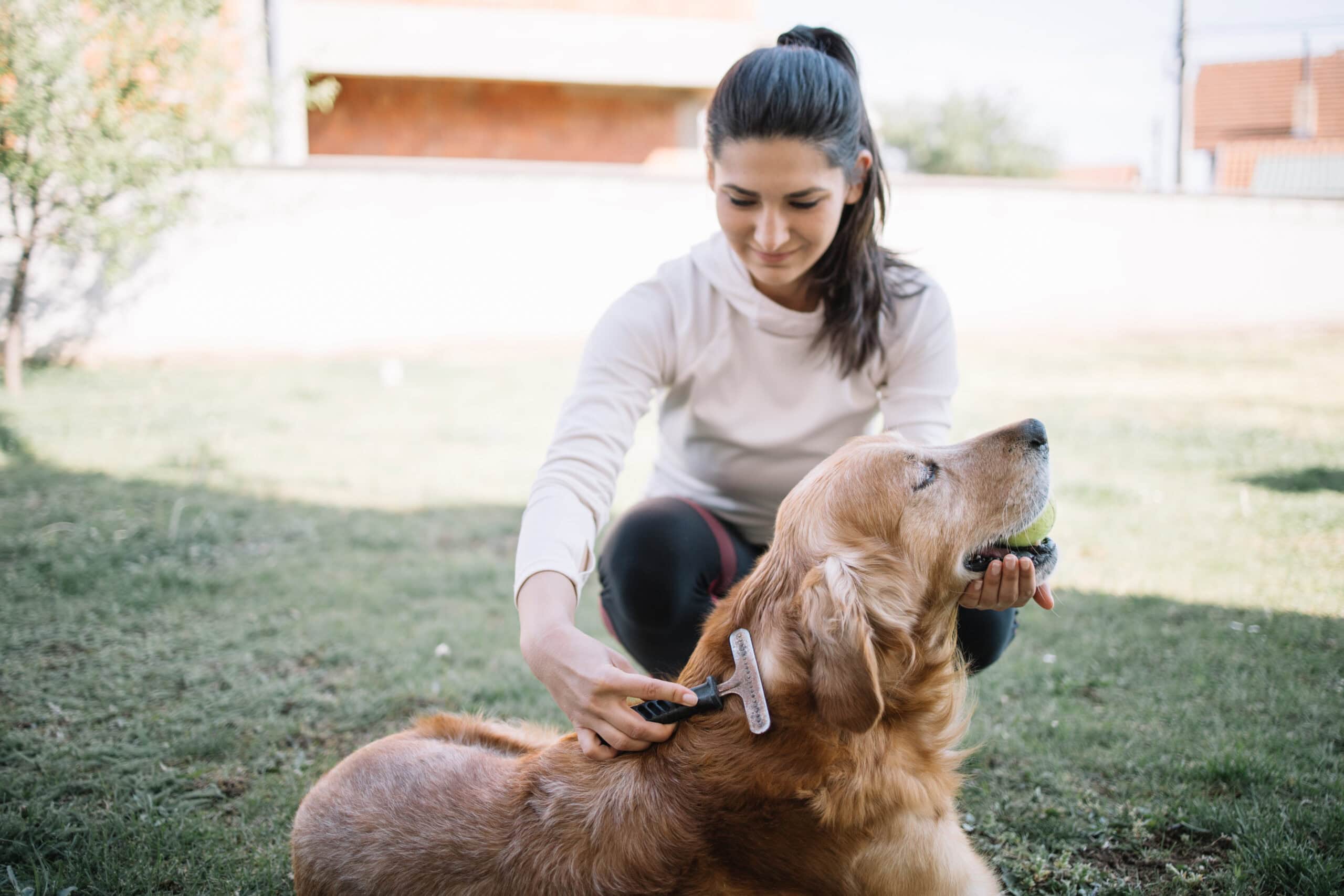
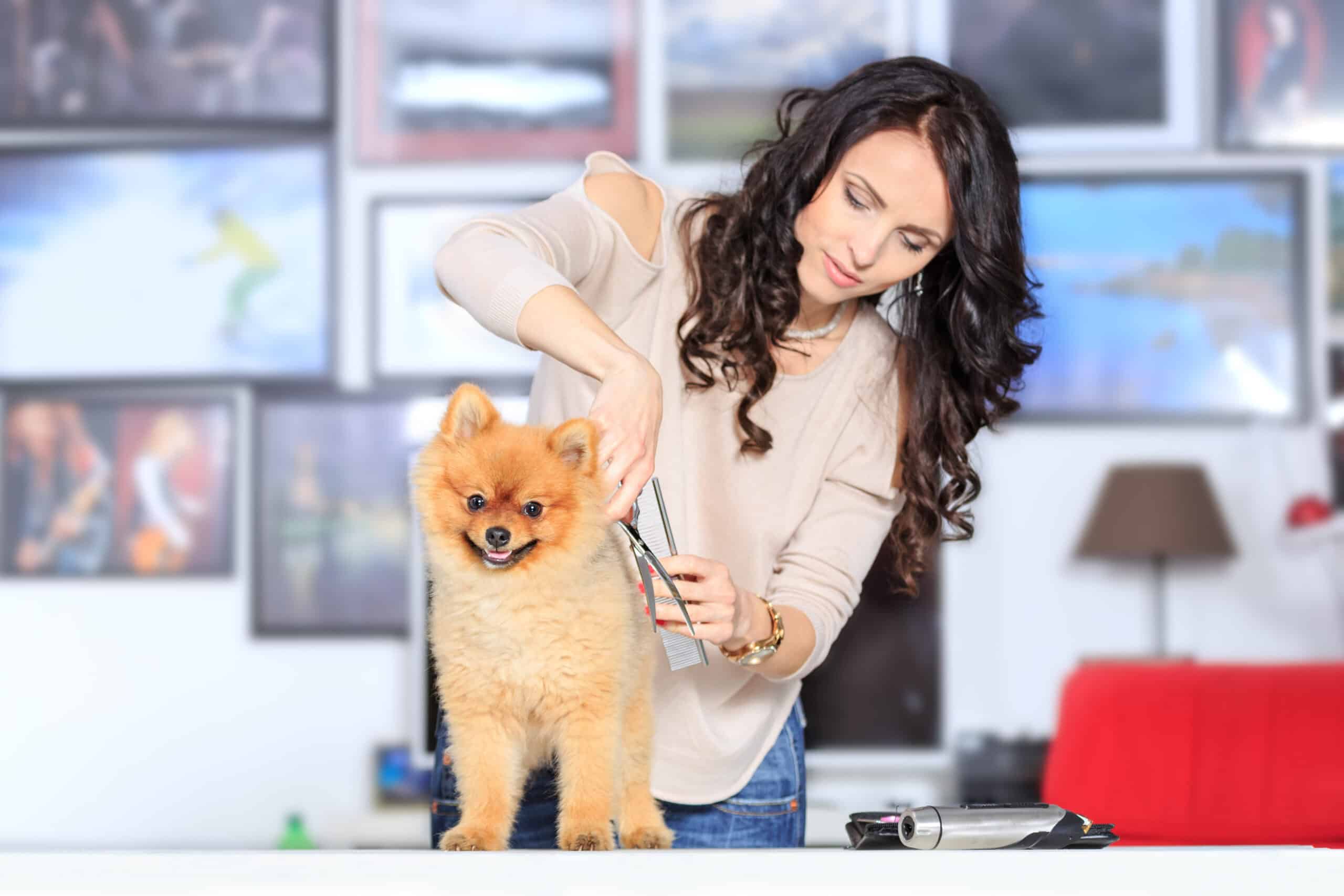
As professional groomers, we’re often faced with a difficult decision: should we attempt to de-matt a matted coat, or should we recommend clipping it off? Whilst the temptation to “save” the coat can be strong, especially when faced with an insistent carer or the judgemental looks from our peers, the reality is that de-matting can cause significant harm to dogs.
It’s time we had an honest conversation about why welfare must always triumph over vanity.
Skin Damage and Pain
Understanding Canine Skin Structure
Canine skin is remarkably delicate. According to research published in veterinary dermatology journals, a dog’s skin is significantly thinner than human skin ranging from 0.5 to 5mm thick depending on the body region, compared to human skin which averages 2-3mm.
When mats form, they create constant tension on the skin, pulling at hair follicles and restricting blood flow to the affected areas.
This tension alone can cause:
- Bruising and haematomas beneath the mat
- Skin tears and abrasions when mats are manipulated
- Pressure sores similar to bedsores in immobile patients
- Folliculitis (inflammation of hair follicles)
- Secondary bacterial or fungal infections in the warm, moist environment trapped
beneath the matting
The Pain Factor
Research into canine pain responses demonstrates that dogs experience pain similarly to humans, with the same neurological pathways and inflammatory responses (Hellyer et al., 2007).
Pain is something we ought to consider when deciding whether to de-matt or not since doing so involves:
- Pulling on already inflamed and tender skin
- Potentially tearing hair from follicles (similar to having your own hair ripped out)
- Manipulating bruised tissue and fascia
- Extending a painful experience for prolonged periods of time (de-matting can be a lengthy process!)
Studies on stress indicators in dogs show that prolonged grooming sessions involving de-matting result in elevated cortisol levels, increased heart rate, and visible stress behaviours – all known indicators of significant discomfort and distress (Dreschel, 2010; Bergamasco et al., 2010).
The question is whether we can justify causing pain to dogs through de-matting if there’s an option to simply clip-off the coat to allow for new hair to grow.
The Behavioural Consequences
Learned Aversion and Fear
From a behavioural science perspective, de-matting creates a powerful negative association with grooming.
Dogs learn through classical conditioning – when grooming repeatedly results in pain, the grooming environment itself becomes a predictor of that pain (Blackwell et al., 2013).
This can manifest as:
- Grooming anxiety: anticipatory stress before appointments – for example, many guardians have noted that their dog will begin to display stress when they recognise a certain route in the car.
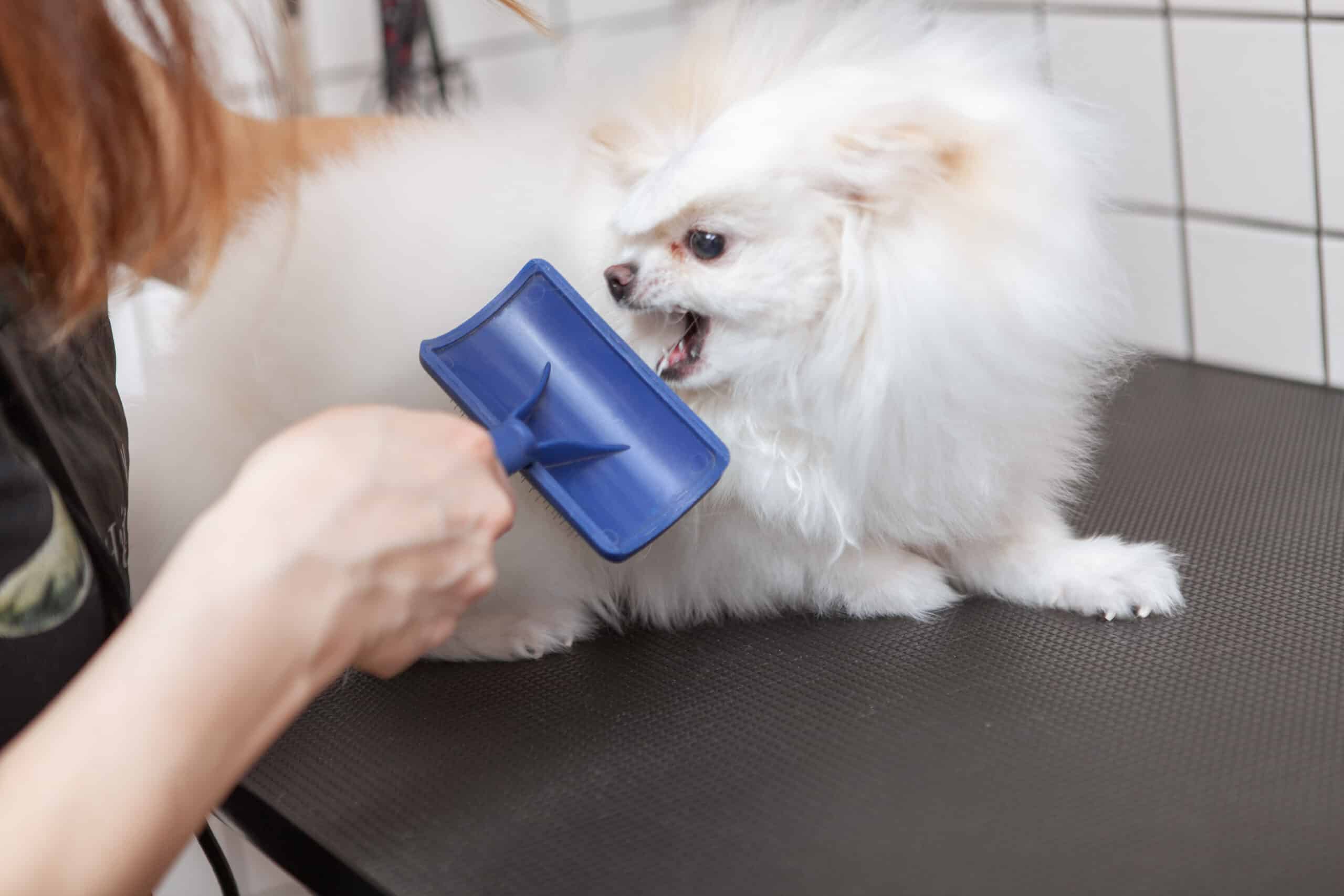
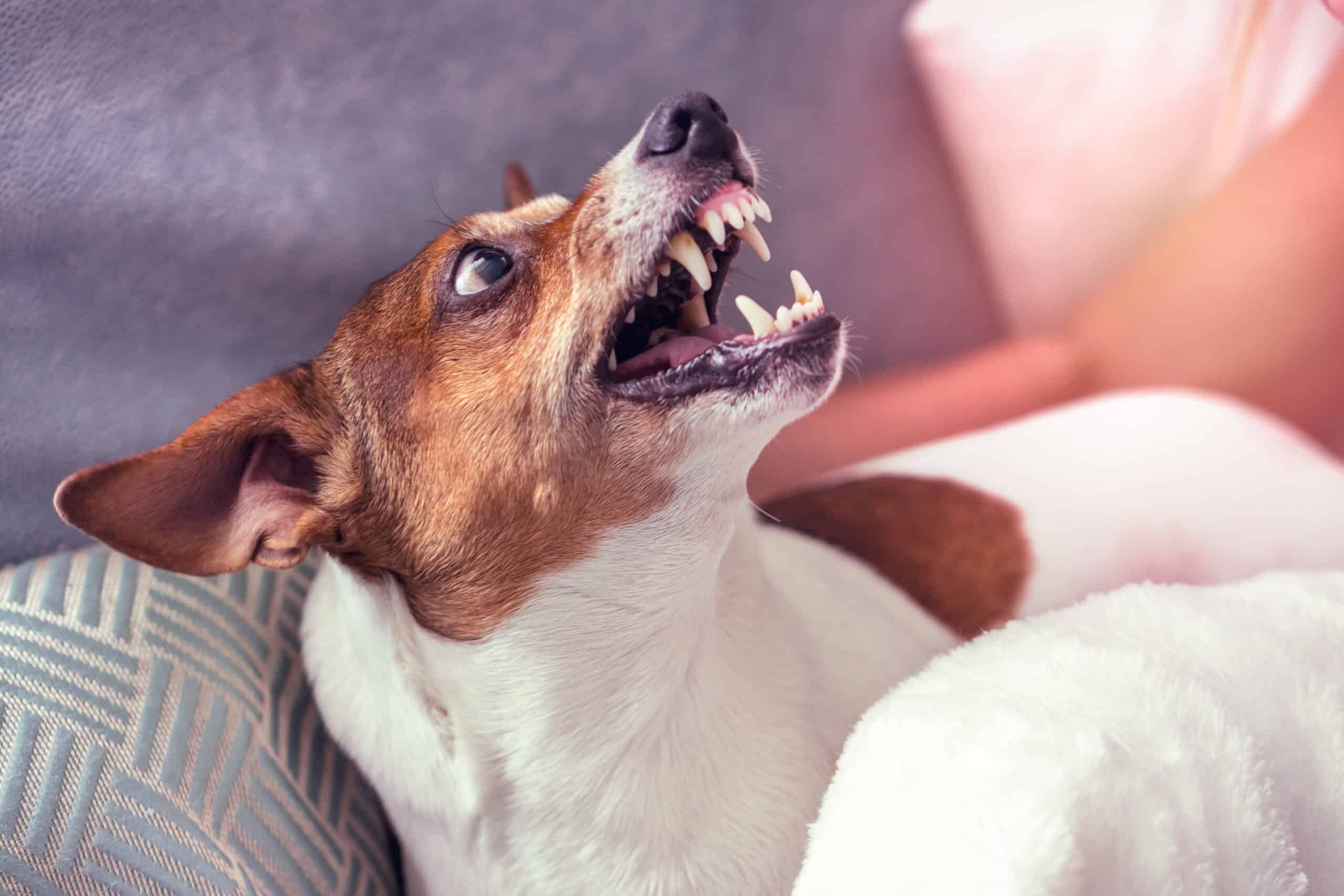
- Defensive aggression: biting, snapping, or growling during handling – while undesirable, this suggests a significant negative association to grooming tasks that requires more advanced behaviour modification.
- Generalised fear: avoidance of being touched in everyday situations – it has been noted that dogs typically struggle with similar touch-based activities and scenarios after a significantly traumatic grooming experience.
- Shutdown behaviour: learned helplessness where the dog dissociates completely – this is usually mistaken for cooperation however, to a more trained eye, can be quickly identified based on how the dog is expressing behaviours in the grooming context.
Research by Overall (2013) and other veterinary behaviourists confirm that painful grooming experiences can create lasting behavioural changes, sometimes requiring months, even years, of behaviour modification to address, and HGA Students and Graduates agree – grooming trauma can often result in long-lasting, often chronic behavioural consequences that make future grooming sessions incredibly difficult, if not, impossible.
The Ripple Effect
The consequences don’t stop at the grooming salon either!
As noted earlier, one significant traumatic event at the groomers can result in a dog associating similar activities the same way.
For example, dogs can:
- Become difficult to groom at home with their guardians which can lead to neglect out of fear of being bitten.
- Resist veterinary examinations thus preventing guardians from taking their dog to routine appointments unless absolutely necessary out of fear of being judged.
- Show aggression towards family members during routine care which can put younger members of a household at greater risk if careful boundaries are not in place.
- Develop generalised anxiety disorders (Landsberg et al., 2013) which can be expressed through various, often bizarre, behaviours such as excessive licking, humping and similar OCD behaviours.
With this in mind, when we are painfully de-matting a dog, we’re not just affecting one isolated grooming session, we’re potentially impacting the dog’s entire relationship with handling and care.
The Welfare-First Approach
Defining Animal Welfare
The Five Domains of The Animal Welfare model (Mellor et al., 2020) provides a comprehensive framework for assessing welfare that considers:
- Nutrition
- Physical environment
- Health
- Behavioural interactions
- AND, Mental state
Based on this model, de-matting negatively impacts (at least) three of these domains:
- Health (through skin damage and pain)
- Behavioural interactions (through restraint and significant traumatic experiences), and
- Mental state (through fear, anxiety, and prolonged distress).
Professional Responsibility
As grooming professionals, we have an ethical obligation to prioritise the dog’s welfare over aesthetic outcomes and/or dog guardian preferences and expectations.
That being said, we are also obligated to explain to guardians why we decide a specific approach to care so to allow for total transparency.
This means:
- Honest conversations with clients about the realities of the de-matting process
- Recommending humane alternatives such as clipping, even when it’s not what the
carer wants to hear - Refusing to de-matt when it would cause significant distress or harm
- Educating clients about prevention and maintenance
The British Veterinary Association and animal welfare organisations consistently emphasise that no cosmetic outcome justifies causing an animal pain or distress (RSPCA, 2021), so it begs the question:
Why does the professional grooming industry, not respect this need?
The Comfort Groom
Let it be said here and now: clipping a matted coat is not “giving up”.
It’s making a welfare-informed decision for the benefit of the dog, and it’s also acknowledging the significance of the grooming experience and how it influences future grooming sessions.
When we clip off matting we:
- Minimise pain and distress by reducing handling time
- We prevent skin damage from prolonged manipulation
- Preserve the dog’s trust in grooming and handling
- Allow the skin to heal from any existing damage
- Give the dog a fresh start with (hopefully) a proper coat maintenance plan in place
Yes, the dog will have a shorter coat but that’s temporarily – hair grows back.
Trust, on the other hand, is far harder to rebuild.
Education and Prevention
The ultimate goal isn’t just to respond humanely to matting, it’s to prevent matting altogether.
Client cooperation can be established through raising awareness of the health risks of coat neglect and by encouraging at-home grooming maintenance between professional appointments.
In my course, I strongly encourage groomers to offer ‘Grooming Masterclasses’ to all of their clients. Grooming Masterclasses should be arranged not long after trust has been established between a dog and the groomer (ideally within the first couple of months).
Grooming masterclasses are an opportunity to educate the dog carer on basic skin and coat care, demonstrate holistic protocol and provide them with opportunities to practice technique while under groomer supervision.
While some carers may be resistant to paying for such a service, by reinforcing the benefits of synchronised care while also emphasising that grooming doesn’t start and end in a professional salon, I’ve found that 99% of dog carers can be convinced to at least try.
The benefits of these classes far outweigh the financial investment – if a dog carer is serious about achieving low-stress, cooperative and enjoyable grooming sessions for their long-term, and never wants to risk having their dog matted, it really is a no-brainer.
Additionally, groomers should seriously consider:
- Keeping motivation and encouragement up through the use of a Bespoke Holistic Grooming Planner
- Providing dog carers ample opportunity to ask questions and receive additional support through the implementation of a support service
- Implementing a consistent grooming schedule that caters to the needs of the dog and dog carer
- Opting for realistic trims over more complex, show-type trims where required and having confidence in their decision
When we shift the conversation from “saving the coat” to “protecting the dog” we safeguard our integrity and reputation.
Success is then measured by a groomer’s ability to provide the best standard of care, rather than how well a coat has been styled to breed standard perfection.
Choosing Compassion Over Cosmetics
Ultimately, every single time we pick up a tool we make a choice that will influence the experience the dog in front of us has.
The question is whether our decision prioritises how the dog looks or how the dog feels.
The science is clear, the behavioural evidence is compelling and our ethical responsibility is unambiguous.
So what will you do?
Learn More with The Holistic Grooming Academy
If you would like to learn more about HGA Philosophy, Behaviour Grooming Theory and/or Holistic Grooming Protocol, why not join our FREE HGA Skool Community here and gain instant access to a range of amazing resources including (but not limited to):
- Holistic Grooming Library – a resource hub with various holistic grooming demonstrations of groomers around the world actively practicing our approach every single day.
- Access to Expert Q&As – join as a spectator as we talk all things ‘holistic dog care’ to some of the world’s most inspiring and innovative pet industry experts!
- Engaging Community – connect and network with both guardians and professionals with a passion for welfare-driven care for their beloved dogs.
And so much more!
Alternatively, why not have a look at my available books and start learning how to make grooming less stressful for dogs today.
References
Bergamasco, L., Osella, M.C., Savarino, P., Larosa, G., Ozella, L., Manassero, M., Badino, P., Odore, R., Barbero, R. and Re, G. (2010) ‘Heart rate variability and saliva cortisol assessment in shelter dog: human-animal interaction effects’, Applied Animal Behaviour Science, 125(1-2), pp. 56-68.
Blackwell, E.J., Twells, C., Seawright, A. and Casey, R.A. (2013) ‘The relationship between training methods and the occurrence of behavior problems, as reported by owners, in a population of domestic dogs’, Journal of Veterinary Behavior, 8(3), pp. 142-149.
Dreschel, N.A. (2010) ‘The effects of fear and anxiety on health and lifespan in pet dogs’, Applied Animal Behaviour Science, 125(3-4), pp. 157-162.
Hellyer, P., Rodan, I., Brunt, J., Downing, R., Hagedorn, J.E. and Robertson, S.A. (2007) ‘AAHA/AAFP pain management guidelines for dogs and cats’, Journal of the American Animal Hospital Association, 43(5), pp. 235-248.
Landsberg, G., Hunthausen, W. and Ackerman, L. (2013) Behavior problems of the dog and cat. 3rd edn. Edinburgh: Elsevier Saunders.
Lloyd, D.H. (2008) ‘Canine skin structure and function’, in Guaguère, E. and Prélaud, P. (eds.) A practical guide to canine dermatology. Paris: Merial, pp. 1.1-1.8.
Mellor, D.J., Beausoleil, N.J., Littlewood, K.E., McLean, A.N., McGreevy, P.D., Jones, B. and Wilkins, C. (2020) ‘The 2020 Five Domains Model: including human-animal interactions in assessments of animal welfare’, Animals, 10(10), 1870.
Miller, W.H., Griffin, C.E. and Campbell, K.L. (2013) Muller and Kirk’s small animal dermatology. 7th edn. St. Louis: Elsevier.
Monteiro-Riviere, N.A., Bristol, D.G., Manning, T.O., Rogers, R.A. and Riviere, J.E. (2006) ‘Interspecies and interregional analysis of the comparative histologic thickness and laser Doppler blood flow measurements at five cutaneous sites in nine species’, Journal of Investigative Dermatology, 93(5), pp. 582-586.
Overall, K.L. (2013) Manual of clinical behavioral medicine for dogs and cats. St. Louis: Elsevier.
RSPCA (2021) RSPCA welfare standards for dogs. Horsham: RSPCA.
Have Your Say!
What are your thoughts on de-matting practices in the grooming industry? How do you approach these conversations with clients? Share your experiences in the comments below.