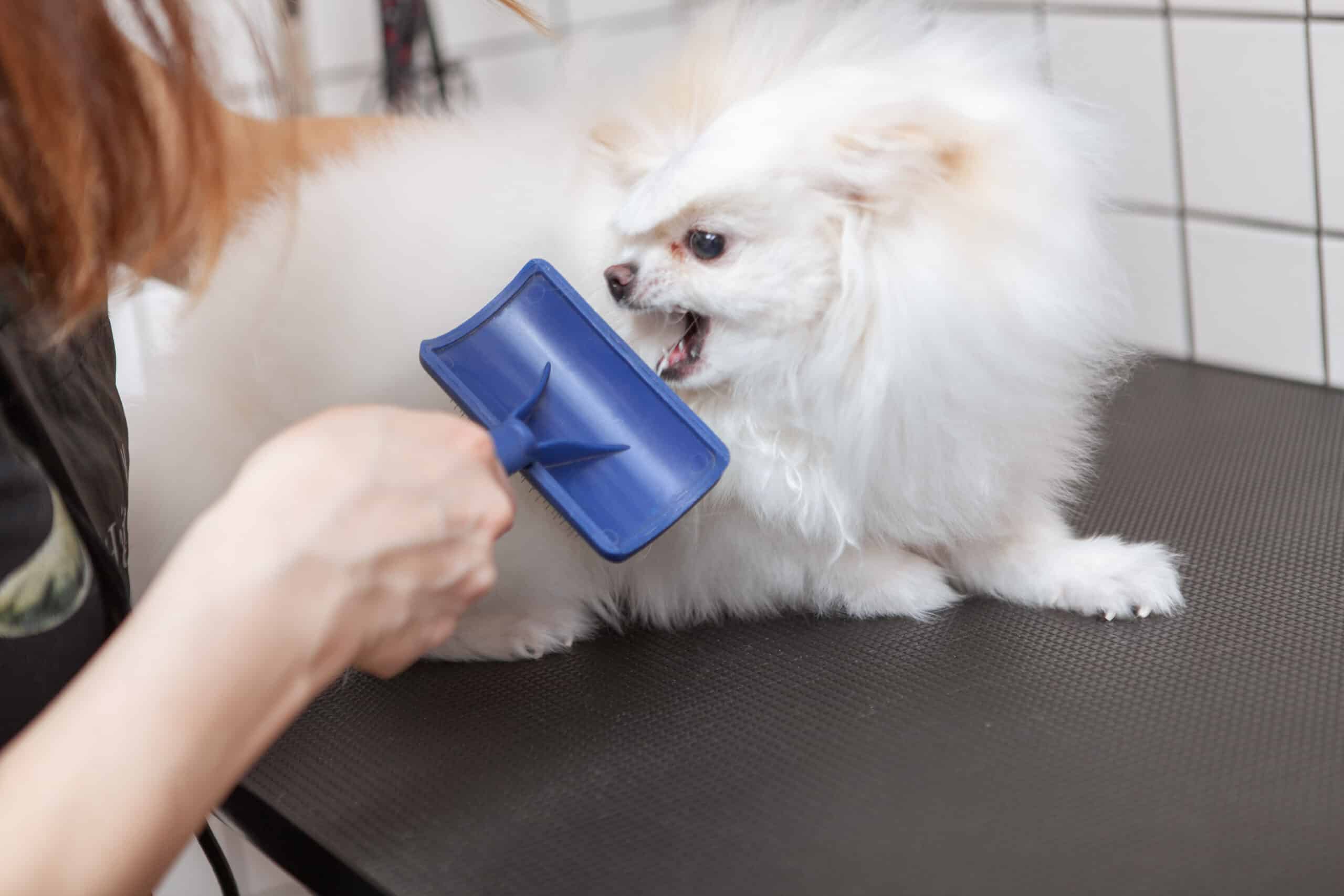
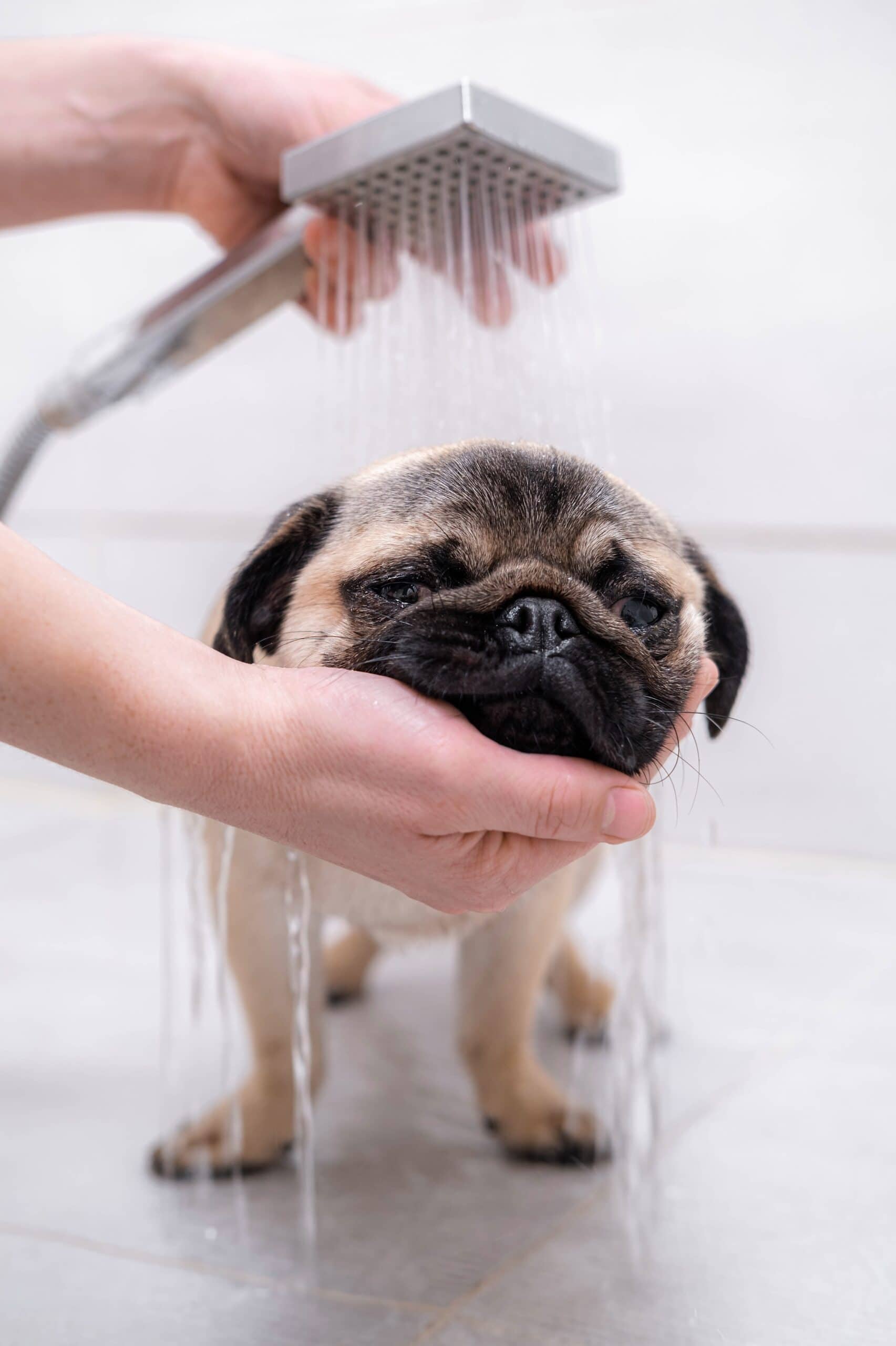
It’s easy to assume that the responsibility is solely on your professional groomer to ensure that your dog enjoys the grooming experience but did you know that research consistently demonstrates that successful behaviour modification in dogs requires environmental consistency across all contexts? (Herron et al., 2009). This means that if training and/or desensitisation happens only in the grooming salon but not at home, progress will stall or regress.
Therefore, one of the biggest roles in helping your dog overcome their fear of grooming, is the role in which you take to help make their transition better.
In this blog piece, I want to decipher the reasons why community effort is as important in achieving low-stress grooming results, and ways you can begin to work with your dog at home for long-term, meaningful, grooming success.
The Science Behind Why Your Support Matters
Before I dive into the practical aspects, let’s understand the neuroscience and behavioural psychology that makes your involvement absolutely essential,
Learning Doesn’t Happen in Isolation
Dogs don’t automatically generalise learning from one context to another (Deldalle and Gaunet, 2014), this means that even if your dog learns to tolerate nail trimming at your groomer’s salon, they won’t necessarily, automatically, accept it at home, or even in a different room at the grooming salon in the future.
This phenomenon, called context-dependent learning, means that desensitisation and counter-conditioning must be practised across multiple environments to be truly effective.
Research in applied animal behaviour demonstrates that consistent reinforcement across contexts significantly accelerates behaviour modification and increases the likelihood of long-term success (Blackwell et al., 2008). When you practise grooming-related tasks at home using the same positive approach your holistic groomer employs, you’re not just “helping out”, you’re providing essential repetition that allows your dog’s brain to form new, positive neural pathways.
The Stress Accumulation Effect
Here’s something critical that many dog carers don’t realise: stress is cumulative.
Research by Beerda et al. (1997) demonstrates that dogs experiencing chronic stress show elevated cortisol levels and increased fear responses over time. When your dog experiences negative grooming interactions at home (even seemingly minor ones) those experiences don’t exist in isolation. They compound, raising your dog’s baseline stress level and making them more reactive during professional grooming sessions.
For example: every time you chase your dog with a brush, force them into the bath, or restrain them for nail trimming without proper desensitisation, you’re depositing stress into their “stress bank account.” Eventually that account overflows, and what might have been manageable anxiety becomes full-blown panic (Overall, 2013).
The Power of Predictability
Dogs thrive on predictability and consistency (Rooney and Cowan, 2011). When the approach to grooming tasks is consistent between home and professional settings, such as using the same:
- cues
- reinforcement strategies
- respect for their communication
Dogs experience less anxiety because they can predict what will happen and trust that their choices will be respected.
This is why synchronised care between you and your holistic groomer is so powerful! You’re creating a consistent, predictable framework that allows your dog to relax and participate cooperatively.
What Are the Benefits of Taking On Responsibility?
Having an element of responsibility towards how successful a grooming session goes for your dog is not only an incredibly empowering feeling, but it’s also a feeling of pride.
Knowing that you’ve played a key role in helping your dog overcome grooming-related fears can be such a rewarding thing. I’ve watched hundreds of dog carers just like you embrace homework tasks, notice a significant positive difference in their overall relationships with their dogs as a result, and feel amazing for it.
The Relationship Transformation
Research consistently shows that cooperative care training strengthens the human-animal bond (Yin, 2009). When you engage in positive, choice-based grooming interactions with your dog, you’re not just teaching them to tolerate grooming, you’re also building trust, improving communication, and deepening your relationship.
Studies on attachment theory in dogs demonstrate that dogs who experience predictable, positive interactions with their carers show more secure attachment styles and lower stress responses in novel situations (Rehn et al., 2013). Therefore, the time you invest in grooming homework isn’t just about grooming, it’s about becoming a more trustworthy, reliable partner to your dog.
Setting the Standard for Others
At its most basic, taking some of the responsibility is your way of saying, “I acknowledge how beneficial a cooperative grooming experience is for my dog, and I am willing to do all that I can to help the groomer and, most importantly, my dog get there.”
But let’s add a little more depth to that – working alongside your holistic groomer not only shows them your commitment to safeguarding the wellbeing of your dog, but it also sets the standard for other dog carers with dogs who struggle as well.
If you can do it, why can’t they?
Sadly, there are thousands upon thousands of dog carers who still believe that the responsibility in grooming their dog falls solely on their chosen groomer. This damaging belief means that over time, thousands upon thousands of dogs will eventually suffer due to a lack of synchronised care.
The Real-World Impact of Inconsistent Approaches
Let’s make it clear: failing to reinforce positive experiences with grooming tasks at home will either bring progress for your dog to a monumental halt, or it will result in them finding the process progressively more frightening as time goes on due to negative experiences outside the holistic grooming environment.
A Real-World Example
A dog who attends a bi-weekly grooming appointment with an HGA Approved Groomer is introduced to various grooming tasks using a positive and carefully devised bespoke care plan. Progress is being made, and the dog is learning to trust, communicate, and participate cooperatively.
Then the dog carer books a caravan stay. During a walk, the dog gets incredibly mucky. Having no choice but to bathe the dog, the dog carer gets a hose and attempts to clean the dirt off their dog’s coat. The dog struggles the entire time and by the end of the session, the carer is both frustrated and exhausted.
At the next grooming appointment, the holistic groomer attempts to carry on where they left off and takes the dog through to the room where the bath is. The dog notices the shower hose immediately and panics before a frenzy ensues.
The groomer is shocked and feels very confused, only to be told what happened at the caravan just a few days prior.
As a result of this negative experience with the dog carer, the dog has taken ten steps back, and the holistic groomer must start the desensitisation process all over again.
This isn’t about blame, but it is about understanding how learning works.
Research in classical conditioning demonstrates that a single highly aversive experience can undo weeks even months of careful desensitisation work (Bouton, 2004). This phenomenon, called spontaneous recovery of fear, explains why one bad experience can have such a devastating impact on progress.
If you would like to learn exactly how to handle situations like this without undoing your dog’s progress, consider purchasing my latest book, Help! My Dog Hates Grooming on Amazon today. This resource provides step-by-step guidance for dog carers on how to support their dog through grooming challenges at home without triggering fear or regression.
Why Should You Care About Supporting Holistic Grooming Processes?
I’m all about “all for one and one for all,” yet I can’t make you care about wanting to help support your holistic groomer. But let me give you some significant reasons that are backed by science to hopefully get you seeing things from my perspective.
Holistic Grooming Is Important Because:
- It ensures your dog receives a bespoke care plan that considers their needs over and above any aesthetic-based goal.
Research demonstrates that individualised behaviour modification plans are significantly more effective than one-size-fits-all approaches (Herron et al., 2009). Every dog has unique triggers, learning history, and emotional responses. Holistic groomers assess each dog individually and create tailored plans that respect their specific needs. - It gives your dog the opportunity to overcome significant and often chronic emotional and psychological fears in a positive and dog-centred way.
Studies on fear and anxiety in dogs show that positive reinforcement-based desensitisation and counter-conditioning are the most effective methods for reducing fear responses whilst also improving overall welfare (Blackwell et al., 2008). Punishment-based or force-based approaches may suppress behaviour temporarily but increase anxiety and damage trust long-term. - It provides your dog with a safe space to thrive whilst also helping to make other high-stress scenarios more low-stress.
Research on resilience in dogs demonstrates that positive experiences in one stressful context can improve coping skills in other contexts (Rooney and Cowan, 2011). When your dog learns that they have agency and choice during grooming, they become more confident and adaptable in other situations too.
Holistic Grooming at Home Through a Synchronised Approach
How your support at home affects your dog is just as important as understanding what exactly holistic grooming is and why it’s essential.
A Real-World Success Story
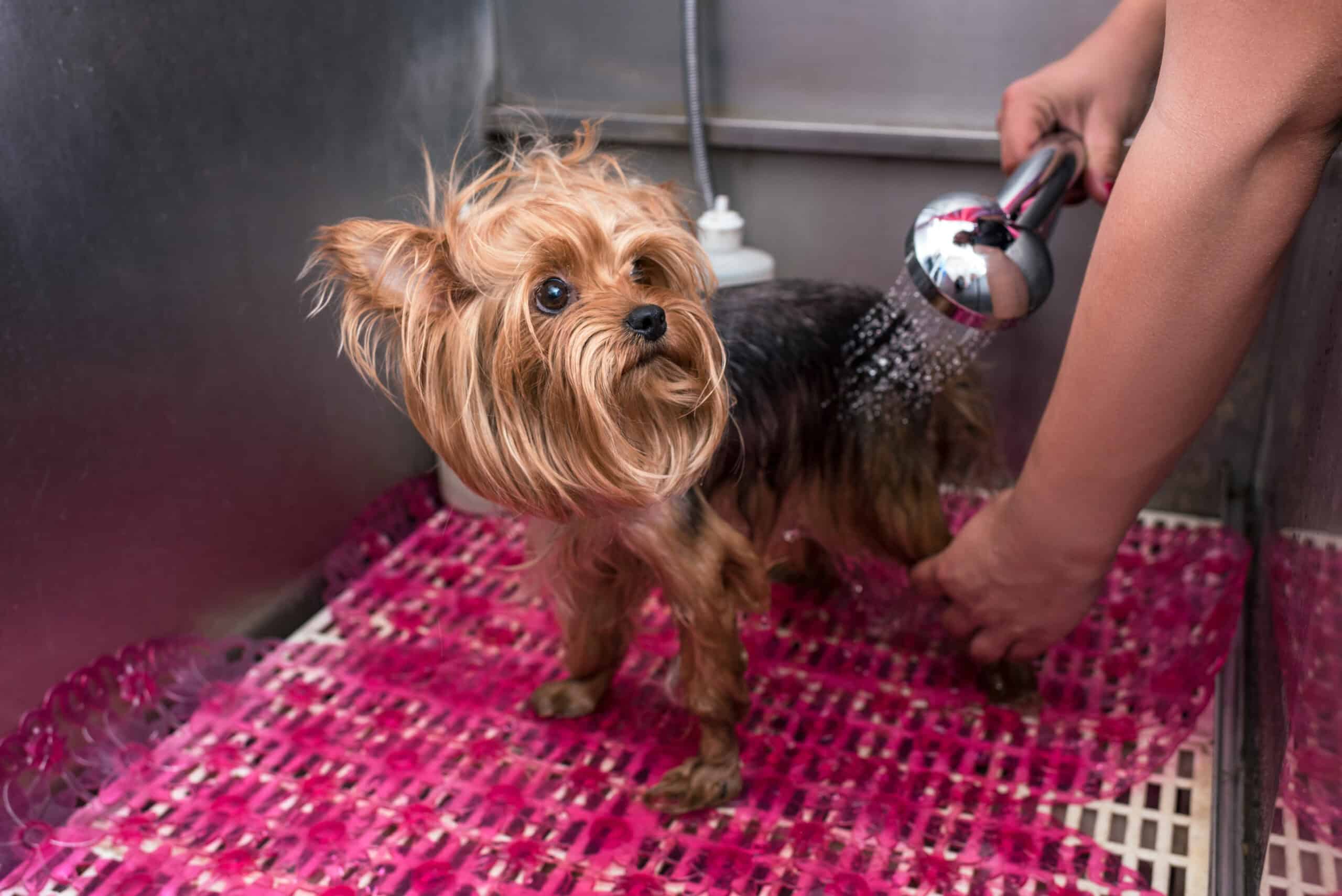
Snoopy is terrified of running water and cannot bear to be washed in a bathtub. The sight of the shower hose is enough to escalate his emotions way over threshold, and he begins to thrash around helplessly in an attempt to escape what he perceives to be a threat.
The HGA Approved Groomer decides that she needs to begin desensitising Snoopy to the sight of a shower hose, the noise of running water, and eventually both combined.
However, between scheduled desensitisation sessions at the groomer, Snoopy is exposed to various encounters with flowing water, which sets his progress back substantially since his last session.
The solution? To help prevent such a setback going forward, Snoopy’s carer is shown how to perform the specific desensitisation exercise at home. As homework, they work on introducing the sight and sound of flowing water using this positive approach instead.
Snoopy’s dog carer commits to the homework assigned, and they both notice great progress at the next grooming session when Snoopy is able to stand next to the shower hose whilst the water is running.
The Science of Synchronised Care
The groomer above applies a very common desensitisation exercise that combines counter-conditioning with positive reinforcement whenever the dog is in the presence of running water, and the dog carer does the same at home—this is synchronised care and approach.
Research demonstrates that behaviour modification success rates increase dramatically when training is consistent across environments and handlers (Herron et al., 2009). The more frequently your dog experiences positive associations with grooming-related stimuli, the faster their fear response diminishes and is replaced with calm, cooperative behaviour.
Whilst the dog carer may not have initially thought it was ever possible to help their dog overcome such a deep-rooted phobia, team effort has proved to be effective in the rehabilitation of their dog.
If you’re wondering how to implement these techniques at home, Help! My Dog Hates Grooming walks you through the exact desensitisation and counter-conditioning protocols used by HGA approved holistic groomers, including clear instructions, troubleshooting tips, and real-world examples you can follow step-by-step.
Science-Backed Ways to Support Your Holistic Groomer and Dog
Stop “Groomer-Hopping” When Things Get Tough
The Science: Research demonstrates that consistency in handling and approach is critical for successful fear reduction (Overall, 2013). When you switch groomers frequently, your dog must constantly adapt to new environments, new people, new handling styles, and new routines—all of which increase stress and prevent the formation of positive associations.
An HGA Approved Groomer has invested over 320 hours of dedicated and specialised training covering a broad range of science-backed theory and approach (that’s over and above their official and traditional grooming training, by the way). They have invested thousands of pounds in their continual professional development just so that they can support your dog without contributing to their stress and trauma.
HGA Approved Groomers are not “just groomers”—they are specialists with a very niched set of skills and therefore should, and need to, charge more for their expertise. Truth be told, they are a rare kind of groomer and deserve to be respected, so please do not make the mistake of belittling them or trying to haggle with them regarding their pricing.
If they are genuinely too expensive for you, move on—but be aware that if your dog is genuinely struggling with grooming processes, going to a more conventional groomer might just make things a whole bunch worse, and more expensive for you long-term.
Be Willing to Listen and Take On Advice, Especially When It’s Uncomfortable
The Science: Research in veterinary communication demonstrates that client compliance with professional recommendations is one of the strongest predictors of successful treatment outcomes (Shaw et al., 2004). When dog carers resist or ignore professional advice, progress stalls.
Sometimes things change, and in the pet care world, standards change all the time. That means what was once the “status quo” five years ago may very well be outdated and debunked today.
If your HGA Approved Groomer is advising you to stop doing something and instead trying to show you an alternative approach, try to keep an open mind and at least give it a chance! Remember, these groomers have been specially trained to ensure that they are equipped with the most modern and science-backed approach to dog care and, as such, are fully competent in providing you with the best advice when it comes to helping your dog overcome grooming-related fears.
A conflict of ethics is understandable at times—whether it’s down to culture, age, or something else but understanding that your HGA Approved Groomer is only offering you advice to help safeguard the wellbeing of your dog will help you to see things from a different perspective and, hopefully, put a little faith in the groomer.
Be Willing to Get Involved and See the Benefits for Yourself
The Science: Studies on behaviour modification demonstrate that training frequency and consistency are among the most significant predictors of success (Hiby et al., 2004). The more opportunities your dog has to practise new skills in a positive context, the faster they learn and the more durable that learning becomes.
As I’ve mentioned, much of the success of your dog’s rehabilitation relies on your willingness to do homework to help reinforce learning.
Don’t look at a regular professional grooming schedule as an alternative to grooming at home, but instead use time at home to further support all that your dog is covering during a professional grooming session.
The more time you put in to providing your dog with additional opportunities to learn in a positive way, the more quickly your dog will progress and overcome any fears. What’s more, be honest and transparent about how grooming sessions at home are going, and don’t be afraid to contact your groomer and ask for further support and guidance.
Many HGA Approved Groomers offer “Grooming Masterclasses” where dog carers can receive practical training to help ensure they know how to safely groom their dog using various grooming tools.
Not sure where to start with at-home grooming practice? Help! My Dog Hates Grooming is specifically written for dog carers like you, with practical exercises, troubleshooting guides, and clear explanations of the science behind each technique – it’s like having a holistic groomer in your pocket, guiding you every step of the way!
Key Takeaways
The key takeaways to remember from this post are that your dog relies on your support and a synchronised approach to grooming tasks.
This means it’s crucial that you listen and respect your holistic groomer and resist belittling them when they’re trying to help you.
The Science Is Clear
Research in applied animal behaviour, learning theory, and veterinary behavioural medicine all point to the same conclusion: successful behaviour modification requires consistency, repetition, positive reinforcement, and collaboration between all stakeholders in a dog’s care (Herron et al., 2009; Overall, 2013; Yin, 2009).
When you work alongside your holistic groomer—practising at home, following their guidance, and maintaining consistency—you’re not just helping your dog overcome grooming fears.
You’re:
- Strengthening your bond with your dog
- Building their confidence and resilience
- Improving their overall welfare and quality of life
- Setting them up for success in other stressful situations
- Becoming a more skilled, knowledgeable, and empathetic dog carer
The Holistic Grooming Academy’s Mission
The Holistic Grooming Academy’s mission is to raise awareness of the importance of our Holistic Grooming Protocol and explain the difference between it and other holistic grooming practices, as well as conventional grooming processes.
Our HGA Approved Groomers really are a different kettle of fish when it comes to their competence and knowledge in helping dogs with grooming-related fears, and we strongly encourage both dog carers and pet professionals to respect their specialised set of skills and be open to working with them in the rehabilitation of dogs.
Your Next Steps
If you would like to learn more about the Holistic Grooming Protocol, you can visit The Holistic Grooming Academy website here. And if you would like to see where your closest HGA Approved Groomer is, you can check out The Holistic Groomer’s Directory.
Ready to become your dog’s best advocate and support partner? Grab your copy of Help! My Dog Hates Grooming today and discover how you can transform grooming from a source of stress into an opportunity for connection, trust, and cooperation. Available now on Amazon worldwide!
References
Beerda, B., Schilder, M.B.H., Van Hooff, J.A.R.A.M., De Vries, H.W. and Mol, J.A. (1997) ‘Manifestations of chronic and acute stress in dogs’, Applied Animal Behaviour Science, 52(3-4), pp. 307-319. doi: 10.1016/S0168-1591(96)01131-8.
Blackwell, E.J., Twells, C., Seawright, A. and Casey, R.A. (2008) ‘The relationship between training methods and the occurrence of behavior problems, as reported by owners, in a population of domestic dogs’, Journal of Veterinary Behavior, 3(5),
pp. 207-217. doi: 10.1016/j.jveb.2007.10.008.
Bouton, M.E. (2004) ‘Context and behavioral processes in extinction’, Learning & Memory, 11(5), pp. 485-494. doi: 10.1101/lm.78804.
Deldalle, S. and Gaunet, F. (2014) ‘Effects of 2 training methods on stress-related behaviors of the dog (Canis familiaris) and on the dog–owner relationship’, Journal of Veterinary Behavior, 9(2), pp. 58-65. doi: 10.1016/j.jveb.2013.11.004.
Herron, M.E., Shofer, F.S. and Reisner, I.R. (2009) ‘Survey of the use and outcome of confrontational and non-confrontational training methods in client-owned dogs showing undesired behaviors’, Applied Animal Behaviour Science, 117(1-2), pp. 47-54. doi: 10.1016/j.applanim.2008.12.011.
Hiby, E.F., Rooney, N.J. and Bradshaw, J.W.S. (2004) ‘Dog training methods: their use, effectiveness and interaction with behaviour and welfare’, Animal Welfare, 13(1),
pp. 63-69.
Overall, K.L. (2013) Manual of Clinical Behavioral Medicine for Dogs and Cats. St. Louis: Elsevier.
Rehn, T., Handlin, L., Uvnäs-Moberg, K. and Keeling, L.J. (2013) ‘Dogs’ endocrine and behavioural responses at reunion are affected by how the human initiates contact’, Physiology & Behavior, 124, pp. 45-53. doi: 10.1016/j.physbeh.2013.10.009.
Rooney, N.J. and Cowan, S. (2011) ‘Training methods and owner–dog interactions: Links with dog behaviour and learning ability’, Applied Animal Behaviour Science, 132(3-4), pp. 169-177. doi: 10.1016/j.applanim.2011.03.007.
Shaw, J.R., Adams, C.L., Bonnett, B.N., Larson, S. and Roter, D.L. (2004) ‘Use of the
Roter interaction analysis system to analyze veterinarian-client-patient communication in companion animal practice’, Journal of the American Veterinary Medical Association, 225(2), pp. 222-229. doi: 10.2460/javma.2004.225.222.
Yin, S. (2009) ‘Low stress handling, restraint and behavior modification of dogs and cats’, Cattle Dog Publishing, Davis, CA