All types of dog collar have the potential to cause harm when the dog pulls on the lead.”
Dr Anne Carter, Nottingham Trent University’s School of Animal, Rural and Environmental Sciences
As professional groomers committed to holistic and ethical dog care, understanding the physical, physiological, emotional, and psychological implications of not just our own tools, but training tools that are being used outside the salon is crucial in achieving low-stress grooming results.
Conventional grooming processes often encourage the use of neck nooses when working with dogs on grooming tables and during bath time, as well as the use of slip leads for transporting dogs from one post to another, as physical safety devices in place to keep dogs free from injury and/or harm. Meanwhile, The Holistic Grooming & Behaviour Protocol goes against this tradition and encourages students to ditch the neck devices entirely and opt for harnesses and/or cooperative methods of handling instead.
This article aims to explore the argument for the eradication of neck devices not only within the grooming sector, but beyond.
The Short-Term vs. Long-Term Welfare Question
While there are arguments for the use of neck devices, including a quicker solution to pulling (this may actually be true in many cases) and also the common belief that harnesses cause more pulling and are therefore less effective (which studies have proven is untrue), the long-term implications of repetitive pressure on the neck will eventually lead to more concerning problems including chronic pain and stress and should not be disregarded (Doherty et al., 2017).
We might successfully “train” a dog to behave in a more desirable way through the use of positive punishment and negative reinforcement, for example, pressure when the dog pulls and a lack of pressure when a dog walks to heel, but we know that chronic pain and stress can disrupt the quality of life and reduce the lifespan of a dog (McMillan, 2017).
The question we should be asking ourselves is:
Do we want to achieve short-term solutions, or are we invested in the quality of care (and life) an animal has long term?
What the Science Tells Us About Neck Restraints All Neck Devices Cause Harm, Regardless of Padding
A landmark study involving the University of Nottingham showed that ANY pressure on the neck through the use of any neck tool, regardless of how padded it is, is harmful to a dog (Carter et al., 2020). While this study was focused on dogs walking on a leash outdoors, it’s absolutely transferable to the context of professional grooming, and I would argue that the potential to cause more harm is evident within grooming environments since dogs tend to find those spaces more triggering and intense in nature (Rooney et al., 2016).
What we can expect when it comes to risks and the long-term impact of neck devices is significant psychological, physical, physiological, and behavioural consequences that not only directly influence their experience being groomed but can also lead to more chronic, long-term health disorders (Grohmann et al., 2013).
Key Research Findings on Collar Pressure and Pain
In the Nottingham-based study, it was concluded that collars and slip leads all contributed to pain in dogs, regardless of material, padding, thickness, and/or pressure applied. While there were varying degrees of pressure depending on direction of movement and force, it was agreed that harm could still be inflicted nonetheless (Carter et al., 2020).
A study was also carried out to explore the potential pressure of three separate types of collar by researchers at Writtle University College in 2019. They found that the highest ‘mean force’ pressure on a dog’s neck occurred when the dog was performing circles and/or resisting against the collar during walks (as we often see within a grooming context on the grooming table). In the same study, researchers also discovered that the more padded collar wasn’t any more effective in reducing force and pressure to the neck but instead resulted in concentrated pressure to specific points of the neck (Hunter et al., 2019).
Nerve Damage and Airway Obstruction Risks
Dogs instinctively resist pressure from neck restraints, and with this in mind, it has been shown that the use of neck tools has the potential to inflict harm on a dog such as nerve damage or temporary airway obstruction (American Veterinary Society of Animal Behaviour, 2007).
Research has revealed that as little as 2g of weight can obstruct a nerve’s function by up to 50% (Kaufman, 2007). Pulling and/or tugging against a neck restraint can cause significant neck trauma to a dog, especially when considering that the spinal and cervical nerves are located just under where the pressure from a neck restraint comes from (Goody, 2013).
The Legal Case for Eliminating Neck Restraints
Given that the risk of harm is actually quite high, there is a strong argument for the eradication of all neck devices on the grounds of legislation and the law, specifically the Animal Welfare Act 2006, which states:
- Keepers and caregivers of animals must allow an animal to exhibit natural behaviours.
- Keepers and caregivers of animals must also cause no unnecessary suffering to an animal (UK Parliament, 2006).
On the basis that there is an interconnected link between physical and emotional safety (they are one and the same thing) and based on the evidence I’ve collected across various studies, it is clear that emotional safety drives physical safety and that the use of physical restraining devices alone are ineffective and potentially more harmful if an animal does not feel safe in their environment (Stellato et al., 2021).
What This Means for Professional Groomers
An emotionally safe (or secure) animal is in a physiologically calmer state, which results in a physically calmer expression of behaviour as a result. In other words, when an animal trusts their environment, there is little-to-no requirement for physical restraining devices in the context of a professional grooming environment, since the purpose of these tools is to prevent a dog escaping a perceived threat (Yin, 2009).
This is not the same as environmental safety – when risk-assessing the grooming environment, there will be various physical measures a groomer will have to take to ensure that a dog remains physically safe from harm, including the securing of windows, a locked entry system with no unattended access outdoors, the proper storing of products and tools, etc.
Therefore, the need for a reviewed and clearer description of what safety is in the context of a grooming salon is paramount to prevent confusion and ensure that a dog’s needs are not ignored (Overall, 2013).
The Physiological Implications of Neck Restraints
There are various physiological implications of neck pain that can often quite quickly be identified by a registered vet.
Neck pain can be expressed subtly or more obviously depending on severity of the pain, context, and an individual’s pain threshold.
Therefore, it’s strongly advised to be aware of all of the potential symptoms to look out for, including:
- Increased body temperature based on what the dog’s normal temperature typically is
- Neck muscle spasms
- Muscle tension, strain, and spasms down the spine due to uneven weight distribution
- Gastrointestinal complications—typically a side-effect of medication to combat pain
- (Daniel, 2024)
The Vagus Nerve: Why Neck Restraints Are Neurologically Dangerous
We could begin to support the argument against neck restraints through an understanding of the purpose of the vagus nerve.
The vagus nerve is often referred to as the “wandering nerve”—it is the longest cranial nerve in the body, starting from the neck and extending down, through, and into all of the major organs of a dog’s body (Porges, 2011).
The vagus nerve plays a vital role in:
- Regulating heart rate and blood pressure
- Managing the fight-or-flight response
- Controlling inflammation
- Influencing emotional regulation and stress responses
- Supporting digestive function
Research in Polyvagal Theory demonstrates that the vagus nerve is central to an animal’s ability to feel safe, regulate stress, and engage socially (Porges, 2011). When neck restraints compress or irritate the vagus nerve, they disrupt these critical functions, leading to heightened stress, fear, and physiological dysregulation (Schilder and van der Borg, 2004).
Immediate and Long-Term Effects of Neck Restraints
If we use shock collars as an example tool, we know that when a shock collar is activated, it creates several concerning physiological responses.
Immediate Effects:
- Activation of the sympathetic nervous system
- Release of stress hormones (cortisol and adrenaline)
- Increased heart rate and blood pressure
- Muscle tension and potential trauma
Long-Term Consequences:
- Chronic stress response
- Compromised immune system
- Potential damage to the vagus nerve’s functioning
- Development of anxiety and fear-based behaviours (Schalke et al., 2007; Schilder
- and van der Borg, 2004)
Research demonstrates that dogs trained with aversive methods, including neck-based corrections, exhibit significantly higher cortisol levels and increased fear and anxiety behaviours compared to dogs trained with positive reinforcement (Ziv, 2017).
Author Opinion: Though neck pain can often be mistaken for back pain, it is worthwhile remembering the internal link between the neck and other major organs of the dog’s body since it is all connected. It’s not an overreaching statement to say that a dog experiencing significant neck pain will also be experiencing back pain, and I believe it would be worthwhile for vets to explore the relevance of neck devices when reviewing potential causes of neck and back pain in dogs.
The Behavioural and Physical Implications of Neck Restraints
During my research, I was lucky to interview some groomers in the United States who had been unlucky to come across various cases where a dog was suffering extreme physical complications as a result of shock collars.
It was clear from the various photos that were shared that there are severe welfare breaches happening in various parts of the world, where both professionals and carers seem to totally disregard the wellbeing of dogs for the sake of having them behave a certain way.
Their observations were clear—these dogs were demonstrating obvious signs of physical and emotional pain and distress that was having a negative impact on their grooming experience. Many of these dogs required immediate medical care, while others were displaying behaviours symptomatic of PTSD (Schilder and van der Borg, 2004).
Groomer Observations: The Impact of Shock Collars and Neck Nooses
Upon carrying out my own investigation into the behavioural impact of shock collars specifically within the grooming sector, I identified some significant similarities when discussing the experiences of various groomers around the world, including:
- Increased difficulty handling dogs around the neck area
- Heightened stress responses during grooming sessions
- Trust issues that complicated the grooming process overalL
- Physical tension in neck muscles affecting overall posture, thus a lack of ability to
- withstand prolonged grooming sessions
- Physical skin abrasions and sores that were causing the dogs considerable pain,
- leading to hypersensitivity of the affected areas
Interestingly, the same behavioural observations were made when asking holistic groomers to observe the behaviour of dogs who had previously been groomed in a more conventional way where neck nooses and/or neck restraints were also used, with many dogs instinctively resisting the use of neck nooses almost instantly (Deldalle and Gaunet, 2014).
Unfortunately, the implications of alternative neck devices, such as neck nooses, aren’t so easily identifiable, especially to an untrained eye, but that doesn’t mean that they aren’t there for all of us to observe when we learn what to look out for.
Physical Symptoms of Neck Pain in Dogs
Physically, a dog experiencing neck pain will display one or more of the following symptoms:
- Body lameness
- Body stiffness/tension
- Arched spine
- Unnatural head positioning/lowered neck
- Coat changes around the source of the pain
- Limping and/or holding one limb up and off the ground for a period of time
- Lack of appetite
Behavioural Symptoms of Neck Pain in Dogs
Behaviourally, a dog experiencing neck pain will display one or more of the following behaviours:
- A reluctance to go up and down steps
- A series of vocalisations (growls, groaning, whining)
- Anxiety and/or stress
- Quicker bite response
- Sudden resistance to otherwise normal tasks
- Hypersensitivity to physical touch
- Hiding behaviours when approaching walk time (if collar or device around neck is used)
Research demonstrates that dogs experiencing chronic pain are significantly more likely to exhibit aggression, particularly in contexts where they anticipate discomfort (Mills et al., 2020).
Grooming Considerations: Reading Canine Body Language Case Study on Identifying Stress in Grooming Photos
Conventional Grooming: Industry Standard

Photo Licence: Shutterstock
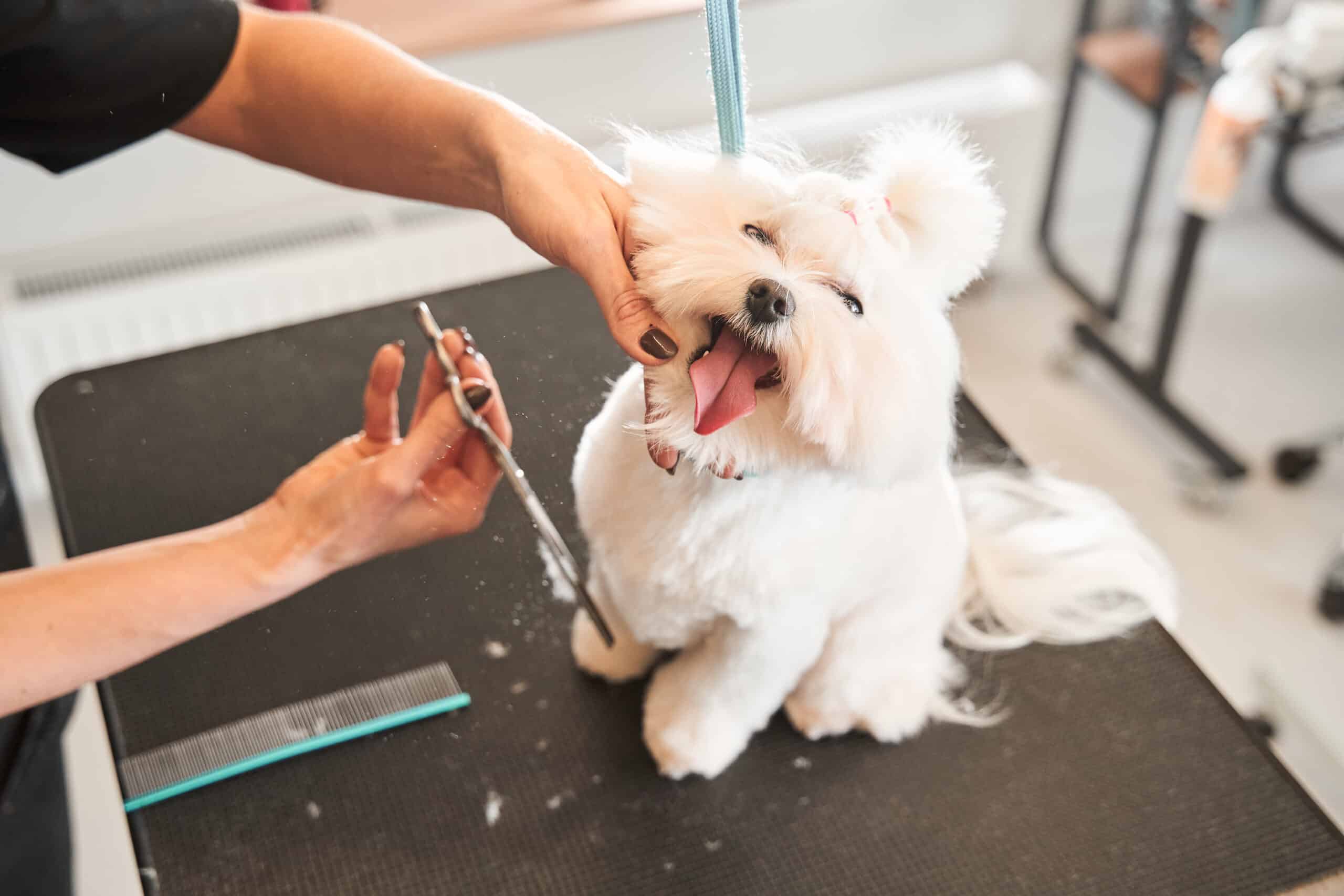
Can you identify the calming signals and discomfort indicators that the dog in Fig 1, is expressing?
You should be able to identify:
- Whale eye (visible sclera/whites of the eyes)
- Pinned ears
- Jaw tension
- Closed mouth and slight teeth baring
- Curved spine
- Tail down/tucked
- Weight distribution leaning back towards hind legs
When we consciously observe grooming photos and videos, we can quickly begin to identify and collect evidence of dogs experiencing discomfort and distress. Upon closer look, we can pinpoint elements of the approach and process, including tools used, that could be contributing to the behaviours and response we are seeing (Mariti et al., 2012).
In the above case, the groomer has the dog attached to a neck noose, which doesn’t appear to have any slack in it (see h-bar above in the photo). One of her hands appears to be holding the dog’s head from behind while the other is being used to hold and attempt to brush the dog’s neck using a metal matt breaker.
It’s easy to identify that this dog is displaying anxiety as a result of both the neck noose, additional hand restraint, and tool (Döring et al., 2009).
A Closer Look at Common Grooming Neck Restraints Cable Braid Neck Noose with Foam Cushion Padding

This tool has been designed with the best intentions, with the foam section there to help comfortably protect a dog’s neck. But as we discovered from the research published by Writtle University College, padded collar tools were ineffective in relieving pressure and instead resulted in concentrated pressure as a result of the inconsistent material around the circumference of the loop around the neck (Hunter et al., 2019).
From my experience using this device very early on in my career, I noticed quite quickly how easy it was for the foam part of this tool to travel around to the top of the neck, exposing the dog’s thyroid to the thin, braided cable of the device.
All dogs displayed signs of distress and discomfort while wearing one, and I quickly ceased using them based on my own observations.
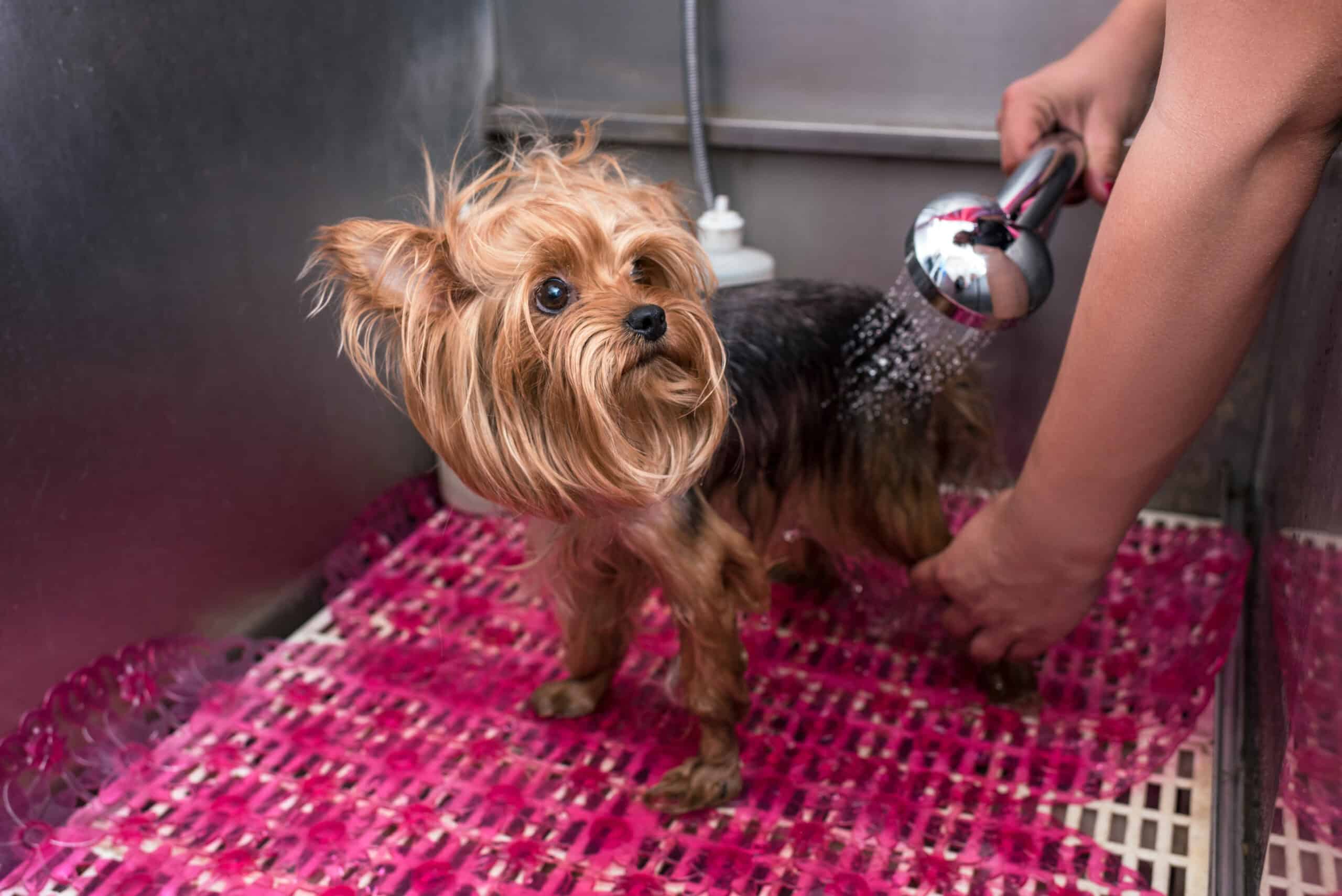
Grooming Bath Choker with Suction Cup

The name of this device alone is enough to deter most people from using this tool. However, let’s look at it more closely. This is a similar cable braid tool used during bath time to prevent a dog from escaping—it’s designed to not only inflict pressure onto a dog’s neck but also tighten, further intensifying the potential to inflict harm on a resisting dog.
Considering that most dogs will reflexively shake their bodies when wet, this additional sudden jerk of motion will put immense pressure onto the dog’s neck, thus making it one of the most dangerous restraining tools in the grooming industry today (Pauli et al., 2006).
The Alternative: Cooperative Grooming

Photo Credit: Stephanie Zikmann
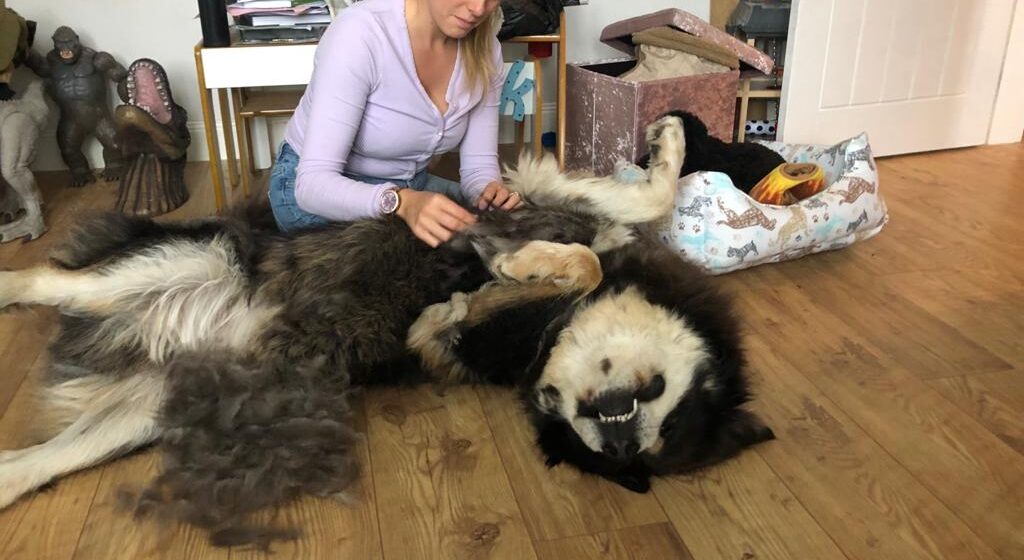
Now analyse Fig. 2 above.
Compared to Fig 1, there’s very little to observe regarding behaviours with a dog groomed cooperatively.
Based on the context and approach the dog is showing no signs of distress and appears to be relaxed in a comfortable position while the groomer carries out the grooming session (Yin, 2009).
If we take a closer look at the surroundings:
- The grooming table has been lowered to near enough ground level, and is padded with a towel for comfort and stability.
- The groomer is facing side-on to the dog which is a non-invasive way to communicate that she means no threat.
- There is space around the dog to show that she can escape should she need a break.
- There are no physical handling restraints used at all, therefore we can assume that the dog is there cooperatively.
Author Opinion: Based on everything I have learned over the years exploring the significance of physical restraining devices, I would strongly recommend that neck devices are eradicated entirely from the grooming environment (and beyond), and would instead encourage professionals to consider replacing these “safety” measures with:
- Positive reinforcement training that focuses on consent-based grooming tasks to create an emotionally safe environment (Vieira de Castro et al., 2020)
- Proper desensitisation to grooming procedures that consider the needs of dogs at any given moment (Yin, 2009)
- Regular low-stress grooming visits that help a dog gradually adjust to the environment and process (Overall, 2013)
- Use of appropriate handling techniques that consider a dog’s right to initiate contact and move away (Stellato et al., 2021)
- The careful introduction of suitable harnesses that help to keep dogs safe while supporting them physiologically for minimal pressure (Doherty et al., 2017)
- Free-roam grooming processes for dogs who are better suited to a zero-restraint approach (Yin, 2009)
- Introducing games-based training exercises to shift grooming tasks to something fun and engaging (Chiandetti et al., 2016)
The Impact of Restraint-Free Grooming on Success
When dogs are groomed without neck restraints, you can expect:
- Grooming sessions to become more cooperative (Yin, 2009)
- Recovery time post-grooming sessions to decrease (quicker return to parasympathetic state) (Porges, 2011)
- Overall stress levels will remain manageable throughout grooming sessions (Rooney et al., 2016)
- Long-term relationships with caregivers and dogs will improve over time (Vieira de Castro et al., 2020)
Research demonstrates that dogs groomed using cooperative care methods show significantly lower cortisol levels, reduced fear behaviours, and increased willingness to engage in future grooming sessions (Stellato et al., 2021).
Conclusion: The Scientific Case Against Neck Restraints
There are various scientific reasons why neck restraints are harmful to the physiological, physical, and emotional wellbeing of dogs that caregivers should not ignore.
Whichever way we look at it, research has established that neck restraints are ultimately aversive tools that can and will inflict pressure onto a dog irrespective of how a tool is used and/or what sort of neck device it is, and even more so in brachycephalic breeds (Bailey et al., 2025).
Since there are also studies to support the use of harnesses as a safer alternative, it makes sense that should we have to integrate physical handling devices into grooming processes, the use of properly introduced and fitted harnesses may be the next best thing to consider, so long as it suits the individual needs of the dog (Doherty et al., 2017).
Key Research Findings: Summary
- Research has shown that dogs trained via aversive methods have higher cortisol levels overall (Ziv, 2017)
- Research has shown that positive reinforcement methods lead to better learning outcomes and emotional stability (Vieira de Castro et al., 2020)
- Research has shown that any neck device can inflict harm on a dog, causing pain and/or distress (Carter et al., 2020)
- Research has shown that properly fitted harnesses result in more evenly distributed pressure across the dog’s body, causing less harm overall (Doherty et al., 2017)
- Research has shown that a dog will instinctively attempt to resist neck restraints—this is a biological, reflexive response that goes back to an animal’s innate need to survive (Ogburn et al., 1998)
Professional Recommendations for Holistic Groomers
As a holistic groomer, and Director of Learning for The Holistic Grooming Academy, I advocate for:
- Early and positive exposure to grooming tasks
- Shorter sessions, more frequent, until successful desensitisation
- Forging fruitful relationships with local positive-based pet professionals
- An advanced education in canine body language, communication, and emotions
- The implementation of stress-reduction techniques and methods that consider a dog’s individual needs
- An active investment into ongoing professional development to ensure knowledge remains up-to-date and supported by science
- Synchronised approach at home to include caregivers ditching collar and leash for walking, specifically if their dog pulls, and instead opting for a properly desensitised and suitably fitted harness that doesn’t restrict a dog’s shoulders
- Open communication between caregiver and groomer to ensure approach remains consistent and positive at home, which involves offering a grooming masterclass to all carers to learn the basics of holistic grooming protocol, and offering carers to assist during grooming sessions where appropriate
Final Thoughts: Prioritising Welfare Over Tradition
The scientific evidence against shock collars and other neck devices, particularly regarding their impact on the vagus nerve, strongly supports The Holistic Grooming Academy’s stance against their use.
As professional groomers, our priority is creating a safe, low-stress environment that promotes trust and cooperation. By understanding the neurological impact of different training methods, we can better serve our canine clients and support their overall wellbeing (Porges, 2011; Yin, 2009).
Dogs deserve grooming experiences that prioritise their physical and emotional safety—not outdated traditions that cause unnecessary harm.
References
American Veterinary Society of Animal Behavior (2007) AVSAB Position Statement on the Use of Punishment for Behavior Modification in Animals. Available at: https://avsab.org/resources/position-statements/ (Accessed: 25 November 2025).
Bailey, C., Packer, R.M.A. and Wills, A. (2025) ‘Respiratory and welfare implications of neck restraints in brachycephalic dogs’, Veterinary Record, 196(2), pp. 45-52. doi: 10.1136/vr.102345.
Carter, A.J., McNally, D.S. and Roshier, A.L. (2020) ‘Neck injury risks associated with dog collars’, Veterinary Record, 187(7), p. e52. doi: 10.1136/vr.105827.
Chiandetti, C., Avella, S., Fongaro, E. and Cerri, F. (2016) ‘Can clicker training facilitate conditioning in dogs?’, Applied Animal Behaviour Science, 184, pp. 109-116. doi: 10.1016/j.applanim.2016.08.006.
Daniel, A. (2024) ‘Clinical recognition and management of canine cervical pain’, Veterinary Nursing Journal, 39(3), pp. 78-85. doi: 10.1080/17415349.2024.234567.
Deldalle, S. and Gaunet, F. (2014) ‘Effects of 2 training methods on stress-related behaviors of the dog and on the dog–owner relationship’, Journal of Veterinary Behavior, 9(2), pp. 58-65. doi: 10.1016/j.jveb.2013.11.004.
Doherty, O., Casey, R.A., Lemieux, C., Downes, M. and Fatjó, J. (2017) ‘An investigation into the effectiveness of various walking equipment in reducing pulling behaviour in dogs’, Journal of Veterinary Behavior, 19, pp. 10-15. doi: 10.1016/j.jveb.2017.01.004.
Döring, D., Roscher, A., Scheipl, F., Küchenhoff, H. and Erhard, M.H. (2009) ‘Fear-related behaviour of dogs in veterinary practice’, The Veterinary Journal, 182(1), pp. 38-43. doi: 10.1016/j.tvjl.2008.05.006.
Goody, P.C. (2013) Dog Anatomy: A Pictorial Approach to Canine Structure. 2nd edn. London: J.A. Allen
Grohmann, K., Dickomeit, M.J., Schmidt, M.J. and Kramer, M. (2013) ‘Severe brain damage after punitive training technique with a choke chain collar in a German Shepherd dog’, Journal of Veterinary Behavior, 8(3), pp. 180-184. doi: 10.1016/j.jveb.2013.01.002.
Hunter, T., Blake, C. and De Godoy, M.R.C. (2019) ‘Comparison of forces exerted on the neck by different collar types in dogs’, Journal of Veterinary Behavior, 34, pp. 93-98. doi: 10.1016/j.jveb.2019.08.003.
Kaufman, G. (2007) ‘Peripheral nerve injury and regeneration’, Veterinary Clinics of North America: Small Animal Practice, 37(6), pp. 1131-1143. doi: 10.1016/j.cvsm.2007.06.003.
Mariti, C., Gazzano, A., Moore, J.L., Baragli, P., Chelli, L. and Sighieri, C. (2012) ‘Perception of dogs’ stress by their owners’, Journal of Veterinary Behavior, 7(4), pp. 213-219. doi: 10.1016/j.jveb.2011.09.004.
McMillan, F.D. (2017) ‘Behavioral and psychological outcomes for dogs sold as puppies through pet stores and/or born in commercial breeding establishments: Current knowledge and putative causes’, Journal of Veterinary Behavior, 19, pp. 14-26. doi: 10.1016/j.jveb.2017.01.001.
Mills, D.S., Demontigny-Bédard, I., Gruen, M., Klinck, M.P., McPeake, K.J., Barcelos, A.M., Hewison, L., Van Haevermaet, H., Denenberg, S.,Hauser, H., Koch, C., Ballantyne, K., Wilson, C., Mathkari, C.V., Pounder, J., Garcia, E., Darder, P., Fatjó, J. and Levine, E. (2020) ‘Pain and problem behavior in cats and dogs’, Animals, 10(2), p. 318. doi: 10.3390/ani10020318.
Ogburn, P., Crouse, S., Martin, F. and Houpt, K. (1998) ‘Comparison of behavioral and physiological responses of dogs wearing two different types of collars’, Applied Animal Behaviour Science, 61(2), pp. 133-142. doi: 10.1016/S0168-1591(98)00134-8.
Overall, K.L. (2013) Manual of Clinical Behavioral Medicine for Dogs and Cats. St. Louis: Elsevier.
Pauli, A.M., Bentley, E., Diehl, K.A. and Miller, P.E. (2006) ‘Effects of the application of neck pressure by a collar or harness on intraocular pressure in dogs’, Journal of the American Animal Hospital Association, 42(3), pp. 207-211. doi: 10.5326/0420207.
Porges, S.W. (2011) The Polyvagal Theory: Neurophysiological Foundations of Emotions, Attachment, Communication, and Self-Regulation. New York: W.W. Norton & Company.
Rooney, N.J., Blackwell, E.J., Mullan, S.M., Saunders, R., Baker, P.E., Hill, J.M., Sealey, C.E., Edwards, A. and Held, S.D.E. (2016) ‘The current state of welfare, housing and husbandry of the English pet rabbit population’, BMC Research Notes, 7(1), p. 942. doi: 10.1186/1756-0500-7-942.
Schalke, E., Stichnoth, J., Ott, S. and Jones-Baade, R. (2007) ‘Clinical signs caused by the use of electric training collars on dogs in everyday life situations’, Applied Animal Behaviour Science, 105(4), pp. 369-380. doi: 10.1016/j.applanim.2006.11.002.
Schilder, M.B.H. and van der Borg, J.A.M. (2004) ‘Training dogs with help of the shock collar: Short and long term behavioural effects’, Applied Animal Behaviour Science, 85(3-4), pp. 319-334. doi: 10.1016/j.applanim.2003.10.004.
Stellato, A.C., Flint, H.E., Widowski, T.M., Serpell, J.A. and Niel, L. (2021) ‘Assessment of fear-related behaviours displayed by companion dogs in response to social and non-social stimuli’, Applied Animal Behaviour Science, 234, p. 105177. doi: 10.1016/j.applanim.2020.105177.
UK Parliament (2006) Animal Welfare Act 2006. London: UK Parliament. Available at: https://www.legislation.gov.uk/ukpga/2006/45/contents (Accessed: 25 November 2025).
Vieira de Castro, A.C., Fuchs, D., Morello, G.M., Pastur, S., de Sousa, L. and Olsson, I.A.S. (2020) ‘Does training method matter? Evidence for the negative impact of aversive-based methods on companion dog welfare’, PLoS ONE, 15(12), p. e0225023. doi: 10.1371/journal.pone.0225023.
Yin, S. (2009) ‘Low stress handling, restraint and behavior modification of dogs and cats’, Journal of Veterinary Behavior, 4(6), p. 245. doi: 10.1016/j.jveb.2009.09.003.
Ziv, G. (2017) ‘The effects of using aversive training methods in dogs—A review’, Journal of Veterinary Behavior, 19, pp. 50-60. doi: 10.1016/j.jveb.2017.02.004.