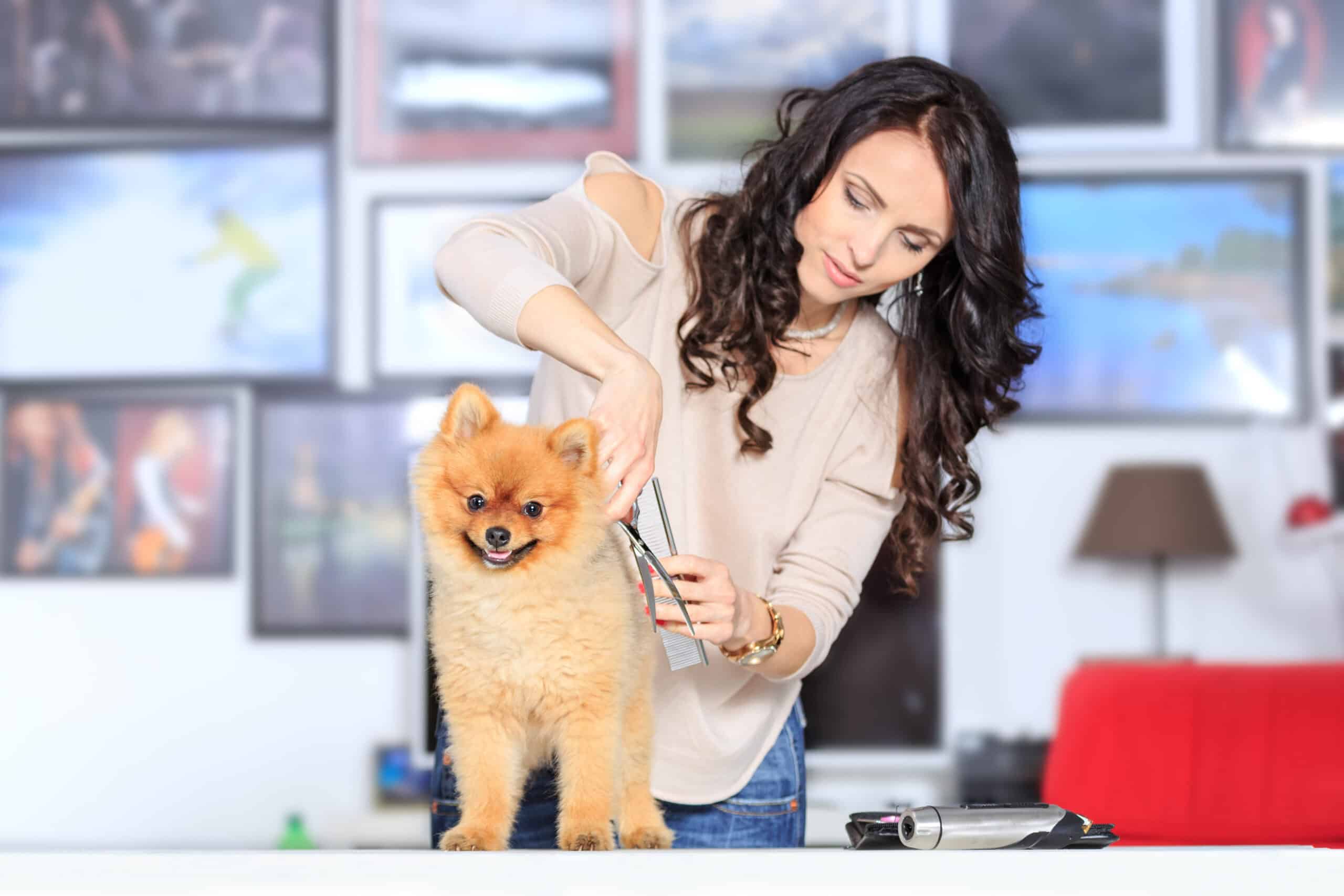
We all know that Crufts isn’t shy about straying from its core mission and values but even still, I couldn’t help but feel increasing frustration at just how pathetically hypocritical the entire fiasco continues to be each year.
With promises to raise industry standards and improve animal welfare policies, it seems to me that whilst a somewhat honourable idea does all the talking, their actions show us time and time again, that money does ALL the walking!
Are we really still as clueless as we seem?
A Wake-Up Call for Groomers
Groomers, I’m talking to you here – do you really not know why this initiative is bad for our sector and, more specifically, your future? Or do you remain blissfully ignorant of the flaws of conventional grooming standards?
Because this isn’t a time to be celebrating at all.
When we focus all of our attention on what looks good over what feels right, we fail to uphold our duty to protect and enhance the wellbeing of dogs.
I can’t help but wonder why styling remains the benchmark to professional grooming stardom.
Why is it that to be considered worthy of a title, a groomer must be able to transform a dog to look a certain way? In what ways does this improve the quality of dogs’ lives?
What needs to happen for the industry to slap itself in the face and finally accept that styling is not the be-all-and-end-all?
The Legal and Ethical Duty We’re Ignoring
Under the Animal Welfare Act 2006, all persons responsible for animals in England and Wales have a legal duty of care to ensure their welfare needs are met, including the need to be protected from pain, suffering, injury, and disease, and the need to exhibit normal behaviour patterns (UK Parliament, 2006), and The Animal Health and Welfare (Scotland) Act 2006 and the Welfare of Animals Act (Northern Ireland) 2011 impose similar statutory duties across the UK (Scottish Parliament, 2006; Northern Ireland Assembly, 2011).
The Code of Practice for the Welfare of Dogs also explicitly states that dogs must be handled in a way that minimises fear and distress and that any procedure that causes pain, suffering, or lasting harm must be avoided (Department for Environment, Food & Rural Affairs, 2018), yet when we prioritise events that consist of so many different variables, coupled with the pressures of achieving flawless trims within strict time frames, we are not just failing ethically but we are potentially breaching UK animal welfare law as well!
Because I personally couldn’t give a monkey’s arse if my dog looked like a traditional Poodle.
If it was a choice between my dog feeling comfortable and looking a little worst for wear, or having the worst 90-minutes of her life just to look good, I’d pick comfortable and messy each and every time. I mean, who wouldn’t, right?
This new scheme isn’t just a mere oversight, by the way –
We know the impact bad experiences have on an animal’s health.
We know that high-stress environments can cause an array of health disorders, many chronic, that lead to more serious, life-threatening conditions long-term.
So why are we risking it?
The Science of Competition Stress
Research shows that many dogs in competitive or performance environments experience significantly elevated cortisol levels, indicating acute stress responses (Cobb et al., 2016).
I recall having this debate once in a very popular grooming forum, where many competition groomers were explaining that show dogs are trained to enjoy the process and as a novice myself, I couldn’t really disagree with them. But fast forward to the next Crufts event, and a student of HGA decided to attend and spectate the entire thing as part of their final grading assessment, and completely blow this claim, well and truly, out the bath full of water.
Contrary to what I was made to believe, even show dogs expressed clear signs of distress during the long and strenuous days at Crufts – my student observed various welfare breaches including aversive handling methods, and a lack of toilet breaks.
Interestingly but not by any means surprisingly, a study that examined dogs in a show environment found that 85% of dogs exhibited stress-related behaviours, including panting, trembling, avoidance, and reduced social interaction (Marinelli et al., 2007).
The bottom line is that, whether we like to admit it or not, competition environments are inherently stressful for dogs because they combine multiple welfare risk factors that are outwith our control, including:
Novel, Unpredictable Environments
You place a dog in an unfamiliar environment surrounded by unfamiliar stimuli, and suddenly you have yourself a breeding ground for stress – that’s not far fetched, that’s just common sense. Dogs in unfamiliar environments with high noise levels and crowds experience heightened stress responses (Beerda et al., 1997), and functional MRI studies have also proved that unpredictable environments activate the amygdala (the brain’s fear centre) triggering anxiety and defensive behaviours in dogs (Berns et al., 2012).
We see it all the time in less exposed grooming environments, and yet the idea of a massive (live) grooming event (at Crufts, no less), doesn’t warrant genuine concern?…
Time Pressure and Restraint
From my experience, I have found that time pressure is one of the leading causes of accidents and injuries within grooming environments, it is also one of the leading causes of – yep – stress!
Why?
Feeling rushed and flustered leads to groomers feeling under pressure to complete full grooms in very little time. I can’t count the number of times I have came across a post from groomers online asking “What is an acceptable amount of time to spend on grooming?” or, “How do I speed up my grooms so that I can comfortably do 10 dogs a day?”, and so on. Coincidently (or not) these are the same groomers who often post about anxious dogs and dog bites on a regular basis.
Through my observations, and through various studies, time-pressured handling has been known to increase the likelihood of aversive techniques, including physical restraint, which significantly elevates stress hormones and fear responses (Rooney and Cowan, 2011).
Additionally, since we know that a lack of choice and control and the implementation of force and restraint can lead to learned helplessness and chronic stress disorders (Seligman and Maier, 1967; Overall, 2013), it goes without saying that should the event demand the use of physical restraining devices for “safety” purposes, you can expect a heightened level of stress amongst dogs who are subjected to attend.
Lack of Agency and Control
Following on from my prior point, animal welfare science further reinforces the fact that a lack of control over aversive experiences is one of the most significant contributors to psychological distress in animals (Bassett and Buchanan-Smith, 2007), making it one of the main reasons why HGA groomers are less inclined to use most of them (and the few we do accept should only be used if absolutely necessary and under very strict guidelines).
Repeated Exposure and Sensitisation
While repeated exposure to events is not something you could say is relevant when it comes to the Crufts grooming hall, it’s important to acknowledge the fact that any negative experience to grooming tasks (irrespective of where it is – at home, in the salon, or at an event as big as Crufts), will contribute to the lasting memory of a dog, further sensitising them to the process.
It’s no longer acceptable to assume that repeated negative exposure leads to successful desensitisation, or even, habituation.
Dogs who are exposed to high-stress events over a prolonged period of time are at risk of serious emotional conditions, such as PTSD and chronic stress, with fear responses only advancing over time (Levine et al., 2007).
From the hundreds of grooming cases I have been referred to, I can also confidently say that there is a higher risk of dog bites when it comes to future husbandry tasks (Casey et al., 2014) – something that the dog is almost always, sadly, blamed and judged for.
If you expect a dog to endure a prolonged and highly-stressful event, such as Crufts, you can expect that the risk of dog bites will be high and personally, I don’t think it’s worth it – I mean, could you imagine if you had to have your dog euthanised for biting under these circumstances?
The Ripple Effect We’re Ignoring
We must think about how our influence shapes public perception of not just our industry, but of dogs.
When we use opportunities to play into our egos rather than to educate the public on issues relating to canine wellbeing and welfare, we are failing to uphold our duty to serve and protect dogs.
Is grooming really about making dogs look good?
As much as this new event MIGHT help society see grooming as a more technical skill, remember that, above all else, grooming is about preservation of health. And actually, in its most indigenous form, it’s a behaviour – not a task – universally the same for all living, sentient beings.
It’s like the old saying goes, “beauty is only skin deep” – there is a whole lot more to a dog than how he/she looks, and that is what I would like to see more grooming events focus on.
The Public Perception Problem
Research in consumer behaviour demonstrates that public expectations are significantly shaped by media representation and high-profile events (Serpell and Hsu, 2005) – this is HUGE!
When “the world’s largest dog show” (Crufts) advertises competition grooming as the industry standard, it creates unrealistic expectations around what is acceptable, and what is not, when it comes to grooming results.
An example of what I mean by this:
“Hall 8 will also play host to brand-new dog grooming competitions, showcasing the artistry and precision of top grooming talent from across the UK and around the world. These contests promise to be a visual spectacle and a celebration of the skill and flair that define the dog grooming profession.“
Kennel club website
Words like the above harm dogs, dog guardians, and groomers.
Let’s say that the average Crufts attendee has a dog who struggles to cope with grooming tasks and after watching the show is now comparing what they have seen with what they get after a grooming session – you can expect them to feel frustration, impatience, and even anger.
Why is my dog not coming out beautifully groomed?
Does this mean my groomer is unqualified and/or inexperienced?
What is wrong with my dog?
All questions that may be asked, placing further pressure on dogs with deep-rooted needs, and groomers who are more welfare-led.
Because lets face it, the average pet dog is not a clean bill of health – there are countless health conditions, as well as, environmental factors that make the life of dogs challenging, regardless of their pedigree. That’s not propaganda.
The truth is that most dogs that I see for consultations are struggling with more than one or two issues that impact grooming sessions and experiences, none of which are solely resolvable with just a few grooming adaptions alone.
Most dogs require an entire team of pet professionals, working in tandem, to ensure that their needs are met (I refer to this a lot as ‘synchronised care’). It’s unavoidable, and non-negotiable in my practice.
Words like “artistry” and “top grooming talent” paired with “that define dog grooming profession” are dangerously misleading, and represent a bigger problem – that even with all of the amazing information accessible on emotional safety and dogs – many of us are reluctant to embrace a truly welfare-focused and ethical approach to pet care because it isn’t entertaining.
The Legal Case Against Competition Grooming
The introduction of Hall 8 at Crufts 2026 also raises serious questions about compliance with UK animal welfare legislation, and I’m not quite sure why these points have yet to be raised.
The Animal Welfare Act 2006: Key Provisions
Under Section 9 of the Animal Welfare Act 2006, it is an offence to cause an animal unnecessary suffering (UK Parliament, 2006).
The Act defines suffering as including physical or mental suffering, and specifies that suffering is unnecessary if it could reasonably have been avoided or reduced.
Section 4 creates a duty to ensure welfare, requiring that animals’ needs are met, including:
- The need for a suitable environment
- The need to exhibit normal behaviour patterns
- The need to be protected from pain, suffering, injury, and disease
- The need to be housed with, or apart from, other animals (as appropriate).
And failure to meet these needs can result in prosecution, fines up to £20,000, and imprisonment for up to six months (UK Parliament, 2006).
Based on the observations of our whistleblower, it is not uncommon for all of the above needs to be breached during Crufts events, with many interviewed dog handlers openly expressing their outdated methods and approach to dog care, such as the use of aversive tools and other punitive measures.
The Code of Practice for the Welfare of Dogs states that dogs must be provided with an environment that minimises fear and distress (DEFRA, 2018) and since we know that competition environments (characterised by noise, crowds, unfamiliarity, and unpredictability) are inherently unsuitable for canine welfare (Marinelli et al., 2007), it’s also not unreasonable to say that this guideline is also commonly disregarded.
Dogs attending grooming competitions are denied the ability to exhibit normal behaviours – they cannot escape for a much-needed break, they cannot rest within the safety of their home. Dogs competing are often left for prolonged periods of time, tied up with no social interaction or room to stretch and/or move freely. Many are locked in cages.
Animal welfare science confirms that denial of normal behaviour patterns constitutes poor welfare and violates the statutory duty under the Animal Welfare Act (Mellor, 2016) – it blows my mind that Crufts is still running.
The Five Domains Model Compliance
I’ve mentioned The Animal Welfare Act (2006), specifically The Five Freedoms, but let’s go one step further and talk about The Five Domains Model (Mellor, 2016).
This internationally recognised framework is used to assess animal welfare, and evaluate welfare across (you guessed it) five domains:
- nutrition
- physical environment
- health
- behavioural interactions and,
- mental state
Research applying the Five Domains Model to grooming environments demonstrates that competition grooming scores poorly across multiple domains, particularly in behavioural interactions (lack of choice, forced restraint) and mental state (fear, anxiety, frustration) (Mellor et al., 2020).
What’s shocking is that The Five Domains Model is still not covered in mainstream Professional Grooming curriculum, it is (thankfully) covered in my Behaviour Grooming Theory Course for this reason!
The Pet Industry Burnout Crisis
After interviewing friend and fellow colleague, Tamsin Durston about her book, ‘Emotional Well-being for Animal Welfare Professionals‘, it’s clear that we are faced with a truly devastating truth – the pet care industry is suffering a mental health crisis. Note: this interview can be accessed for free within our Skool Community via the Library Tab.
Animal care professionals experience significantly higher rates of burnout, compassion fatigue, and mental health disorders compared to other professions (Scotney et al., 2015).
While grooming is seldom ever mentioned, as a professional groomer working with hundreds of professional groomers every day, I know that we are no exception.
Additionally, unlike the majority of all other pet care providers, groomers often see their clients more regularly and for a longer period of the dog’s life.
How does this matter?
It matters because we are constantly liaising with every dog and their guardian – listening to every issue, trying to overcome every hurdle, managing every concern, catering to every need, all while under immense physical and emotional pressure to do our jobs “right” or risk being labelled a “bad” groomer.
The fact remains, groomers are often struggling with a degree of cognitive dissonance, trying to balance what’s right with what’s expected, as a result of:
- How the media (and events like Crufts) presents the grooming industry
- How the grooming industry measures and defines success
- How the dog care community translates both
Why aren’t we taking this seriously?!
The Path Crufts Should Be Taking
Instead of celebrating “visual spectacles” and measuring success by how symmetrical four limbs are, just imagine if Crufts had announced the introduction of educational stands where behaviour-trained groomers focused on educating attendees on ways to:
- Create a calming grooming environment using science-backed methods and techniques
- Reduce stress and increase confidence using behaviour modification protocol
- Promote cooperation through the introduction of choice and agency in dogs
- Devise bespoke care plans that contribute to a dog’s individual needs
- Build upon an interconnected network of trusted pet care providers to ensure a dog receives consistent and synchronised care
Just imagine the message that would send to our industry and the dog-loving community as a whole.
More groomers would be inspired to step into more ethical and science-backed methods of grooming, thus making the industry a much more welfare-driven space.
Dog guardians would stop over-expecting and start respecting the role of the groomer, when it comes to handling dogs with very individual needs.
And hundreds upon hundreds of dogs would receive care that focuses on what they need to feel safe and thrive, which would contribute to the overall wellbeing and health of the dog, both short and long term.
What Behaviour Led Grooming Education Looks Like
Through the work of the late Dr Sophia Yin, we know that the implementation of low-stress, cooperative based methods in handling results in a more cooperative and safe grooming environment (Yin, 2009). This was one of the very first “break-throughs” I had when first beginning my journey into Canine Psychology back in 2018.
What I found the most mind-blowing however was how quickly a dog can make progress through the use of more updated handling methods – it didn’t have to take years to see progress. Sometimes progress was as simple as a feeling, sometimes it was as significant as a total change in behaviours.
The point is that through these practical and science-led concepts, lasting POSITIVE change was possible for dogs who were otherwise deemed “ungroomable”, “problematic”, and even “nasty”. And with a little bit of patience and faith from dog guardians, grooming experiences at home also significantly improved.
Crufts could have championed this research but instead they’ve played into the ego-driven narrative that grooming is entertainment – a spectacle, an art form.
A Summary of Why Hall 8 Is A Bad Idea (The Science)
I want to end this article by summarising key scientific findings that supports my stance on why I believe Hall 8 fails to address the bigger problem:
Legal Violations:
- Competition grooming risks breaching the Animal Welfare Act 2006 by causing unnecessary suffering through time pressure, restraint, and unsuitable environments (UK Parliament, 2006).
- Failure to meet dogs’ welfare needs violates statutory duties under UK law, with penalties including fines up to £20,000 and imprisonment (DEFRA, 2018).
- The Animal Sentience Act 2022 strengthens legal protections for dogs as sentient beings, making entertainment-focused practices increasingly indefensible (UK Parliament, 2022).
Scientific Evidence:
- 85% of dogs in show environments exhibit stress behaviours (Marinelli et al., 2007).
- Competition environments elevate cortisol and trigger fear responses (Cobb et al., 2016; Berns et al., 2012).
- Time-pressured grooming increases aversive handling and psychological distress (Rooney and Cowan, 2011).
- Repeated negative experiences cause sensitisation, not habituation, intensifying fear over time (Levine et al., 2007).
- Lack of choice and control is a primary driver of animal distress (Bassett and Buchanan-Smith, 2007; Stellato et al., 2021).
Professional Impact:
- Unrealistic expectations harm groomers through burnout, compassion fatigue, and undervaluation (Scotney et al., 2015; Kogan et al., 2020).
- Competition standards devalue welfare-focused grooming, prioritising aesthetics over animal wellbeing (Rooney et al., 2009).
The Alternative:
- Education in cooperative care, behaviour modification, and low-stress handling improves outcomes for dogs, groomers, and clients (Yin, 2009; Patronek et al., 2013).
- Science-backed grooming aligns with UK animal welfare law and public expectations (RSPCA, 2021).
What We Must Do Next
Groomers: Refuse to participate in competitions that prioritise aesthetics over welfare. Demand that industry events champion evidence-based, dog-centred practices. And don’t let peer pressure champion over your integrity.
Dog Guardians: Advocate for your dog’s wellbeing. Choose groomers who prioritise cooperation, choice, and low-stress handling over competition credentials. Don’t pay to attend events that have a strong focus on what makes money over what makes the biggest, most positive, impact.
Crufts and the Kennel Club: Withdraw Hall 8 and replace it with an Education Hall that aligns with UK animal welfare law, scientific evidence, and the ethical treatment of sentient beings. Stop seeing the dog industry as a spectacle to make money, and respect the influence and power your platform has to achieve lasting, positive change.
Grooming Industry: Recognise that our legal, ethical, and professional duty is to protect and enhance the wellbeing of dogs, not to entertain humans at the dog’s expense. While styling is an incredible skill, it’s not what defines and measures success.
Dogs are not props. They are sentient individuals who deserve our respect, our compassion, and our commitment to their welfare above all else.
Crufts 2026 Hall 8 is not industry progress at all – it’s a step backwards, and it’s time we all called them, and more importantly, ourselves, out on it.
Share your thoughts with me! Let’s get a discussion going – all opinions are welcome, just keep it friendly.
Bibliography
Below is a list of sources I used to support and inspire my article. If you come across any errors in the following content, please e-mail me via the Contact Page, and I will amend accordingly.
Animal Health and Welfare (Scotland) Act 2006. Edinburgh: Scottish Parliament. Available at:https://www.legislation.gov.uk/asp/2006/11/contents (Accessed: 25 November 2025).
Animal Sentience Act 2022. London: UK Parliament. Available at: https://www.legislation.gov.uk/ukpga/2022/22/enacted (Accessed: 25 November 2025).
Animal Welfare Act 2006. London: UK Parliament. Available at: https://www.legislation.gov.uk/ukpga/2006/45/contents (Accessed: 25 November 2025).
Bassett, L. and Buchanan-Smith, H.M. (2007) ‘Effects of predictability on the welfare of captive animals’, Applied Animal Behaviour Science, 102(3-4), pp. 223-245. doi: 10.1016/j.applanim.2006.05.029.
Beerda, B., Schilder, M.B.H., Van Hooff, J.A.R.A.M., De Vries, H.W. and Mol, J.A. (1997) ‘Manifestations of chronic and acute stress in dogs’, Applied Animal Behaviour Science, 52(3-4), pp. 307-319. doi: 10.1016/S0168-1591(96)01131-8.
Berns, G.S., Brooks, A.M. and Spivak, M. (2012) ‘Functional MRI in awake unrestrained dogs’, PLoS ONE, 7(5), p. e38027. doi: 10.1371/journal.pone.0038027.
Berns, G.S., Brooks, A.M. and Spivak, M. (2015) ‘Scent of the familiar: An fMRI study of canine brain responses to familiar and unfamiliar human and dog odors’, Behavioural Processes, 110, pp. 37-46. doi: 10.1016/j.beproc.2014.02.011.
Casey, R.A., Loftus, B., Bolster, C., Richards, G.J. and Blackwell, E.J. (2014) ‘Human directed aggression in domestic dogs: Occurrence in different contexts and risk factors’, Applied Animal Behaviour Science, 152, pp. 52-63. doi: 10.1016/j.applanim.2013.12.003.
Cobb, M.L., Branson, N., McGreevy, P., Lill, A. and Bennett, P.C. (2016) ‘The advent of canine performance science: Offering a sustainable future for working dogs’, Behavioural Processes, 110, pp. 96-104. doi: 10.1016/j.beproc.2014.10.012.
Department for Environment, Food & Rural Affairs (2018) Code of Practice for the Welfare of Dogs. London: DEFRA. Available at: https://www.gov.uk/government/publications/code-of-practice-for-the-welfare-of-dogs (Accessed: 25 November 2025).
Kogan, L.R., Wallace, J.E., Schoenfeld-Tacher, R., Hellyer, P.W. and Richards, M. (2020) ‘Veterinary technicians and occupational burnout’, Frontiers in Veterinary Science, 7, p. 328. doi: 10.3389/fvets.2020.00328.
Levine, E.D., Ramos, D. and Mills, D.S. (2007) ‘A prospective study of two self-help CD based desensitization and counter-conditioning programmes with the use of Dog Appeasing Pheromone for the treatment of firework fears in dogs’, Applied Animal Behaviour Science, 105(4), pp. 311-329. doi: 10.1016/j.applanim.2006.11.006.
Marinelli, L., Adamelli, S., Normando, S. and Bono, G. (2007) ‘Quality of life of the pet dog: Influence of owner and dog’s characteristics’, Applied Animal Behaviour Science, 108(1-2), pp. 143-156. doi: 10.1016/j.applanim.2006.11.018.
Mariti, C., Gazzano, A., Moore, J.L., Baragli, P., Chelli, L. and Sighieri, C. (2012) ‘Perception of dogs’ stress by their owners’, Journal of Veterinary Behavior, 7(4), pp. 213-219. doi: 10.1016/j.jveb.2011.09.004.
Mellor, D.J. (2016) ‘Updating animal welfare thinking: Moving beyond the “Five Freedoms” towards “A Life Worth Living”’, Animals, 6(3), p. 21. doi:10.3390/ani6030021.
Mellor, D.J. and Beausoleil, N.J. (2015) ‘Extending the “Five Domains” model for animal welfare assessment to incorporate positive welfare states’, Animal Welfare, 24(3), pp. 241-253. doi: 10.7120/09627286.24.3.241.
Mellor, D.J., Beausoleil, N.J., Littlewood, K.E., McLean, A.N., McGreevy, P.D., Jones, B. and Wilkins, C. (2020) ‘The 2020 Five Domains Model: Including human-animal interactions in assessments of animal welfare’, Animals, 10(10), p. 1870. doi: 10.3390/ani10101870.
Northern Ireland Assembly (2011) Welfare of Animals Act (Northern Ireland) 2011. Belfast: Northern Ireland Assembly. Available at: https://www.legislation.gov.uk/nia/2011/16/contents (Accessed: 25 November 2025).
Overall, K.L. (2013) Manual of Clinical Behavioral Medicine for Dogs and Cats. St. Louis: Elsevier.
Patronek, G.J., Sacks, J.J., Delise, K.M., Cleary, D.V. and Marder, A.R. (2013) ‘Co-occurrence of potentially preventable factors in 256 dog bite-related fatalities in the United States’, Journal of the American Veterinary Medical Association, 243(12), pp. 1726-1736. doi: 10.2460/javma.243.12.1726.
Rooney, N.J. and Cowan, S. (2011) ‘Training methods and owner–dog interactions: Links with dog behaviour and learning ability’, Applied Animal Behaviour Science, 132(3-4), pp. 169-177. doi: 10.1016/j.applanim.2011.03.007.
Rooney, N.J., Gaines, S.A. and Bradshaw, J.W.S. (2009) ‘Behavioural and glucocorticoid responses of dogs to kennelling: Investigating mitigation of stress by prior habituation’, Physiology & Behavior, 92(5), pp. 847-854. doi: 10.1016/j.physbeh.2007.06.011.
RSPCA (2019) Animal Welfare Act 2006: RSPCA Prosecutions Data. Horsham: RSPCA. Available at: https://www.rspca.org.uk/whatwedo/prosecutions (Accessed: 25 November 2025).
RSPCA (2021) Public Attitudes to Animal Welfare 2021. Horsham: RSPCA. Available at: https://www.rspca.org.uk/documents/1494939/0/Public+Attitudes+to+Animal+Welfare +2021.pdf (Accessed: 25 November 2025).
Scotney, R.L., McLaughlin, D. and Keates, H.L. (2015) ‘A systematic review of the effects of euthanasia and occupational stress in personnel working with animals in animal shelters, veterinary clinics, and biomedical research facilities’, Journal of the American Veterinary Medical Association, 247(10), pp. 1121-1130. doi: 10.2460/javma.247.10.1121.
Seligman, M.E.P. and Maier, S.F. (1967) ‘Failure to escape traumatic shock’, Journal of Experimental Psychology, 74(1), pp. 1-9. doi: 10.1037/h0024514.
Serpell, J.A. and Hsu, Y.A. (2005) ‘Effects of breed, sex, and neuter status on trainability in dogs’, Anthrozoös, 18(3), pp. 196-207. doi: 10.2752/089279305785594135.
Stellato, A.C., Flint, H.E., Widowski, T.M., Serpell, J.A. and Niel, L. (2021) ‘Assessment of fear-related behaviours displayed by companion dogs in response to social and non-social stimuli’, Applied Animal Behaviour Science, 234, p. 105177. doi: 10.1016/j.applanim.2020.105177.
Yin, S. (2009) ‘Low stress handling, restraint and behavior modification of dogs and cats’, Journal of Veterinary Behavior, 4(6), p. 245. doi: 10.1016/j.jveb.2009.09.003.s news would be a monumental understatement.