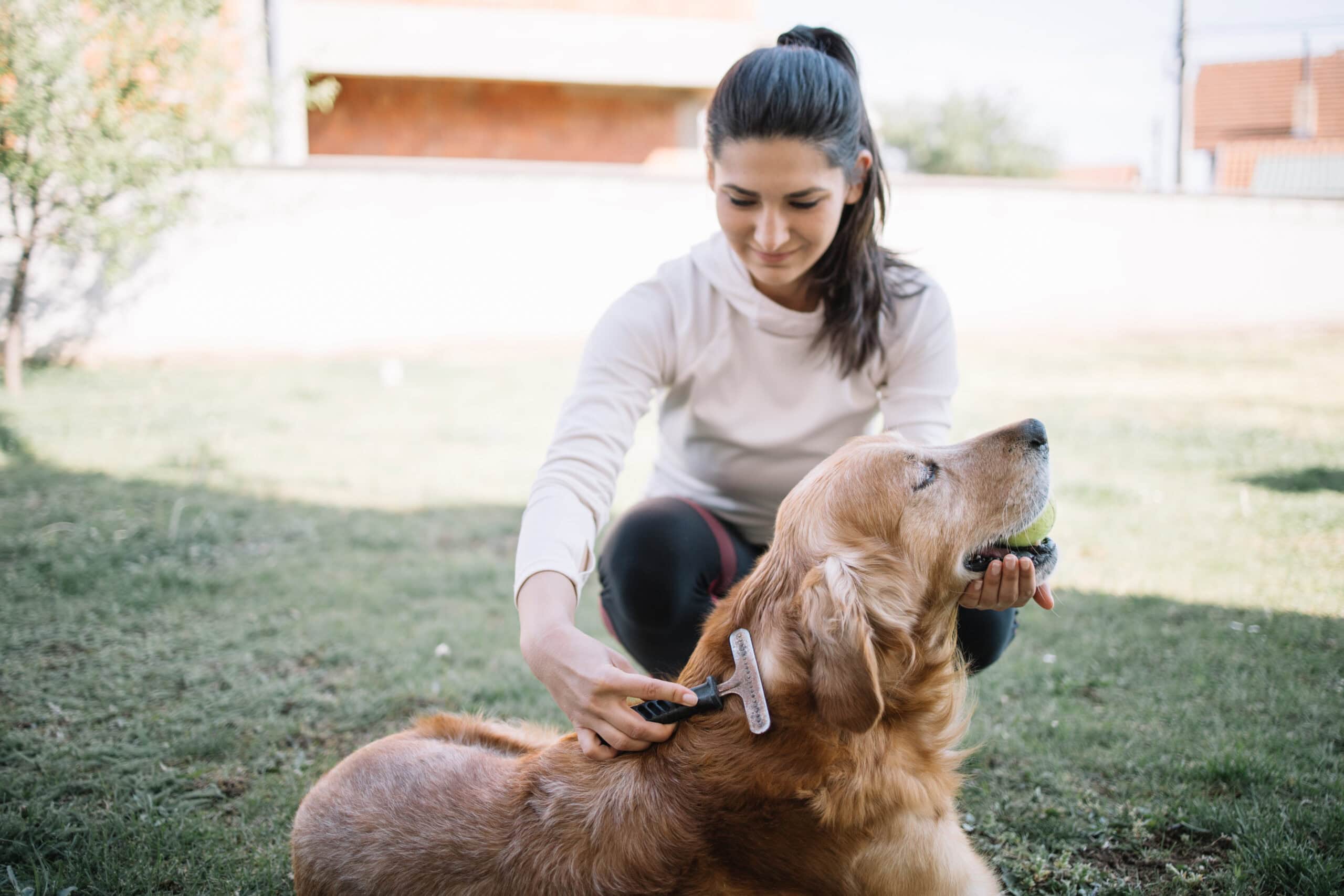
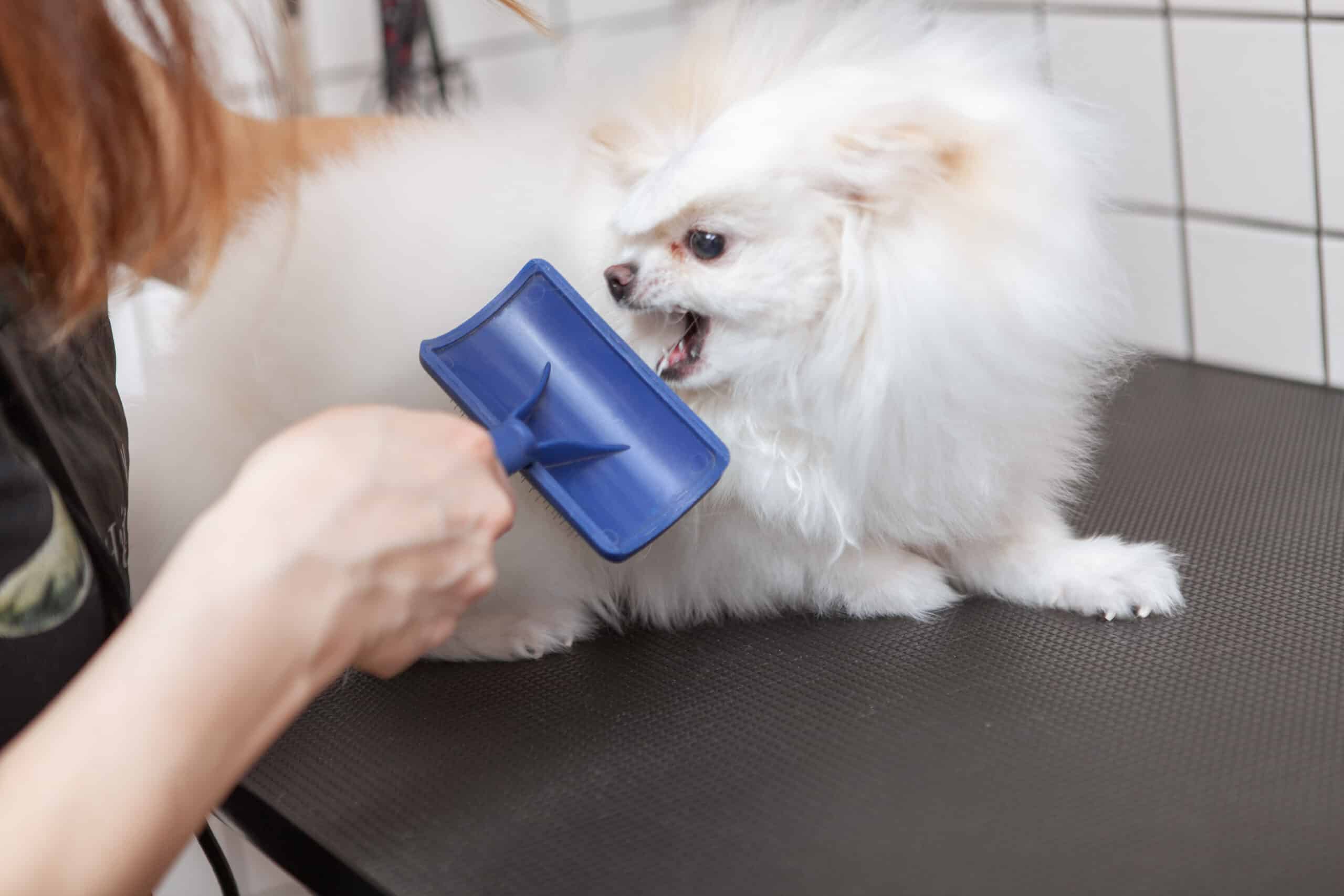
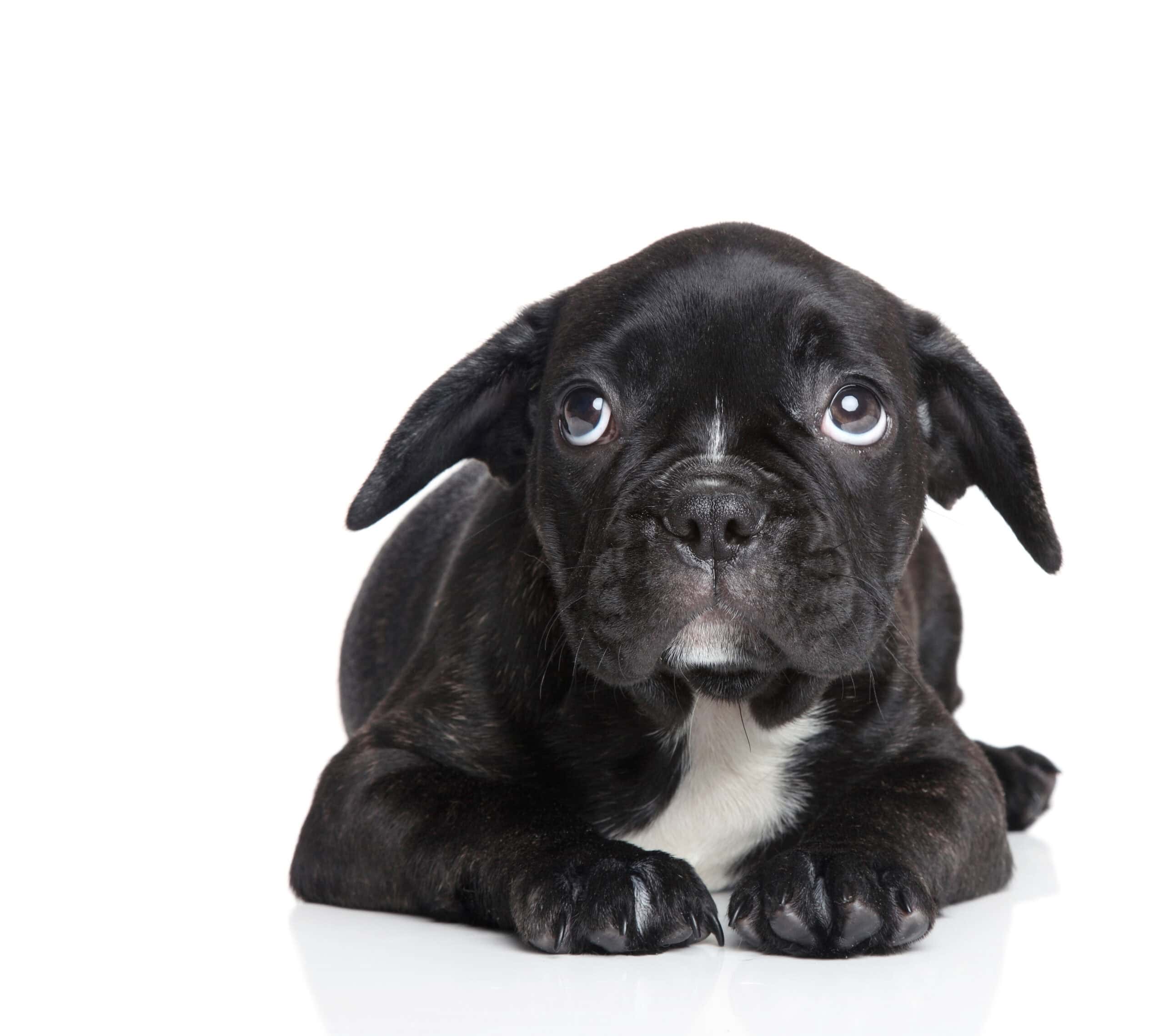
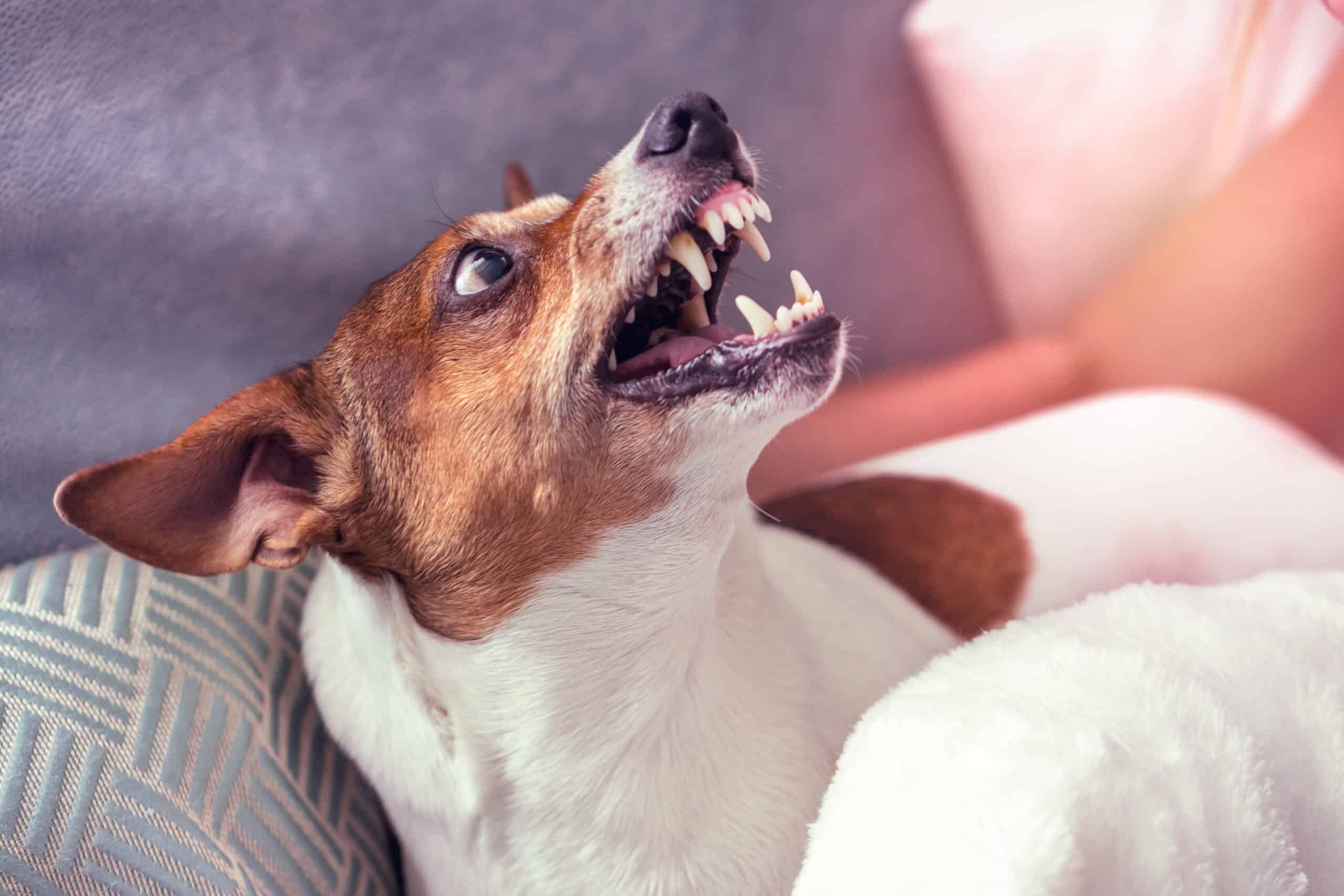
Not long ago, I worked with a lovely rescue spaniel called Daisy who used to panic at the very sight of a brush. As per HGA protocol, I devised a bespoke care plan incorporating desensitisation exercises into the salon environment, meanwhile her carer was tasked to try the same methods at home in between.
After a couple of weeks Daisy was making great progress in the salon and I was able to brush almost every area of her body without signs of unreasonable stress yet according to her carer, things weren’t improving during their home bonding sessions whatsoever.
Her carer seemed to be doing everything right but even still, Daisy would try everything to avoid being brushed at home.
I decided to visit Daisy in her home environment to see what was happening myself, and as explained, as soon as the brush came out she was hiding under tables and chairs to avoid the session. I looked at the space around us.
The room where all grooming tasks took place faced a busy road with traffic rushing by every second – it was noisy and incredibly distracting. Even without the brush, Daisy seemed incredibly unsettled and as I continued to observe her, it was clear she wasn’t comfortable being in this room at all.
I requested that we try a different room, ideally at the back of the house away from public roads, and was taken to a small office facing their private garden.
Daisy was given access both inside and outdoors as we sat down and observed whether her behaviour would differ, and within moments EVERYTHING changed – Daisy was clearly a lot more settled in this environment. It was quieter, it was carpeted, it had access to a secure outdoor space.
After a few moments, we decided to call Daisy over and began some basic brush introduction exercises using her favourite treat, and to her carer’s surprise, she cooperated straight away. Within a few minutes, we were successfully brushing Daisy’s coat without any signs of avoidance.
Environment Is Significant
When we are faced with a dog who doesn’t enjoy grooming, seldom do we ever think about the role the environment plays on influencing a dog’s experience, yet environment is absolutely significant.
If an environment isn’t comfortable –
If it doesn’t feel safe –
A dog will struggle to relax regardless of how you approach things.
The grooming environment should be a place where the dog feels secure and comfortable, therefore, the very first step to cooperative, low-stress grooming is finding the right space to work in, and/or adapting the space in which you work to accommodate to the needs of the dog.
Using The Dog’s Senses To Risk-Assess & Adapt
It can be helpful viewing your space from the dog’s perspective, thinking about what and how they see the obstacles around them.
For example, to a human a chair doesn’t look intimidating at all, but to a dog (at their height) it might look incredibly overbearing.
Everything is down to perspective.
When we begin to think like a dog, see like a dog and risk-assess like we are a dog – everything in our environment looks different.
In HGA Philosophy, we try to encourage students to keep a dog’s senses in mind when planning grooming environments – this helps us to identify all potential triggers that may be causing a dog distress. I’m not embarrassed to say that I’ve even found myself physically on all fours looking at the environment from this perspective, and honestly, it really can open your eyes!
Broken down, things in the environment can be adapted to suit very individual preferences helping to instantly remove stress from the entire grooming experience.
In Daisy’s example above, the noise of traffic and also, the sight of moving traffic was causing her distress.
Once these two factors were removed, she was able to relax more which in turn, allowed for her to embrace brushing sessions the way she had embraced them in my salon. After her home environment was resolved, she came on leaps and bounds.
The Senses: Species Specific Considerations
It’s not enough to simply think of a dog’s senses, we also have to consider what makes a dog’s senses different to humans.
For example, it could be said that a dog’s sense of smell is his superpower – far superior to ours. With this in mind, how an environment smells will absolutely contribute to either the stress, or lack of stress, a dog feels.
If you are anything like me and appreciate the strong scents of candles, you might have to reconsider using them in your home – this might be the most catastrophic piece of knowledge you have learned today, but there’s plenty of research to support just how detrimental scented candles are to dogs (and actually, to us too).
A strong smelling scent to us is undeniably going to be unbearable to that of a dog, whose sense of smell is estimated to be a whopping 10,000-100,000 times more acute than ours! (Kokocińska-Kusiak et al., 2021).
Yes, we might have to succumb to having a home that smells more like wet dog, than Cinnamon and Amber, but if we truly wish to provide our dog’s with a low-stress life, we must consider the impact our home choices might have on not only their behaviour, but long-term health as well.
In any case, using my Senses Checklist to help go through your home environment with a fine-toothed comb (pun intended) is a great way of eradicating/minimising some factors that may be causing your dog stress without you knowing it.
Unfortunately (or fortunately, depending on how you look at it) once you know you cannot UNKNOW, and suddenly everything you do at home becomes secondary to you questioning “how this might influence Snoopy’s quality of life”.
If we break down the other senses briefly:
Sound: Keep background noise as low as possible (avoiding noisy TV, blasting music etc.). While studies have found that some dogs may find Classical or Reggae Reggae music, it’s worthwhile remembering all dog’s are individual and some may find no music, more effective.
Sight: Remove clutter and distracting objects. For example, when I first opened my high street salon, I had a few dog face pillows situated throughout my reception area which various dogs would bark at. The same applies to any unnecessary objects in the room you intend to do all of your grooming sessions in – a tidy, de-cluttered space helps your dog focus and feel safe.
Touch: Considering both the sensation of grooming tools touching your dog’s skin and the surface in which your dog feels on their sensitive paw pads. Not only is a dog’s skin incredibly sensitive, a dog’s feet are full of nerves that are constantly communicating with the environment around them. Use soft towels, gentle brushes, and familiar bedding when grooming your dog, and avoid anything that might make your dog feel less stable on their feet.
Spirituality: It may sound woo-woo upon reading it at first, but actually spirituality in the context of dog’s typical refers to energy and intuition. For example, Feng Shui practitioners hone in on the impact of stagnant energy in the home environment and how this can contribute to various mental health and physical disorders of the inhabitants – this is actually more scientific than what you might believe too, with research showing that clutter does, in fact, influence low mood and reduced overall well-being (Quinn, 2025).
Setting Your Home Grooming Sessions Up for Success
Additionally, there are other measures you can make straight away to help keep grooming sessions smooth-sailing including:
Keep tools within reach: Organise your grooming tools so you’re never scrambling around trying to find something.
Monitor room temperature: Make sure the room you are grooming in is comfortably warm, especially after a bath.
Safe space: Always have a spot where your dog can retreat if they need a break. This could be access to a secure back garden, a comfortable bed or even a crate (if this is where your dog feels most comfortable).
Read your dog: Watch for signs of stress (panting, yawning, turning away). If your dog seems anxious, pause and give them space.
Reward calm behaviour with treats or praise and never punish unwanted behaviour. Grooming sessions at home should be a positive, trust-building opportunity.
Download Your Free Home Grooming Layout Template
Ready to put these tips into practice? Download my Home Grooming Layout Template for support on how to prepare for home grooming success today.
Transform your home into a haven for low-stress grooming. Your dog will thank you, and you’ll both enjoy the process so much more.
If you’ve got questions or want to share your set-up, drop a comment below or tag @holisticgroomingacademy on social media. Let’s create a kinder, calmer grooming experience together.
References
Kokocińska-Kusiak, A., Woszczyło, M., Zybala, M., Maciocha, J., Barłowska, K. and Dzięcioł, M. (2021). Canine Olfaction: Physiology, Behavior, and Possibilities for Practical Applications. Animals, 11(8), p.2463. doi:https://doi.org/10.3390/ani11082463.
Quinn, F. (2025). Home clutter and mental well-being: Exploring moderators and the mediating role of home beauty. Journal of Environmental Psychology, [online] p.102672. doi:https://doi.org/10.1016/j.jenvp.2025.102672.