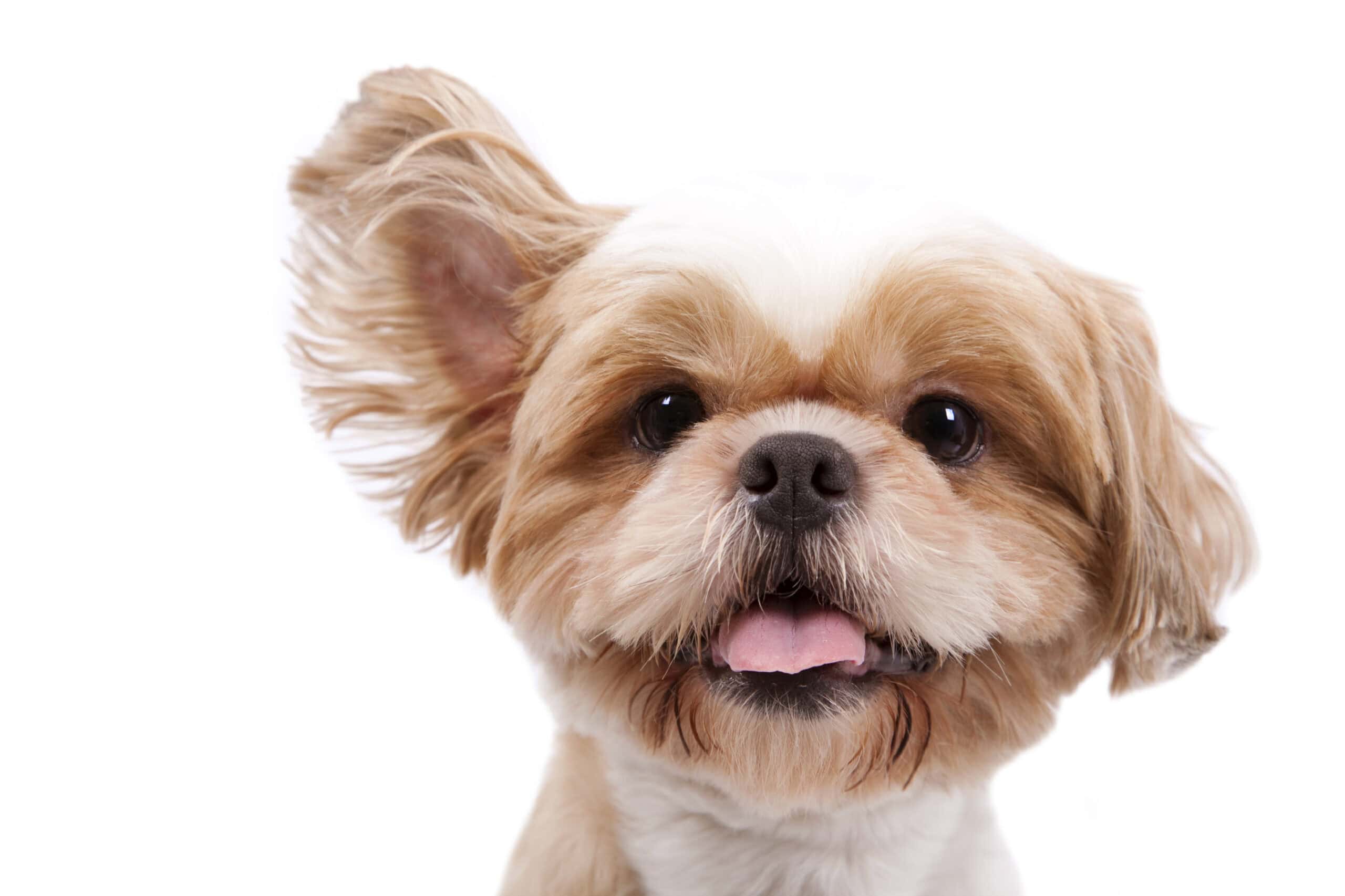
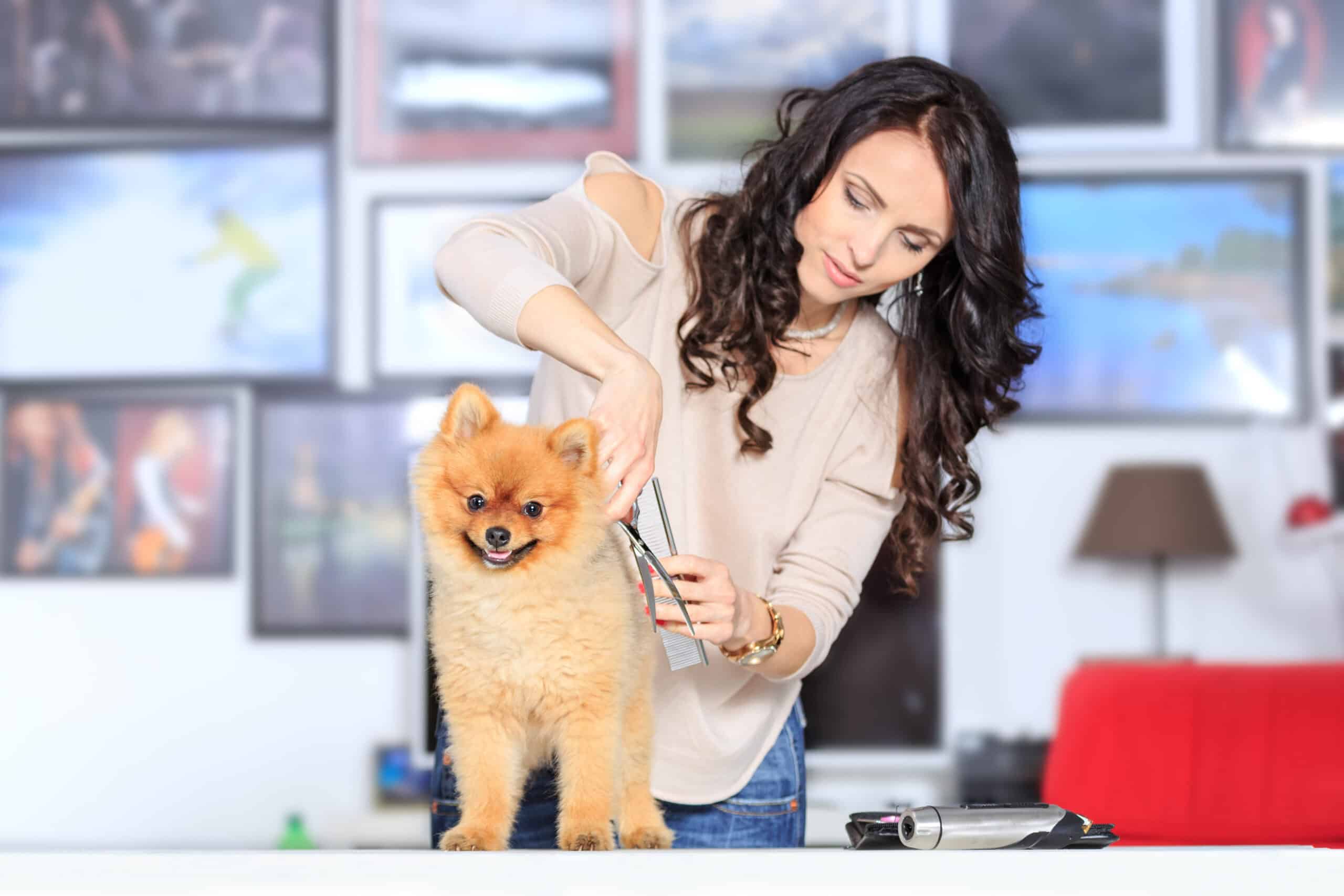
Your dog approaches and begins licking your hand, face, or arm, and the immediate assumption is, “Aww, they love me!”
Whilst there’s no denying the bond between dogs and their humans, the truth about licking behaviour is far more nuanced and fascinating than a simple display of affection that one might suggest. Understanding what’s really happening when your dog licks can transform how you respond to their needs and strengthen your relationship in meaningful ways.
The Myth of “Kisses”
For decades, we’ve romanticised canine licking as the equivalent of human kisses, that is, a pure expression of love and devotion, however, contemporary research in canine behaviour and cognition reveals a much more complex picture.
Whilst affection can be one component, it’s rarely the primary driver of licking behaviour in dogs (Horowitz, 2009).
Dogs are sophisticated communicators who use a combination of body language, vocalisations, and physical behaviours to convey information, and licking is one tool in their extensive toolkit.
Context is everything! (Bradshaw, 2011).
What Science Tells Us About Licking
Communication and Appeasement
One of the most common reasons dogs lick humans is to communicate submission or appeasement – this behaviour originates from puppyhood, when young dogs lick their mother’s mouth to stimulate regurgitation of food and to signal non-threatening intentions (Coren, 2000). In adult dogs, this translates into a calming signal directed at humans or other dogs.
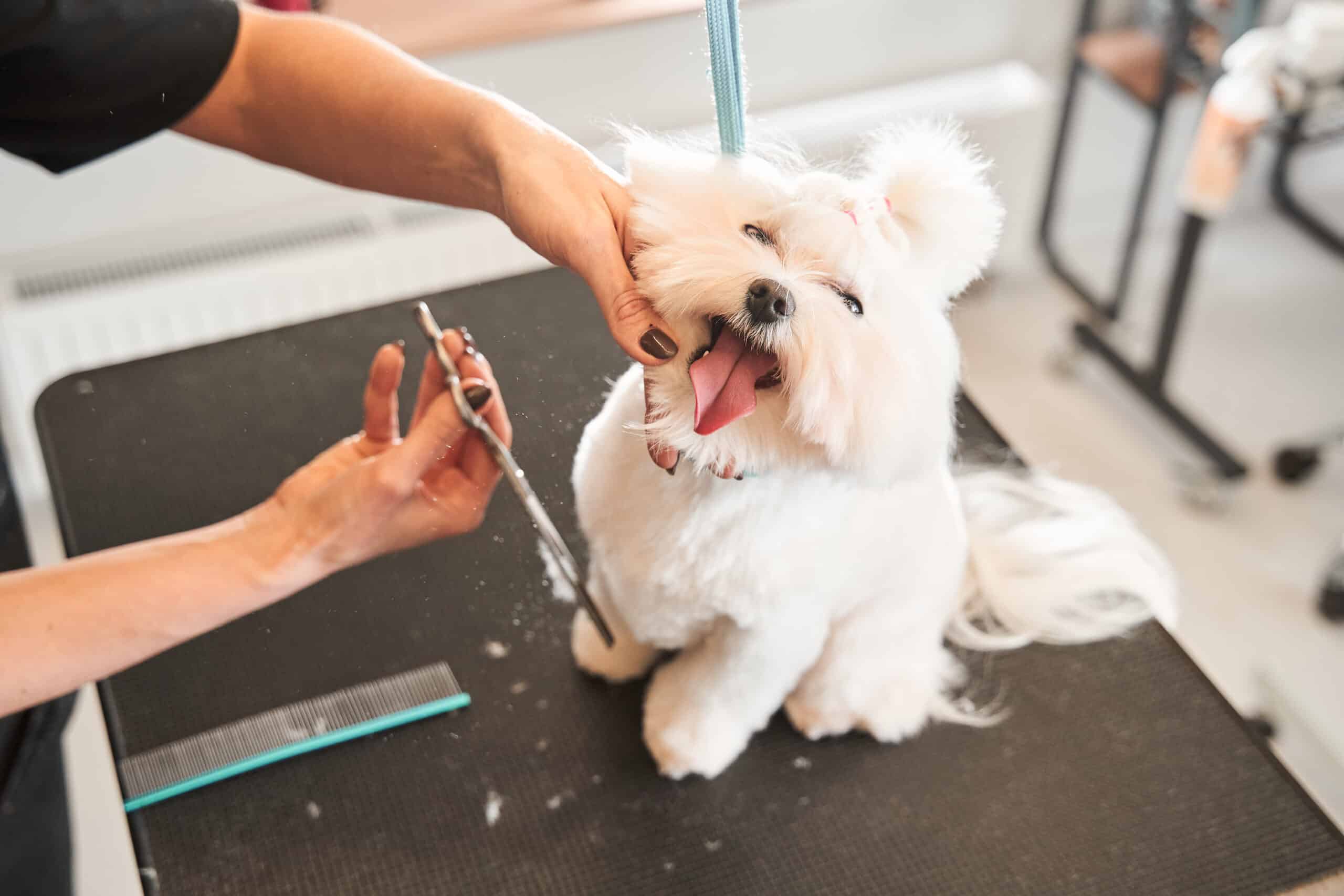
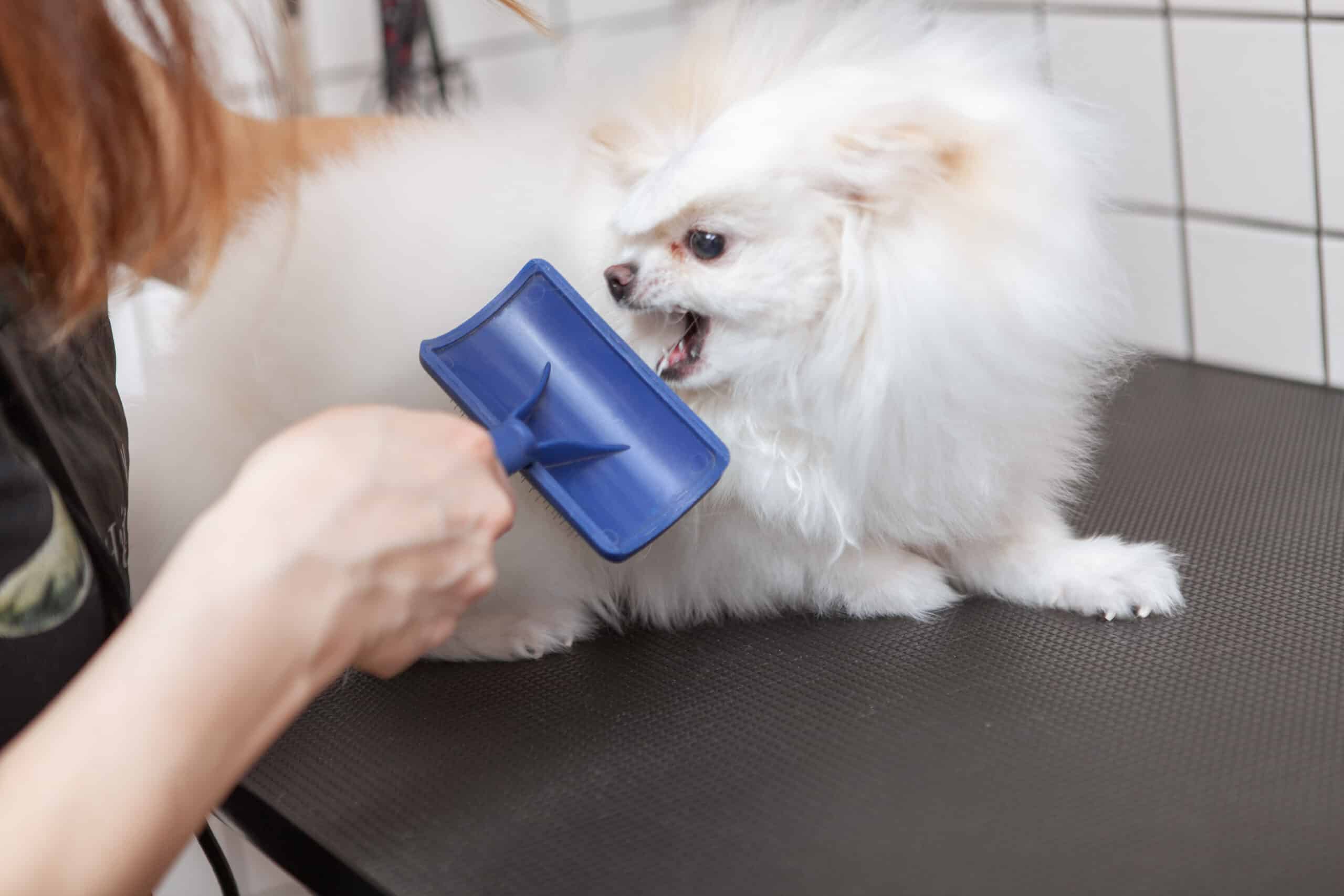
Research by Rugaas (2006) on canine calming signals identifies licking as a key behaviour dogs use to de-escalate potentially stressful situations. We see this behaviour all the time in grooming, yet I see so many groomers snap pictures and videos above captions such as “when the dog just loves being pampered”, or “when you work so hard so that the dog learns to love grooming!”.
While licking may still signify an affection towards the groomer in these scenarios, we must try to step back and read the whole room, and series of events on the lead up to this specific behaviour before assuming because when a dog licks you, they may actually be saying, “I’m not a threat”, “Please, don’t be upset with me”, or even, “I want to bite you to stop this from happening but I’ll lick you instead and hopefully you’ll understand”.
Stress and Self-Soothing
Excessive licking – whether directed at themselves, objects, or humans – can indicate stress, anxiety, and/or discomfort.
The repetitive nature of licking releases endorphins which provides a temporary calming effect (Overall, 2013) – this can be compared to when a human rubs their body to relieve the pain after hitting it against a wall. Humans may also bite their nails or fidget when anxious in an attempt to occupy the mind during stress (and actually, I’ve witnessed dogs biting their own nails as a way to self-soothe).
In grooming contexts, this is particularly relevant.
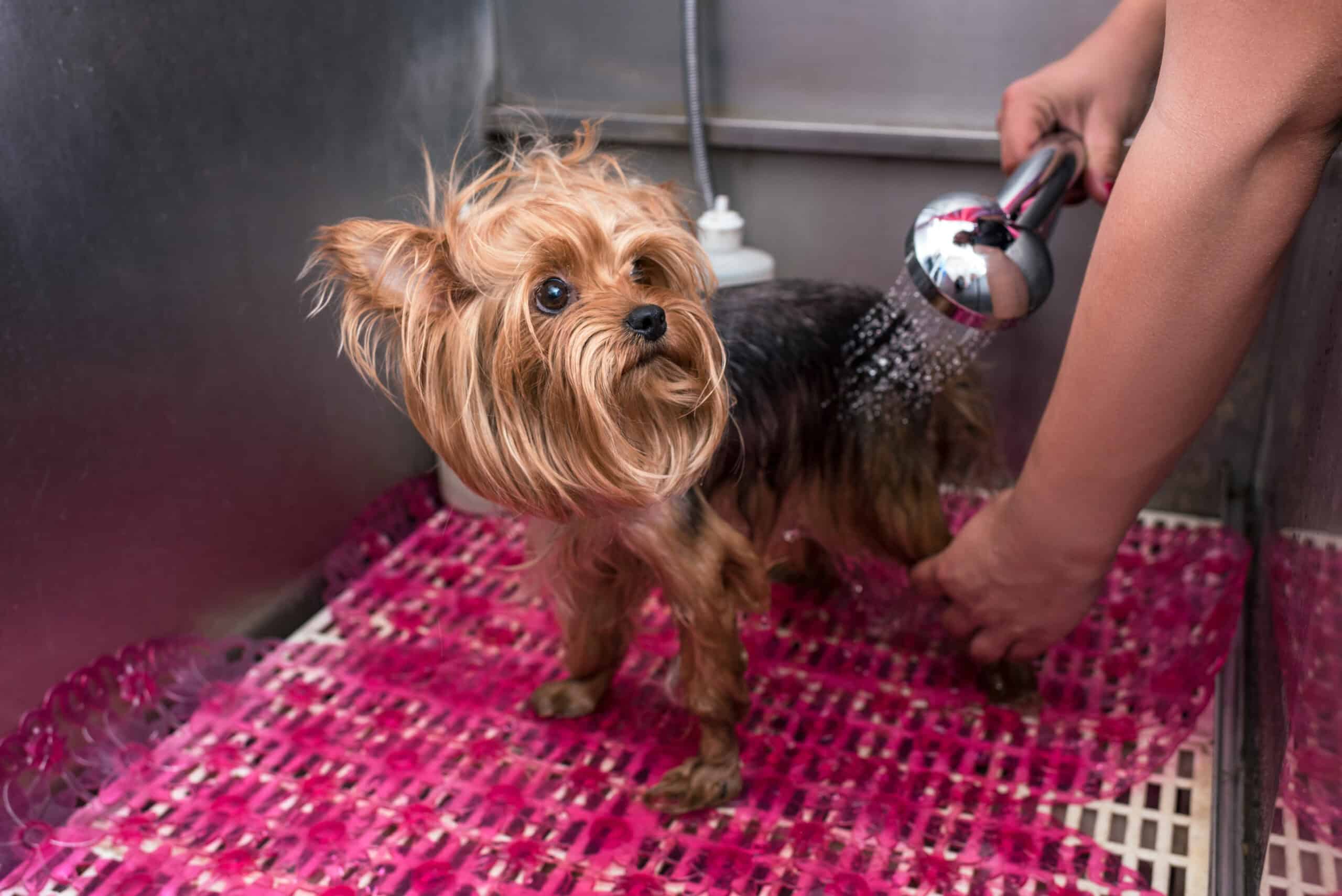
A dog who licks excessively during or after grooming may be attempting to self-soothe following a stressful experience. Having both the groomer and the carer recognise this allows us to adjust the grooming approach, implement cooperative care techniques, and create a more positive experience during future grooming sessions (Yin, 2009).
Note: I will discuss how we can intentionally use licking behaviours (in a positive way) to help reduce stress in grooming context in another post.
Information Gathering
Dogs experience the world primarily through scent but did you know that licking is an extension of their olfactory investigation? Perhaps you have noticed this when you’ve been out walking your dog – your dog stops to sniff the 100th post, and like clockwork, the tongue comes out to have a taste. You may think your dog is being disgusting, but actually, there’s a whole lot more happening at that very moment.
I’m always telling my clients to resist the urge to pull their dog away and remember that, to them, sniffing (and licking) the lamp post is their way of reading the newspaper (I call it “The Daily Sniff”) – and it’s sometimes the only opportunity they have at some enrichment in their life.
Equally, when a dog licks your skin they’re gathering information about where you’ve been, what you’ve eaten, and even your emotional state – they gather this through the detection of pheromones and hormones in your sweat (Sommerville et al., 2017). I could swear that my dogs go in momentary huffs with me after a day of grooming other dogs, and this could be why.
In any case, licking behaviour is rooted in survival instincts and a need to bond socially. In wild canid populations, pack members lick each other to gather information and maintain social cohesion (Mech and Boitani, 2003).
Attention-Seeking and Learned Behaviour
And let’s be honest, licking often works brilliantly as an attention-getting strategy – if a dog licks you and receives petting, verbal praise, or even just eye contact, that behaviour can be reinforced (Pryor, 2019). Over time, dogs learn that licking results in human interaction, regardless of whether the attention is positive or negative.
Reading the Full Context
The key to understanding what your dog is communicating through licking lies in observing the entire behavioural context, and never being tempted to interpret a single behaviour in isolation.
Licking must be read alongside other communication signals the dog will absolutely be expressing – you can read more about calming signals in my other post here.
The Environmental Context
Additionally, considering what is happening in the environment at the present moment, and on the moments leading up to the licking behaviour:
- Has there been a change in routine whether in the salon or at home?
- Are there unfamiliar people, animals, sounds present?
- Is the dog in a novel or potentially stressful situation (vet visit, grooming salon, new location)?
- What happened immediately before the licking began?
- How did you respond to the licking behaviour initially – did this intensify or relieve the behaviour?
- Have you used a different product or tool?
- Have you changed something in your grooming space?
You may think this is absolutely OTT, but trust me, the smallest thing could make the biggest difference.
In her book, ‘Animals in Translation’, Temple Grandin wrote about a time she was called in to investigate cattle in a Slaughterhouse who were getting overly stressed for no apparent reason. Upon inspection, she observed a light reflecting off of a piece of steel metal that was causing the cattle considerable stress, once removed the cattle were much more calm (not the nicest of examples), and while I wouldn’t recommend her work for obvious reasons, the lesson was significant – every little thing matters.
Individual Dog Factors
Every dog is unique, and factors such as breed tendencies, past experiences, health status, and individual temperament all influence behaviour (Serpell and Duffy, 2014). A dog with a history of anxiety may use licking as a coping mechanism more frequently than a confident, well-socialised dog.
If you suspect that a significant behaviour need is the cause of licking behaviour, best practice would be to refer the dog to an experience canine behaviourist for throughout assessment, since these coping mechanisms can quickly develop into more chronic disorders such as OCD (yes, even in dogs!).
Other Factors Explained
Self Grooming and Hygiene
Dogs lick themselves to maintain cleanliness, remove debris, and attend to wounds and/or irritations and while this is normal behaviour, excessive self-licking can indicate underlying medical issues such as allergies, skin infections, or pain (Scott et al., 2001).
As groomers, recognising the difference between normal grooming behaviour and compulsive licking is crucial for identifying dogs who may need veterinary attention.
Social Bonding Within the Family
Licking does play a role in social bonding, both between dogs and humans. Mother dogs lick their puppies extensively, which serves multiple purposes:
- cleaning
- stimulating elimination
- strengthening the maternal bond (Foyer et al., 2016)
In multi-dog households, dogs may lick each other as part of their social repertoire, reinforcing hierarchy structure, showing deference, or simply engaging in affiliative behaviour. When directed at humans, this can be an extension of that social bonding instinct, particularly in dogs who view their human family as part of their social group.
How To Respond To Licking Behaviour
Understanding the “why” behind licking allows us to respond appropriately and meet our dogs’ needs.
When Licking Signals Stress
- Remove or reduce the stressor when possible
- Provide space and choice – allow the dog to move away or take a break
- Implement calming techniques such as slow, predictable movements and a quiet environment
- Avoid punishment or scolding, which will increase anxiety
When Licking Is Attention-Seeking
- Redirect to an appropriate behaviour (sit, touch, or another trained cue) and reward
- Reinforce calm, polite behaviour rather than demanding behaviour
- Ensure adequate mental and physical enrichment to reduce boredom-induced licking
- LISTEN – if your dog is licking for attention, there is a reason why that is
When Licking Indicates Medical Issues
- Observe for patterns – note down when, where, and how often the licking occurs, along with the severity of the licking
- Check for physical causes – can you see any potential skin flare-ups, wounds and/or changes to the dog’s posture/movement?
- Consult a veterinarian if licking is excessive, focused on one area, and/or accompanies by other symptoms
In Grooming Contexts
- Recognise licking as communication – the dog may be saying “this is uncomfortable”, or “I need a break”
- Implement cooperative care principles that honour the dog’s communication attempts
- Adjust your approach based on what the dog is telling you, not what you expect and want
- Build positive associations through desensitisation and counter-conditioning
The Bottom Line
Dog licking is a rich, multifaceted behaviour that serves numerous functions:
- communication
- stress relief
- information gathering
- social bonding
- hygiene
Whilst affection may be part of the equation, it’s rarely the whole story.
By moving beyond the “kisses” narrative and learning to read the full context of our dogs’ behaviour, we become better advocates for their welfare and more effective communicators in return. This is particularly crucial for those of us in the professional pet care industry, where understanding canine communication can mean the difference between a stressful experience and a positive, cooperative one.
The next time your dog licks you, pause and observe.
Ask yourself:
- What is their body language telling you?
- What is currently happening the environment around your dog?
- What ight they actually need in this moment?
- What are the chances your dog is licking your right now as a way to express affection?
Learn to think outside the box!
Bibliography
Bradshaw, J. (2011) In Defence of Dogs. London: Allen Lane.
Coren, S. (2000) How to Speak Dog: Mastering the Art of Dog-Human Communication. New York: Free Press.
Foyer, P., Wilsson, E. and Jensen, P. (2016) ‘Levels of maternal care in dogs affect adult offspring temperament’, Scientific Reports, 6, p. 19253. doi: 10.1038/srep19253.
Horowitz, A. (2009) Inside of a Dog: What Dogs See, Smell, and Know. New York: Scribner.
Mech, L.D and Boitani, L. (eds.) (2003) Wolves: Behaviour, Ecology, and Conservation. Chicago: University of Chicago Press.
Overall, K.L. (2013) Manual of Clinical Behavioural Medicine for Dogs and Cats. St. Louis: Elsevier.
Pryor, K. (2019) Don’t Shoot the Dog: The Art of Teaching and Training. 3rd edn. New York: Ring Press.
Rugaas, T. (2006) On Talking Terms with Dogs: Calming Signals. 2nd edn. Wenatchee: Dogwise Publishing.
Scott, D.W., Miller, W.H. and Griffin, C.E. (2001) Muller and Kirk’s Small Animal Dermatology. 6th edn. Philadelphia: W.B. Saunders.
Serpell, J.A. and Duffy, D.L. (2014) ‘Dog breeds and their behaviour’, in Horowitz, A. (ed.) Domestic Dog Cognition and Behaviour. Berlin: Springer, pp. 31-57.
Sommerville, B.A., Settle, R.H., Darling, F.M.C. and Broom, D.M. (2017) ‘The use of trained dogs to discriminate human scent’, Animal Behaviour, 84(6), pp. 1295-1301.
Yin, S. (2009) ‘Low stress handling, restraint and behaviour modification of dogs and cats’, Cattle Dog Publishing, Davis, California.