If you ask a groomer whether they are a dog trainer, most will probably say no, and technically they’d be right.
Dog grooming curriculum doesn’t train the groomer how to train the dog how to perform conventional dog training activities such as stay, come and give paw, nor does it teach anything about the various different training models and methods that currently exist.
Grooming is considered, mainly, a task-oriented profession with one main purpose – to wash and style a dog.
Anything beyond this (behaviour and training) falls into someone else’s lane.
However, whether we like to admit it or not, every grooming session teaches the dog something and as such, influences their behaviour.
This means groomers have a responsibility to look beyond the haircut and understand, more intricately, the role grooming plays when it comes to training dogs and how this will influence their lives outwith the grooming salon.
What are groomers teaching dogs?
Without even realising it, groomers are working within a dog training model – that model influences how the groomer will interpret behaviour, respond to stress, make professional decisions, and define success.
Understanding what dog training models are doesn’t mean having to become a licensed/qualified dog trainer, but it does mean becoming more informed and better equipped to working with dogs ethically, and in a way that supports how dogs learn.
During my exploration of the many grooming career pathways, I found that the majority of theory provided to students covered one model more than others – dominance theory – going on to reference famous dog trainers, well-known for their outdated views and approach.
But there’s no denying that dog training has undergone a powerful transformation over the last few decades – force, control, hierarchy, and submission are now increasingly being replaced with cooperation, guidance and emotional support, and it’s backed by up-to-date scientific research and welfare legislation.
Before we decide how best to work with dogs, we must first understand that dog training methods not only shape how dogs behave, but also how dogs come to feel about the world around them.This ultimately means that our decision is not only relevant, but significant.
Furthermore, training is not a neutral experience for any dog; it is either supportive or suppressive in nature.
And there are three main approaches that consume modern discussion:
- Dominance-based training
- Rewards-based (“force-free”) training
- Balanced training
It’s important to note that each of these methods’ can provide evidence to support its effectiveness, but it’s only when looking at their impact beyond immediate results, that we begin to notice the risks to welfare, and how they all differ.
The evolution of ‘Dominance Theory’
Dominance theory originated from studies of captive wolves and suggested that dogs constantly seek to challenge humans for “alpha” status.
This led to training methods based on:
- Physical corrections
- Intimidation tactics
- Force and submission
- Punishing “undesirable” behaviour
The problem?
Captive wolves behaved much differently to wild wolves, and both captive and wild wolves are significantly different to domesticated dogs.
The results of those early observations were irrelevant, and Mech himself would go on to debunk them.
Despite this, many dog trainers remain loyal to the method because dominance-theory proves to be incredibly “quick” at correcting undesirable behaviours, and who could argue?
There are not many individuals who would continue to repeat a behaviour if the consequences were to be hit, forcefully pinned down, pinched, sprayed with water, and/or zapped by an electric collar –
fear is undeniably, a great tool to coerce and control.
The issue with this method wasn’t only that it was based on irrelevant research, but that it didn’t consider the long-term physical, psychological, and physiological damage it might do to a sentient being – while a “quick-fix” appealed to the impatient professional/carer, results barely ever lasted without worrying consequences emerging, including:
- advanced fear-induced aggressive behaviours
- chronic health disorders including anxiety, stress, insomnia, and even OCD
Suddenly, the quick fix develops into deep-rooted trauma that is much more difficult to relieve and resolve.
The shift from Dominance to Rewards Based Training
As science evolved, so did our understanding of dogs.
Research into stress, learning theory, emotional processing, and neurobiology showed that fear-based methods:
- Increased anxiety
- Damaged trust
- Suppressed behaviour without resolving cause
- Increased the risk of aggression
Contrary to this, positive-based trainers were getting more promising long-term results.
By focusing on:
- Positive reinforcement
- Choice and consent
- Emotional safety
- Trust-based learning
Here sparked a fundamental shift from “How do I stop this behaviour?” to “Why is this behaviour happening?”
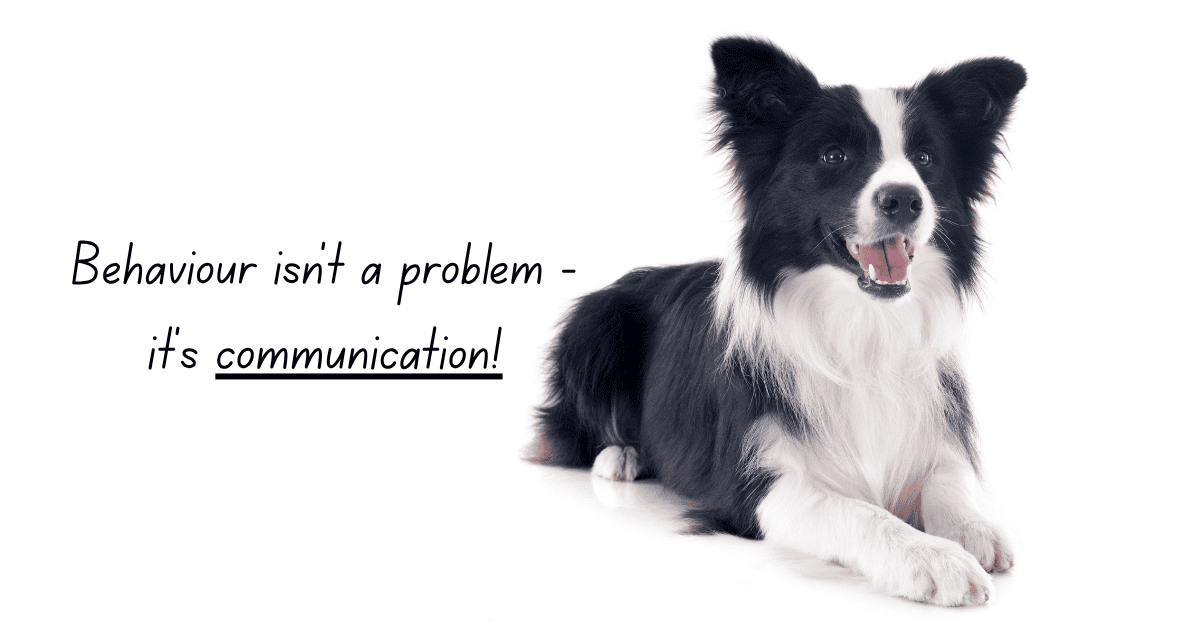
These individuals finally realised that the many behaviours they were told they had to “correct”, were completely normal canine behaviours, vital for effective communication, not to mention valuable insights, into the minds of dogs.
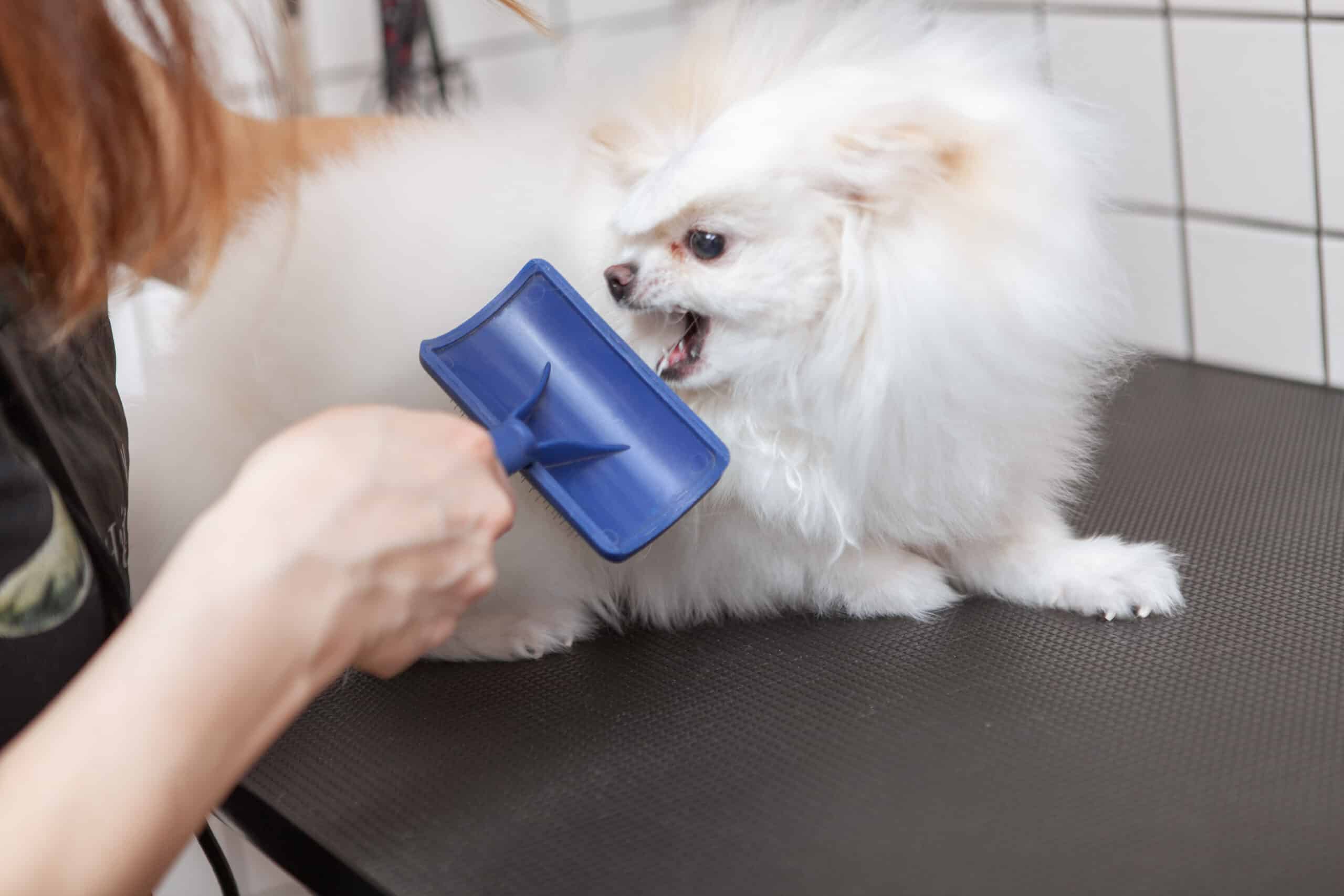
Where a less behaviour-savvy professional would see growling in a high-stress environment as an “aggressive” or “reactive” behaviour, a more behaviour-savvy professional would see a healthy and controlled dog telling them, very clearly, they need space.
That same behaviour-savvy professional would also know that growling could also mean something completely different – all depending on the context, and series of events on the lead up to the growl being observed.
The point is, more people noticed that when we instantly revert to punishing a dog for displaying a form of communication that we deem “undesirable”, we don’t resolve the problem, we simply remove the warning, making future events more likely to ignite a more advanced behavioural response from the dog.
What is ‘Force Free’ Training?
An approach to dog care that aims to inflict no harm, no fear and no pain in dogs.
The approach these individuals take relies heavily on positive experiences, which are created through a blend of desensitisation, counter-conditioning and positive reinforcement methods.
Reward-based training uses:
- Rewards to create positive associations and experiences
- Environmental management to help reduce sensory overload and triggers
- Emotional regulation through agency and opportunities to consent
- Clear and healthy communication between human and canine
And significantly, it either ignores undesired behaviours, or it aims to change an emotional state from negative to positive by using rewards.
Ultimately, it recognises dogs as emotional beings whom thrive on feeling safe.
Rather than controlling behaviour, it aims to understand behaviour while supporting the dog in learning ways to build confidence and resilience to a life of experiences in this man-made world.
This method supports and aligns with modern animal welfare frameworks that prioritise:
- Physical and emotional safety
- The overall wellness of a dog
- The dog as an individual
While it may sound rather romantic in nature, the benefits of this method continue to prove worth the extra time and effort needed to embrace a more dog-centred approach.
Is ‘Balanced’ Training the “middle ground” or does it breach welfare?
Balanced training claims to blend reward-based methods with corrections and punishment only when “necessary.”
What needs emphasising is that when punishment is considered necessary, it will involve the use of tools such as:
- Prong collars
- E-collars
- Slip leads
- Physical or verbal intimidation
There’s a significant ethical conflict in this method because aversive tools, however often/unoften they are used, cause fear and pain in the receiver. They work not by teaching, but by suppressing behaviour through discomfort or fear.
While a behaviour may stop initially, we already understand that the underlying emotional state remains unresolved, and in time worsens.
The best example of why this method is arguably the most unethical of all methods would be to consider the way a sociopath might love bomb then gaslight their lover to control them.
Would you defend this person because they can be nice when they want to be, or would you consider their behaviour cruel and incredibly manipulative?
Now ask yourself: how would you feel about this person? Would you feel conflicted? Would you feel in doubt of your own choices? Would you feel resentful but afraid to express your pain? How long do you think you could last before finally fighting back?
That’s how I see Balanced Training – the sociopathic method of dog care.
Aversive tools and their implications simplified
Aversive tools do not merely “correct” behaviour.
They:
- Trigger stress responses
- Increase cortisol levels
- Create fear associations
- Damage the human-canine bond
- Can cause long-term psychological harm
Many animal welfare frameworks and legislation increasingly recognise that using pain or fear as a training mechanism contradicts modern welfare standards, and as such, have no place in society today.
How can we use training methods to make grooming results better for both the dog and groomer?
First we must begin to see grooming sessions as one of the most intense learning environments a dog experiences.
Conventional grooming sessions involve:
- Non-consensual handling
- Excessive restraints
- Overwhelming sensory exposure
- Fast-paced environment
And can I note that any holistic groomer who ticks any of the above points is not “holistic”, they are still working conventionally.
When we make more informed decisions on how we proceed with grooming sessions, we can reduce stress and build trust at the same time.
Understanding that every part of the grooming process is trainable, but also, can be positively introduced to prevent stress and fear from escalating.
This is where training philosophy meets real-world practice.
With this approach, a ‘positive-only’ grooming environment becomes an extension of dog training and behaviour – it interlinks and connects to all other experiences a dog has, and it supports the work and progress both training and behaviour professionals are making with the dog beyond the grooming salon.
The individual dog and the bespoke care plan
This is the part where I emphasise (again) that no two dogs are the same.
Grooming, and training, must account for things like:
- Genetics
- Trauma history
- Sensory sensitivity
- Health and current emotional state
- Emotional resilience
One-size-fits-all approaches, especially punishment-based ones, fail to respect individuality and in turn create environments that are restricted, confined, and increasingly stressful for all.
Through The HGA, students are given bespoke care plan templates that encourage the groomer to think outside the box and provide an adaptable grooming experienced based on the individual needs of a dog, at each new session.
It’s not enough to cater to the needs of the individual dog, it’s important to also keep in mind that experiences and circumstances change, and what was good for a dog one session, might not be the best approach for the dog, the next.
Successful groomers are those who are open and able to adapt to the needs of the individual dog.
The future of grooming, and training in grooming environments
The future of ethical dog grooming lies in:
- Science-backed learning theory
- Compassion-led handling
- Respect for canine communication
- Emotional safety as well as physical safety
- Consent-based practices
Grooming and training are no longer about dominance and “showing a dog who is boss” – they are about relationship building, effective communication, and the highest welfare standards.
The Bespoke Holistic Grooming Planner
If you would like to grab a copy of my official bespoke planners for your dog, you can purchase one on Amazon.

(Please note: At no extra expense to you, I may receive a small commission if you use the link to purchase your copy via Amazon, thank you in advance for your continued support in my work).