“But dogs can’t consent, and grooming can never be truly consensual anyway“
In one sense I can agree with this all-too-common statement that I’ve read various times during the popular “consensual grooming” debate.
Because dogs do not understand the human word “consent”. They don’t sit weighing up the long-term benefits of grooming before making conscious, verbal decisions on how they wish to proceed. They don’t sign waiver contracts, or provide informed consent in the legal or philosophical sense.
But here’s where I’m inclined to support the term – in the context of working with dogs, human language is a tool that we use to help us communicate what we are seeing.
Human language is a human-focused educational tool
Every word we use to describe an animal’s behaviour is, ultimately, a human concept.
Dogs don’t use our language to communicate when they are feeling anxious, frustrated, optimistic, fearful, confident, or emotionally sound, they use their own canine vocalisations and body language to communicate – but our understanding of how they feel, is effectively expressed in the words we use to describe what we see being expressed, it’s simply how we learn.
Human language provides humans with a framework for understanding what is likely happening to a dog at any given moment. Without the words we use to describe them, we would struggle to teach welfare, behaviour, learning theory, and emotional health.
The words we use themselves are merely labels that help us to identify the dog’s emotional needs.
Dogs, obviously, speak ‘dog’
As you may already know, most dogs communicate how they are feeling incredibly well – this has never been an issue.
What makes understanding them so difficult, is how little the average human fails to understand what their communication cues mean.
We understand that dogs express how they are feeling through:
- every shift in body posture
- every change in facial expression
- every hesitation, glance away, or lean forward
- every change to the physiology
- every moment of stillness
- every vocalisation
It’s true that a dog doesn’t logically process experiences before deciding whether he/she would like to proceed with a task, their feelings instinctively direct action.
While humans use their more advanced brains to weigh the pros and cons to any given circumstance, without realising it, dogs are reacting to stimuli through feelings – feelings that are naturally influenced by learned history, current health state, and the environment itself.
It could be assumed that at any given moment, a dog is:
- feeling safe/unsafe
- feeling unsure/confident
- feeling rushed/relaxed
- feeling sore/comfortable
- feeling frustrated/happy
- feeling cooperative/resistant
Behaviours are the physical and physiological expressions of an underlying emotional feeling and subsequent need.
The Magic of holistic grooming – stephanie zikmann
Words, therefore, are a human’s interpretation of observable behavioural communication that the dog is expressing.
Why use the word “consent”
When dog professionals talk about “consent-based” method, they aren’t suggesting that dogs understand what the word consent is, or means.
Instead, the words are used to prompt humans into remembering that tasks should not simply happen to a dog without consideration of what that dog needs and wants.
While a dog doesn’t have the ability to understand what consent is, they understand fully the difference in feeling between a task that is carefully introduced at a pace comfortable for the dog, and a task that is forcefully carried out despite how much the dog is struggling.
Consent, to dogs, is merely a feeling that we can identify through the behaviours they express, and encourage in the way we work with the dog.
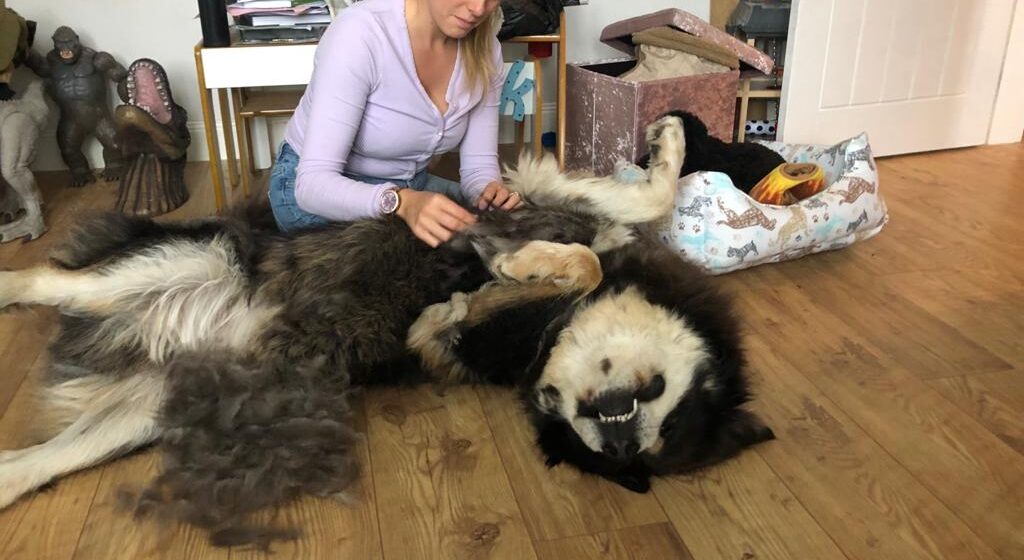
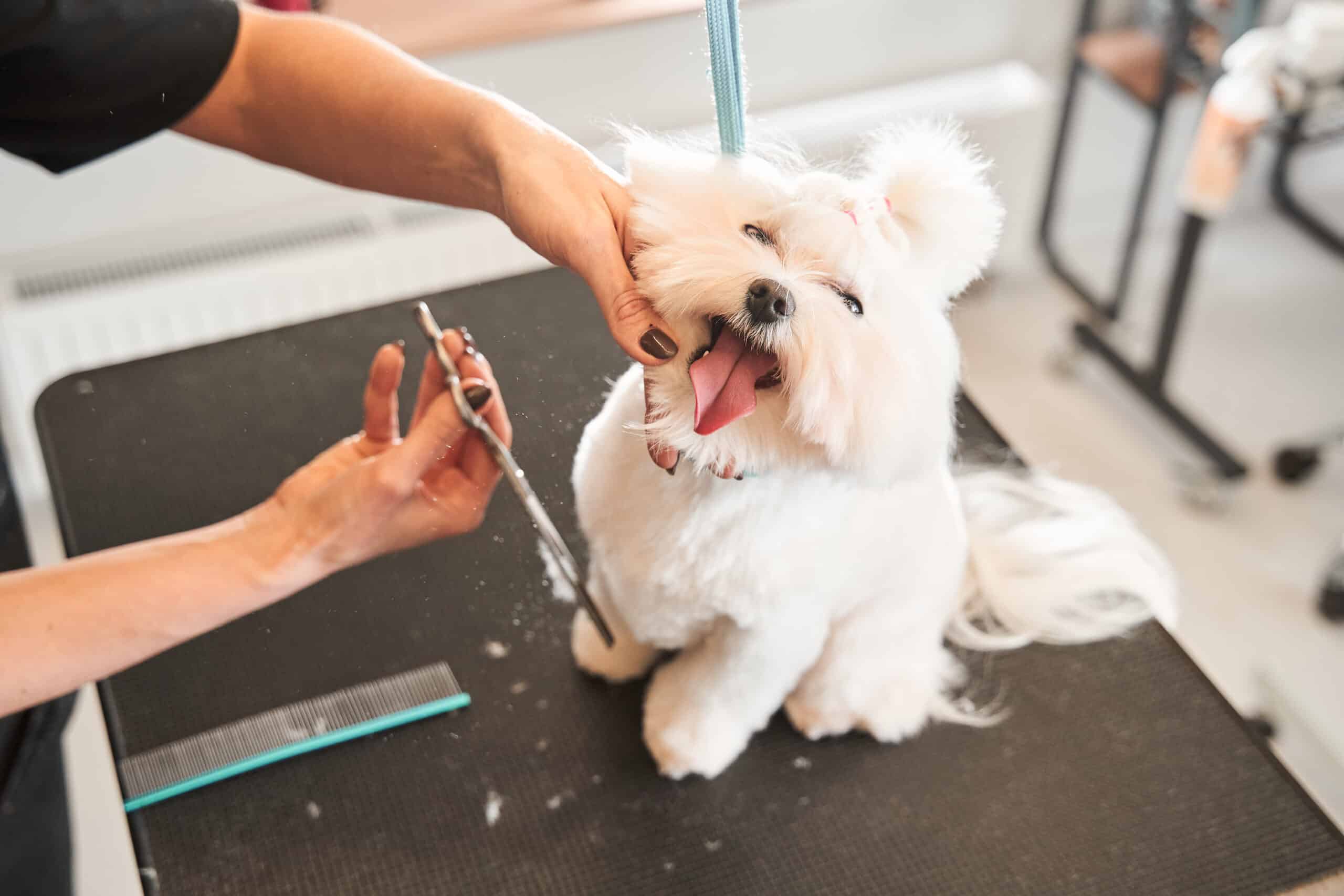
With many groomers defaulting to working on the dog, a consent-based groomer identifies that the grooming process should be a two-sided activity, with two participants directing the session.
This means that the dog’s:
- communication should influence our decisions
- body language should guide our pace
- emotional state should shape our handling and approach
Their choices should matter whenever it is safe and practical for them to do so.
While there will always be a degree of control within the context of a professional grooming environment, the significance of providing the dog opportunities to consent, or communicate direction, helps to reduce stress and make the entire experience more positive and comfortable for both the groomer and the dog.
The purpose of behavioural language
I’ve found that many people become so focused on the dictionary definition of a word that they lose sight of what the word was trying to achieve.
Words like:
- trust
- cooperation
- confidence
- motivation
- optimism
- resilience
- frustration
- and so many more
Are all words we cannot directly observe, but that are observed through behaviour, and how it’s interpreted.
Language is chosen carefully to describe what the evidence most likely represents.
The word “consent” is shorthand to help form a baseline that supports an ethical and welfare-driven philosophy to canine care.
The bigger picture
The language we choose shapes the questions we ask.
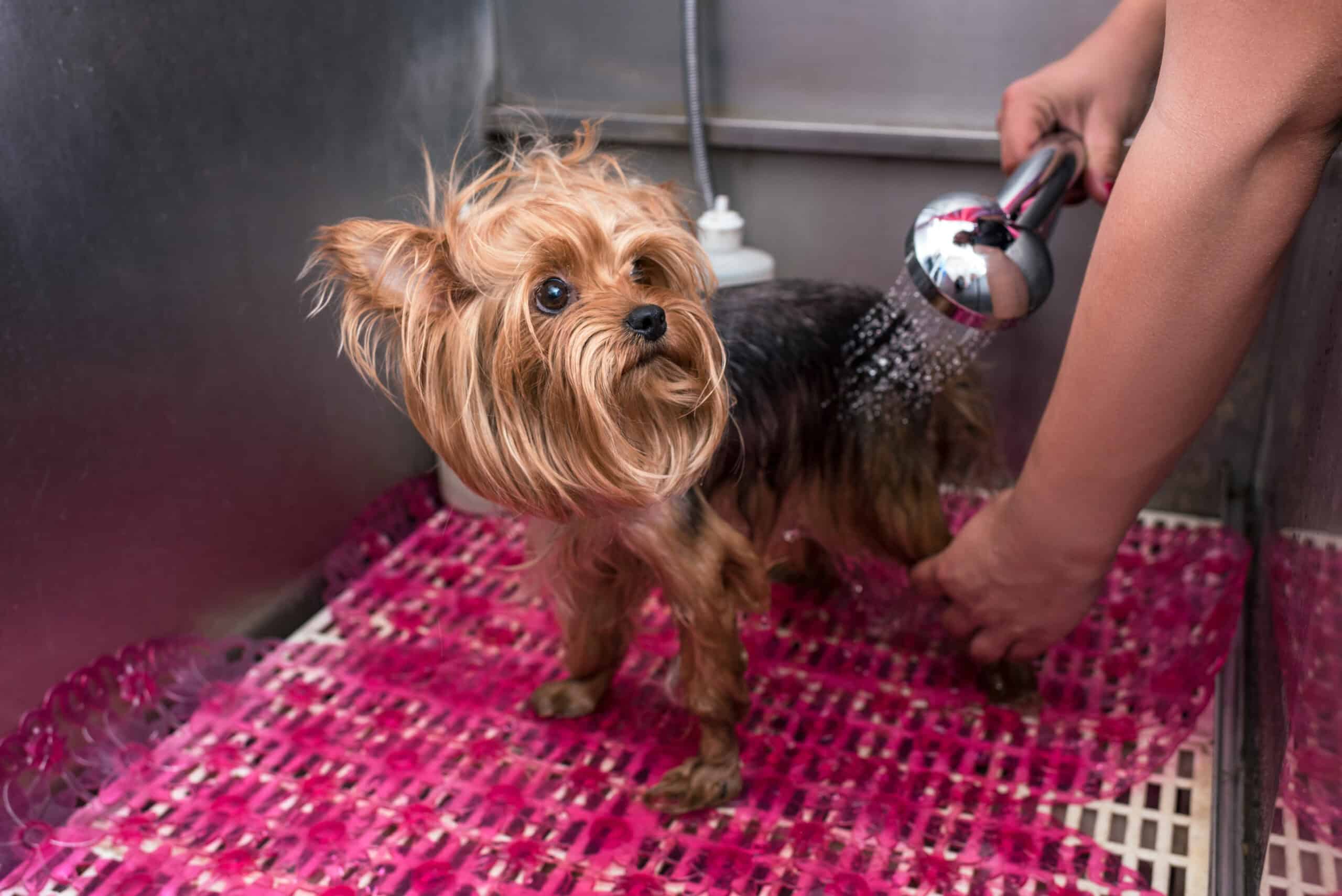
If we take grooming as an example, and we look at the task of grooming as something we do to dogs, our focus (and how we measure success) will naturally default to achieving compliance in order to complete the activity as efficiently as possible.
But if the language we use can quickly remind us that the dog is more than an object – the dog has feelings, needs, preferences, and limits – our approach becomes more than a structured process of task-based activities.
We begin to ask ourselves deeper questions to broaden our understanding more, questions like:
- “What is this dog trying to communicate right now?”
- “How can I slow down the process to give the dog more time to adjust to what is happening?”
- “Do I need to modify my grooming approach to consider this dog’s mobility restrictions more?”
- “How can I help the dog see this part of the process isn’t scary?”
And so on.
Language can be used to ignite a desire to think outside the box and develop our ability to understand dogs better.
It’s about welfare, not semantics
Whether you choose to use phrases such as consent-based, cooperative care, choice-led, agency, or something else entirely matters far less than the principle behind it.
The purpose isn’t to humanise dogs, it’s to dogify humans in a way humans understand – (made up word but hopefully you get my meaning)
The goal is to remind ourselves that the dog standing on the grooming table is more than a coat to be clipped and a skin to manage – they are sentient and they absolutely have the capacity to communicate how they are experiencing the world around them.
If the language we use encourages more people to pause, observe, listen, and respond to dogs with empathy then it’s worth it, but equally, if it more often causes confusion then I do believe we are duty bound to understand why that is, and how to prevent the intention getting lost in translation.
When the word becomes the conversation
While researching this topic, I decided to ask an AI system a simple question:
“Does using the word “consent” improve understanding, or does it actually hinder it?”
I’d be lying if I said that the response was a complete surprise…
It revealed that while the underlying welfare philosophy was valuable, the word consent often becomes the focus of the discussion, rather than the principle it’s trying to communicate.
Rather than the word encouraging questions like:
“How can we make grooming processes better for the dog”, people are inclined to focus on arguing whether dog’s can literally consent – statements such as “dog’s can’t consent” are frequent responses.
The issue with this is that once the discussion centres on the human ideology of the term, the point itself is lost – there’s little consideration of what the term is meant to mean in the context of working with dogs and how it could be identified when observing dogs.
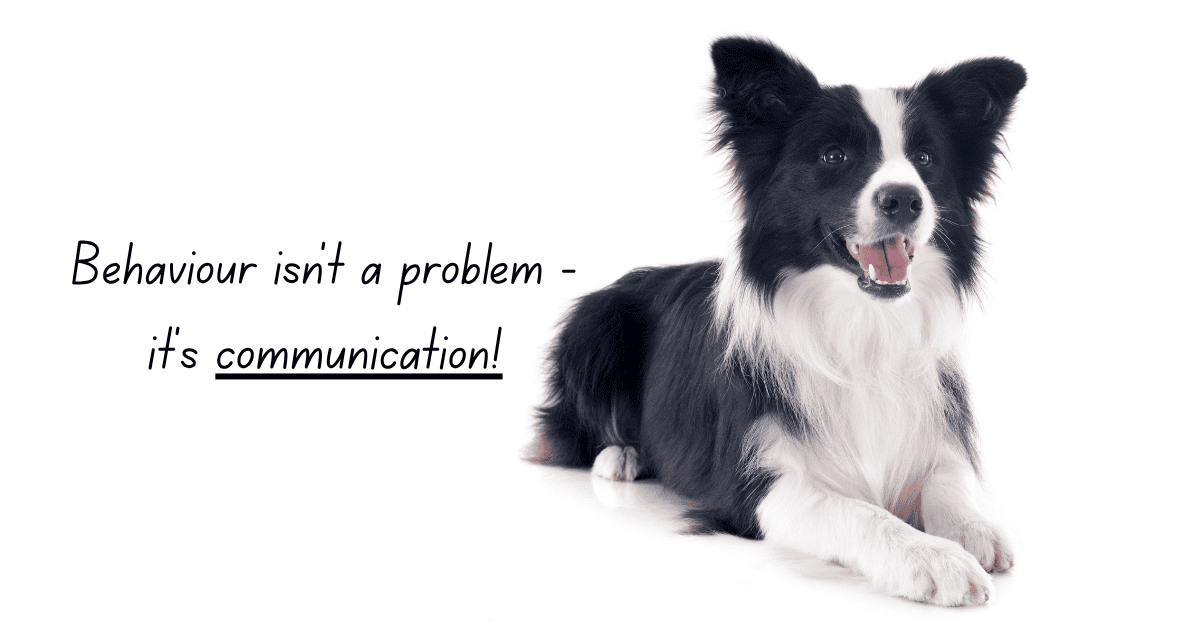
The feedback also challenged me to reflect on my own work, and how I put concepts across to my audience – perhaps the most important concept isn’t consent at all, perhaps it’s simply communication.
Everything that I do is ultimately built upon an understanding that dogs are constantly communicating with us – they are masters of feeling, and living their life through feeling. They quite successfully know how to express their needs, and yet they are also incredibly adaptable when given the chance to develop their resilience and confidence to novice tasks.
If I think that the language I use causes people to become distracted from the purpose, then I believe it’s my responsibility as an educator to ask whether there is, indeed, a less confusing way to teach the significance of the dog’s ability to participate to experiences. I’m not really interested in defending a word for the sake of being “right”.
I’m more interested in developing my own teaching style to help make important breakthroughs in welfare less confusing and more accessible, for anyone who chooses to give me their time.