Lick mats and slow feeders have become a go-to tool in more holistic and cooperative salons around the world – I personally have recommended, and used, them over the years to help calm dogs and create positive associations to stressful grooming tasks. But, my experience with Nala – my late Tibetan Mastiff – also highlighted a risk that many groomers don’t think to consider when deciding how best to form positive associations, which is something I feel we need to talk more about.
Why are lick mats and slow feeders effective for some dogs?
From a biological point of view, we know that licking behaviours release hormones that reduce cortisol levels in dogs – this is why we see so many dogs self-lick in stressful situations, or when in pain. The introduction of lick mats, for example, works because it redirects the behaviour to something moveable, while still providing those same calming effects needed to help build more positive associations to otherwise difficult tasks.
Additionally, things like snuffle mats and slow feeders, also work to keep the dog’s mind engaged providing enrichment benefits that also help by distracting the dog from the aversive stimuli while also shifting their emotional state from “this is stressful”, to “wow, this is fun and tasty” – the idea is that, without even realising it, the dog associates the aversive stimuli with the positive experience of licking/chewing/eating something tasty and so, very naturally, their negative association shifts to something more positive.
This method of behaviour modification is often referred to as ‘Classical Counter-Conditioning’ using ‘Positive Reinforcement’.
With this in mind, it’s very obvious why holistic groomers, including those studying with The Holistic Grooming Academy, have a selection of these tools in their salon. They work and because of this, are an important “secret weapon” in our tool kit.
When might food become a risk to groomers?
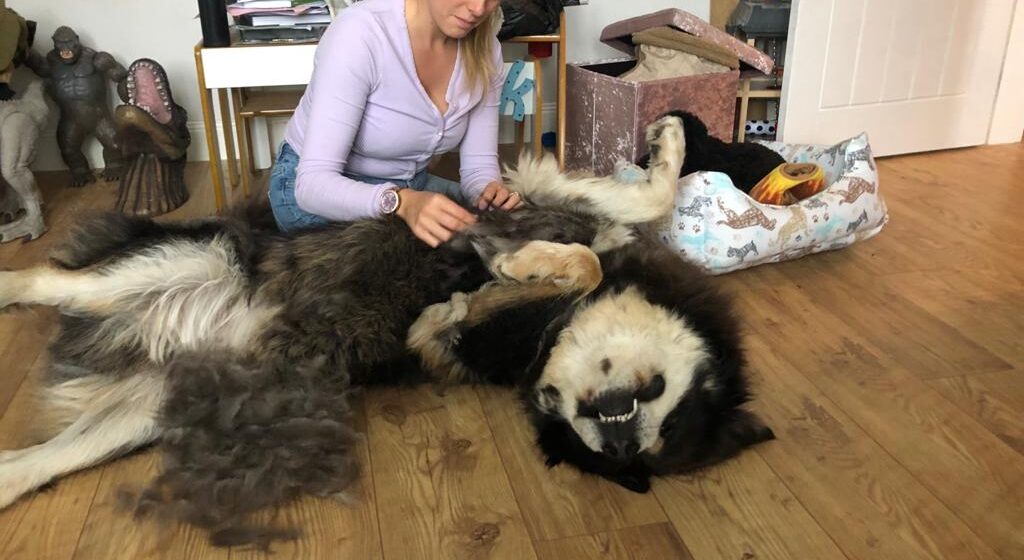
I briefly mentioned my late Tibetan Mastiff, Nala, and for good reason.
From the very first moment I brought Nala home, it was apparent she had quite a complex relationship with food. We discovered rather quickly that we could not safely feed her alongside any other dog in the household without running the risk of a dog fight ensuing.
We learnt the hard way when, one day, I forgot to close the door that normally separated her from our male Tibetan Mastiff, Louis. In a matter of moments, I found myself in between an attack, and before I knew it, I was bitten by Nala on the back of my leg in her attempt to get to Louis (ironically, she is the only dog to have ever bitten me).
My experience with Nala taught me a lot about how deep food aggression and resource guarding can go – without her, I would definitely not have been as interested in learning more about behaviour and would, most likely, be using food without much thought on the potential risks it can lead to.
With Nala, even the sound of a wrapper rustling was enough to kickstart a fight/flight response – her attention would almost instantly direct itself to any nearby (male) dog in her space – it was awful.
How this can be transferred to a grooming context is very simple – when you have a dog in your salon who has such a deep-rooted fear of not being fed, you have a ticking time bomb ready to explode at the slightest trigger, and this is something you must take very seriously.
Resource guarding behaviours are rooted in anxiety, not dominance as some more old-fashioned trainers might have you believe.
Most of these issues stem from a very early negative experience with food that involved the dog not getting enough, or any, food at all.
Commonly, when breeders introduce the ‘one-bowl’ concept to puppies, where they all share food from the same bowl, these problems can occur. The idea behind this approach is usually very genuine.
In theory, it’s assumed that by doing this early on all puppies will learn to share resources and in fact have no issues over food. The reality is that, in many cases, there will always be one or two puppies (usually the weakest of the litter) who get pushed aside and left without their belly full – these puppies learn, and continue to learn, that food is a scarce resource that they have to fight for.
Could you imagine growing up as a child with other siblings and having to race for food every single time, running the risk you might not eat if you aren’t fit, fast, or strong enough?
For dog’s with food trauma, introducing a high-value food into a high-pressure environment isn’t creating a calm environment or changing anything for the better, instead it’s creating a situation where the dog perceives the environment to be a threat to his/her survival, and you can expect a fast escalation of behaviours that put you, any other individual in your environment, and the dog at risk.
Dogs often need space when eating
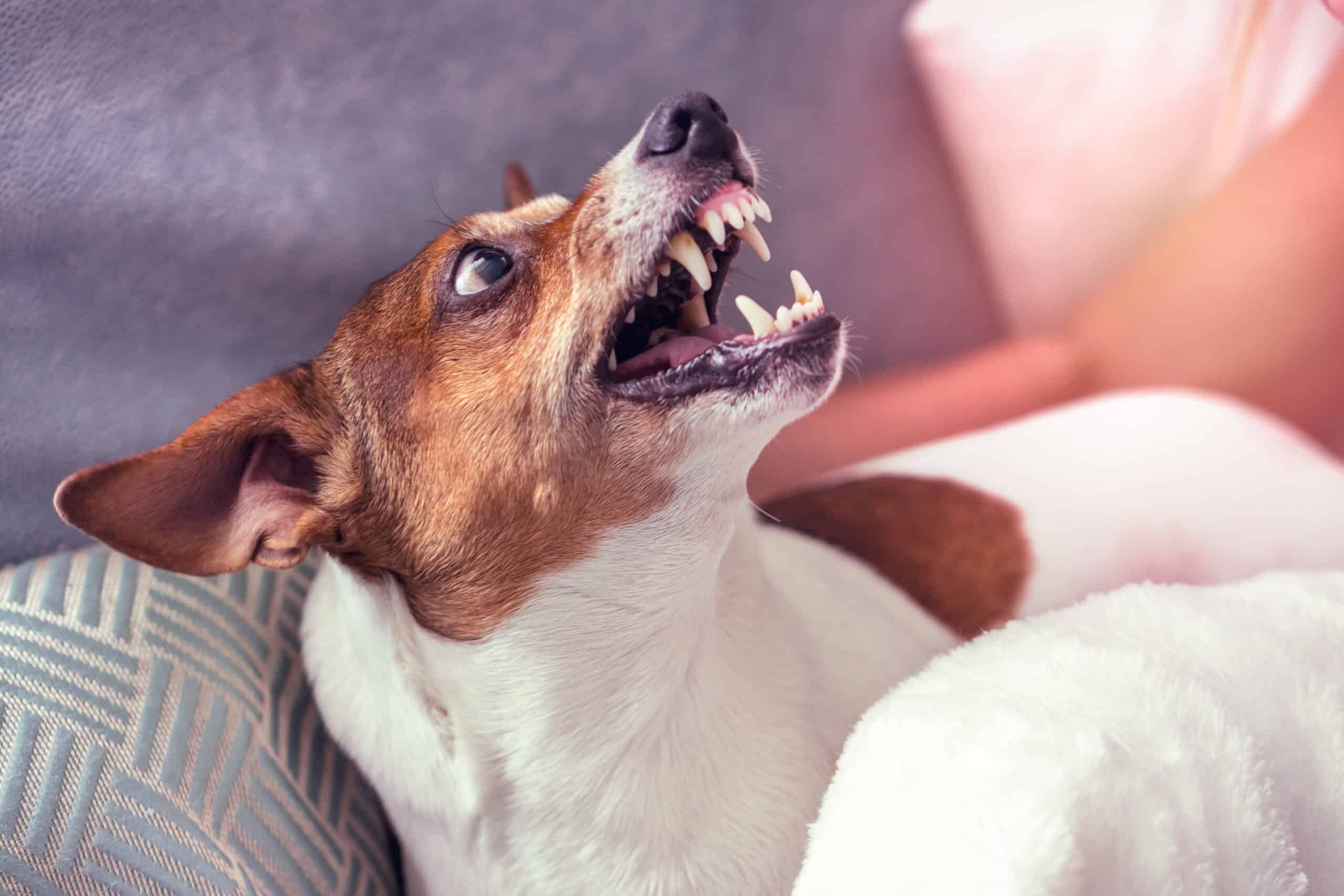
Especially when thinking of dogs with resource guarding tendencies, any sort of physical contact during a meal can trigger a defensive response which may look like aggression to an untrained eye.
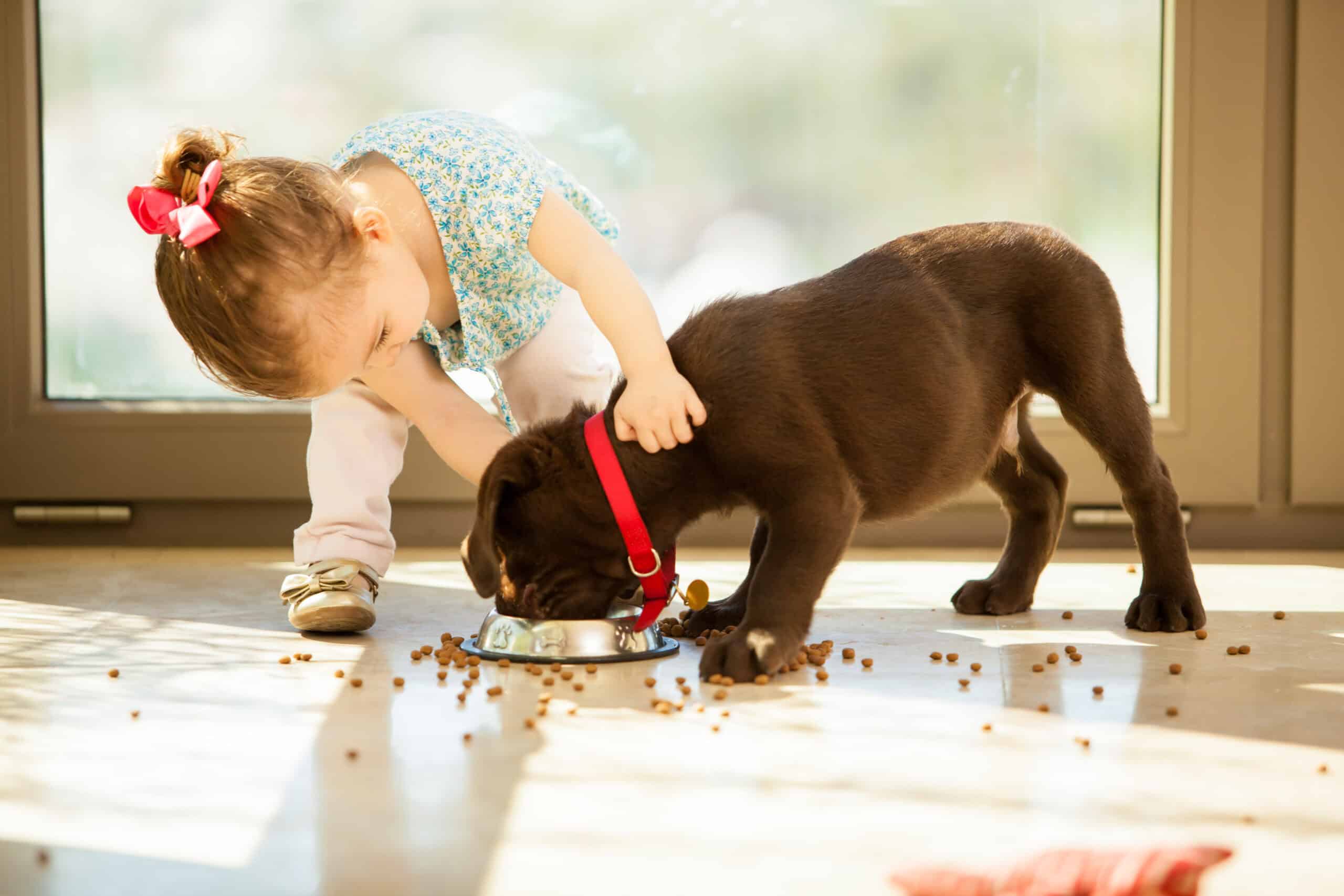
In my children’s picture book, ‘I Can Be A Dog Detective!‘, I teach readers to “never approach a dog eating dinner”, but how does this translate in the grooming room and are we practicing what we preach?
Many dogs need space to eat their meal, and this includes treats on lick mats and snuffle mats.
In grooming contexts, it’s not uncommon for the groomer to move the tool around the table or room in order to reach other parts of the dog’s body. When working with a dog with unresolved guarding issues, this can trigger a reflexive fear response (human approaching = loss of resource = fight to protect).
If we go one further, over time, the groomer’s hands themselves become associated with the loss of resource making any form of physical contact a potential trigger – what then happens to future sessions and/or any additional experiences where hands are required?
Such as:
- putting on a harness or collar
- petting the dog
- placing a bowl down
- health examinations
Suddenly there’s a whole lot more to think about, and the potential impact can absolutely extend beyond the grooming environment itself.
Many dogs find lick mats, snuffle mats and slow feeders, frustrating.
While lick mats, snuffle mats and other mentally challenging tasks are often sold as effective tools to calm dogs while providing them with enrichment, there’s also a risk that they do the opposite as well.
Not all dogs will find working for food fun at all, with many easily frustrated. This frustration can lead to high-arousal and an urgency around accessing the high value resource which can, in turn, be potentially risky.
Since the purpose of these tools are to slow access to food down and make a dog work hard to get it, there’s instantly an increased perceived value to the food itself. For certain dogs, especially those who already have a high food drive, have experienced food-related trauma, and/or are already in a heightened emotional state, this can create conflict rather than calm.
You may witness things like:
- rapid, frantic licking
- scratching and pawing
- increased body tension and overall irritability
- whining and/or an increase in various vocalisations
All signs of escalating stress, rather than a dog having fun.
It’s worthwhile emphasising here that if a dog is already stressed, adding an additional challenge between them and food isn’t a good idea at all. Food should only ever be introduced before any undesirable behaviours are present.
Too much air-intake is dangerous physiologically
If we also think about what happens when a dog is desperately trying to inhale food, what is this increased air-intake doing to the dog inside?
Aerophagia is a medical term which basically translates to “air swallowing”.
This is especially significant in deep-chested breeds of dog, and dogs with anxiety disorders. Aerophagia can cause a range of mild to serious health concerns including:
- gastrointestinal discomfort
- gastric dilatation-volvulus (otherwise known as bloat)
It therefore would be wise to think about what sorts of breeds of dogs these tools may not be suitable for, and/or how you might adapt the use of them to make the use of them safer for deeper-chested breeds.
How do we know if we are creating or reinforcing negative associations with food?
If we only use food in stressful situations, or paired with certain restraints and/or other negative experiences, we run the risk of spoiling the emotional value of food for the dog.
In many instances food itself becomes a negative stimuli for the dog.
Many trainers and groomers will advise dog carers to integrate their dog’s meal with training and conditioning, typically as a way to control weight. The risk with this approach is that food becomes something that the dog always has to work for.
I used to advise this myself – especially for elderly dogs and/or dogs already overweight, and while it can still be helpful to integrate this approach in these instances, it’s crucial that we know how to break it up so that these dogs are having plenty of opportunities to enjoy food without expectation, demands, and/or pressure.
When we are constantly using food as a way to help condition and/or counter-condition a dog, we can unintentionally make the dog more conflicted around food situations, which leads me on to the next point – bribery vs conditioning.
Bribery Vs Conditioning
Many handlers get confused and struggle to differentiate between bribery and conditioning when it comes to using rewards.
To keep it simple:
- Bribery is where food is used to get through the task, and the dog tolerates it because they want the food.
- Conditioning is where a dog learns that the task itself is safe and the underlying emotional state shifts from negative to positive.
The test is:
If the food disappears, and the desired behaviour falls apart – you haven’t successfully conditioned the dog at all. Instead the dog is complying to get what they really want.
If the food disappears and the desired behaviour remains mostly consistent – you are working towards successfully conditioning the dog to associate the task with something safe, and positive.
If not food, what?
Food (and toys) are just one reinforcer.
Reinforcers can also be actions – for example, allowing a dog to step away for a break is rewarding in its own right.
There’s considerable research that supports perceived control to be an effective way at reducing stress in animals, and if we spend time thinking about this more, it’s not difficult to understand why that is. Any animal will feel less safe when they have little-to-no control over decisions and actions that directly impact them.
When I delivered my keynote presentation, ‘Barking Up The Right Tree – Choice and Consent’ in Manchester way back in 2022, I gave an example of this to help the audience put themselves in the position of a dog restrained in the grooming space:

Imagine you are walking down the street, then out of nowhere someone strange decides to grab and throw you into a Van by the side of the road.
You are handcuffed, your ankles tied together with cable ties, and your mouth is taped shut. You have no idea who this person is, where you are going, or what they want from you.
With this in mind, we can use gentle and clear handling and communication to help make the grooming process more predictable and stable for a dog, helping them to anticipate what’s coming before it occurs. Adding to this, we can also incorporate verbal praise and physical touch in a cooperative and consensual way to help soothe, reassure and reward a dog throughout the grooming process.
When food can still be used for grooming
As I’ve said, there are times, after careful assessment, where I will still choose to use food to reinforce desired behaviours and help change an emotional response given that some basic ground rules are met:
- dogs using food must be “low-risk” for food/resource guarding
- food should only be used when working with dogs one-to-one
- food should be provided by the carer to help reduce liability (allergies)
- food should be used as a short-term tool, during the early stages of training
- a broken down bespoke care plan should be used in conjunction with the use of food and both carer and groomer should be fully onboard with the plan
- disclaimer should be signed by the carer to confirm behaviour history
Once the above are all considered, the use of food can be introduced to support both the groomer and the dog with their grooming journey, and should behaviours suggest that a dog is not comfortable the groomer should have a contingency plan in place to quickly and safely adapt the plan to remove the use of food completely.
The role carers play in safeguarding the groomer and the grooming environment, as well as their dog’s wellbeing
The most important thing is carer transparency when it comes to their dog’s history, behaviours and existing health condition, otherwise groomers are venturing into a grooming session blind.
It’s absolutely imperative that the groomer is made aware of any past incidents and/or experiences where a dog has shown:
- food/resource guarding behaviours
- frustration around food
- bite incidents in general
There are also a range of medications that can cause behaviour-related issues, especially around food and water. For example, some steroids can cause an increase in hunger and thirst in dogs which can sometimes lead to tension, anxiety and an increase of “aggressive” behaviours around those two resources.
If a carer is in doubt, it would be worthwhile for a groomer to support them with the right resources to help expand their knowledge in canine behaviour and communication signals, so that they can be better equipped to observe and identify any potential concerns and/or changes to their dog’s behaviour going forward.
Together, the groomer and the carer can take a dog through a few basic food response checks to help gauge through observation, whether a dog may be higher risk of food/resource guarding behaviours – while this is not the same as an advanced behavioural assessment from a qualified clinical behaviourist, they can really help both the carer and groomer understand a dog better, thus make safer choices.
Learn more with The Holistic Grooming Academy
Calm behaviour built on distraction disappears when the distraction does so depending on food alone is not an effective way to help support, relieve and/or resolve a dog’s underlying emotional need.
Instead, the groomer should use food to help support a dog short-term while working towards reducing the intensity (or dependency) of the reward. Ultimately, in order to truly thrive in any given circumstance and/or context, a dog must feel safe.
You can learn more about this topic and more via my CPD Accredited course, ‘The Behaviour Grooming Diploma‘.