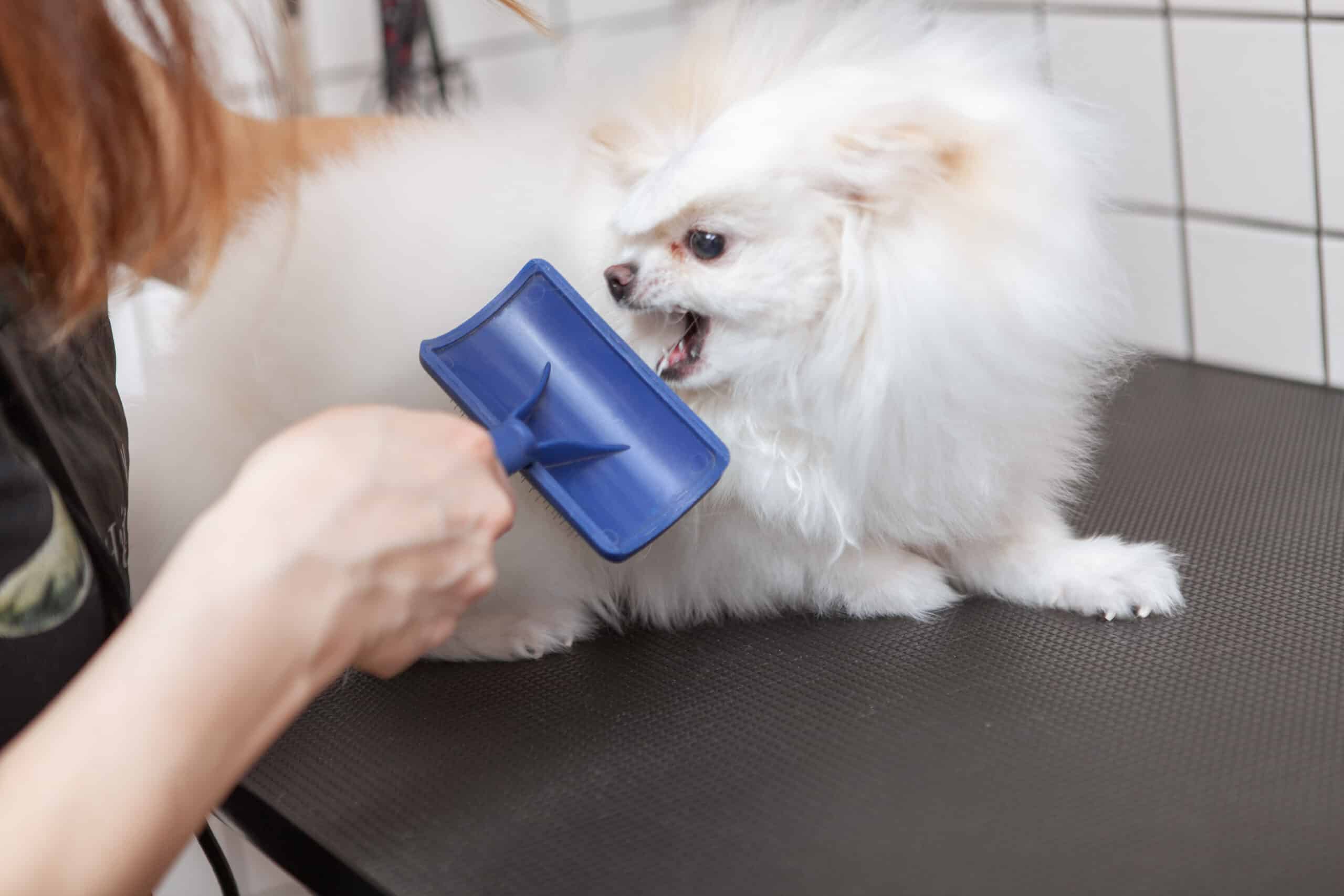
“The dog used to be absolutely fine during grooming, and then suddenly they started hating it!” is something I have witnessed many groomers and dog owners say over the years, but the reality is, it is very rarely “sudden” at all…
So why do some dogs “suddenly” hate grooming?
Most dogs do not simply wake up and decide they dislike grooming. More often, their behaviour is the result of accumulated experiences, increasing stress, unresolved discomfort, and/or repeated exposure to situations where they were coping outwardly but struggling internally.
As groomers, owners, and pet professionals, it is important that we learn to recognise the moment a dog begins showing signs of discomfort so that we can adapt before negative associations begin to develop. Because dogs often show us they are struggling long before behaviours escalate.
Tolerance is not the same as successful desensitisation
While many dogs are labelled “good for grooming” simply because they stand still, allow handling, or do not actively resist, there may be a whole lot more going that the groomer has not identified.
Some dogs cope by:
- freezing
- shutting down
- becoming overly compliant
- dissociating
- suppressing communication
These dogs are often praised for being calm or well behaved, when in reality they may be highly stressed and suffering internally.
Over time, continually pushing a dog through experiencing they are not emotionally coping with can change how they respond, especially if they are having a particularly “bad” day.
The dog who once tolerated grooming quietly may eventually begin:
- pulling away
- resisting handling
- barking
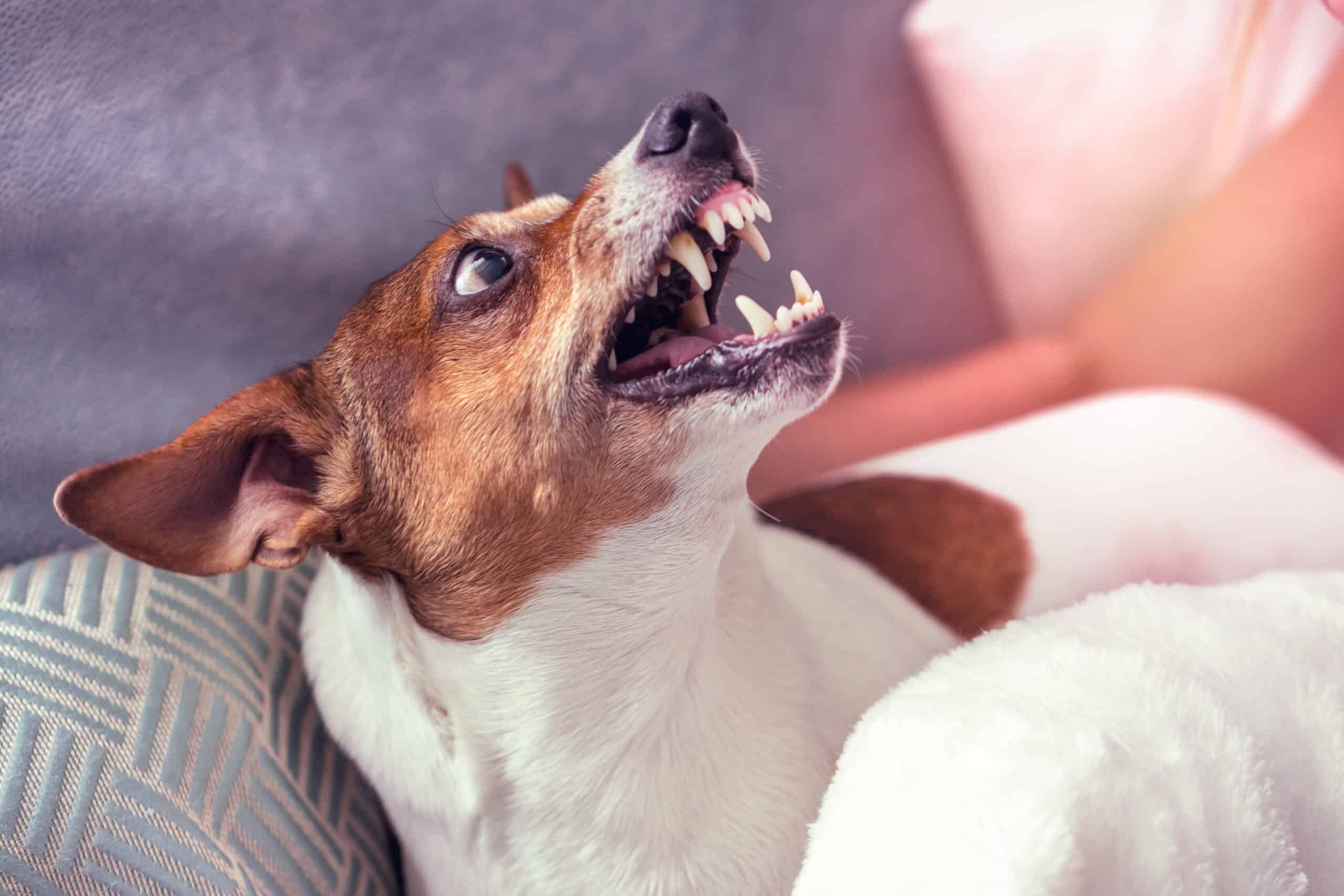
- growling
- snapping
- panicking
- attempting escape
From the outside, it can appear that the behaviour “came out of nowhere”, but the struggling was there all along.
Stress is cumulative
Dogs do not experience grooming in isolation. Furthermore, every other experience a dog has and is exposed to, matters.
A dog arriving for an appointment may already be carrying stress from:
- lack of sleep
- pain or discomfort
- changes in routine
- adolescence
- veterinary visit
- busy home environment
- death of a family member
- previous grooming experiences
- unfamiliar dog or person
- travel to the salon
There are so many different variables to consider and absolutely no way of really understanding what and how a dog is feeling, but adding:
- excessive and intrusive handling
- restraint
- noisy dryers, clippers
- vibration from tools
- prolonged standing
We have a breeding nest for sensory overload and at some point the nervous system will say, “I cannot cope with this anymore”.
The behaviour we see when a dog “suddenly” reacts badly is usually the end result of accumulated stress that has been stacking/piling on for years, months, weeks, and/or days – every experience results in a learned association and subsequent emotion and behaviour, and there is nothing “sudden” about that.
Pain can cause sudden aversion to touch-based activities
One of the most overlooked reasons dogs become, “suddenly”, distressed during grooming is pain.
A dog with:
- matting
- skin irritation
- joint pain
- ear discomfort
- dental pain
- muscular tension
- undiagnosed medical conditions
may find normal grooming procedures significantly harder to tolerate.
You may have experienced a similar scenario yourself:
Have you ever had someone tickle you and you reflexively lash out and hit them?
While not the very same thing as a pain-induced, reflexive response, the point is that there are times when a groomer might, unknowingly, hit a sore spot or exasperate a symptom when working through grooming tasks, which can lead to reflex/knee-jerk reactions from dogs.
This is normal.
Even gentle handling can feel threatening when the body hurts, and anticipatory pain can induce reflexive behaviours as well – if pain repeatedly occurs during grooming, the dog’s brain begins to associate the entire experience as something that causes discomfort.
And this is why behaviour changes should never automatically be labelled as “bad behaviour” or “aggressive behaviour”.
Flooding can create delayed fallout
One difficult truth in grooming is that dogs do not always react immediately after overwhelming experiences.
Some dogs can appear to “cope” during a grooming appointment only to show escalating behaviours during future visits.
This is particularly common when dogs are repeatedly flooded with grooming tasks, for example:
- held still despite obvious distress
- pushed beyond their emotional threshold
- exposed to intense sensory experiences without recovery
- prevented from escaping or communicating in a normal way
The dog may very well tolerate the initial experience, but that doesn’t guarantee every session thereafter will be as plain sailing.
Over time, the nervous system remembers, and eventually the dog will try harder and harder to avoid the situation entirely.
Listen before escalation
I believe dogs should not have to reach the point of panic before we recognise dis-ease and discomfort.
The earlier we notice stress signals, the more opportunities we have to support the dog and prevent suffering.
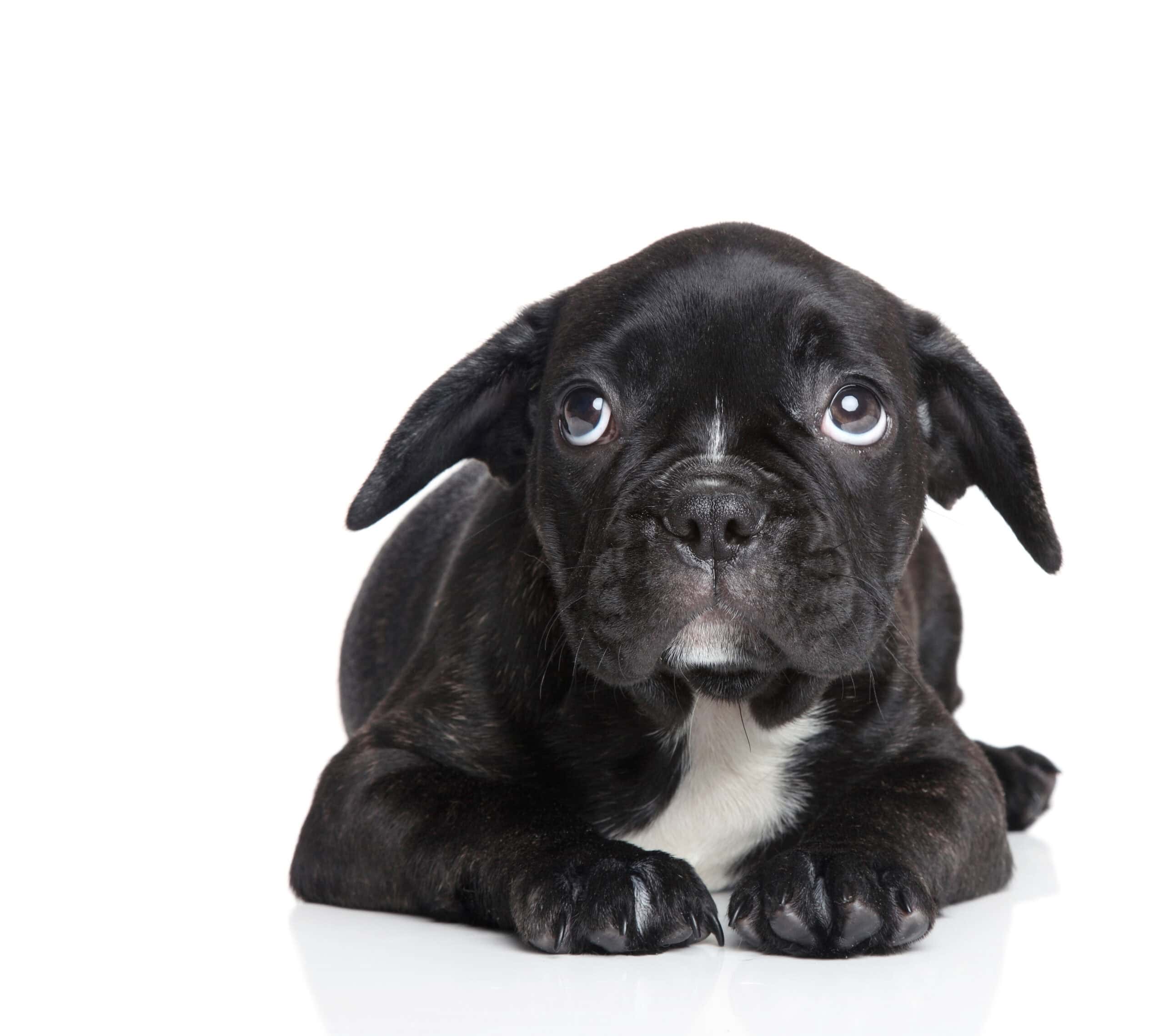
That means paying attention to the very subtle calming signals a dog will express:
- lip licking
- yawning out of context
- whale eye
- avoidance
- paw lifting
- body tension
- tail tucks
- jaw tension
- averted gaze
- trembling
- shaking out of context
- displacement behaviours
- hard stare
These are not inconveniences to ignore, and while they are normal behaviours they are behaviours we want to try our best to avoid escalating in the grooming environment.
All of the above signals are communication cues that the groomer must learn to work with.
When we respond thoughtfully, slow down, adapt our handling, and support the dog’s emotional regulation, we help dogs learn that grooming does not need to become a battle of survival.
Grooming should not rely on learned helplessness
A dog who “gives up” is not a dog who feels safe – this distinction matters deeply.
Ethical, emotionally aware grooming is not about forcing tolerance through repetition. It is not about forcing compliance through ignorance and a lack of respect.
It is about building trust, predictability, safety, and cooperative experiences wherever possible to help make grooming an experience dogs look forward to.
Because when dogs feel supported and heard, they feel emotionally safe.
When a dog feels safe, they are able to learn effectively and develop positive associations, which leads to participation.
And a participating dog changes everything.