When I found out I was expecting my first child I remember the steps my husband and I took to child-proofing our home – there wasn’t a stone left uncovered. In fact, my husband began calling me “risk-assessment Stephanie” because I had this remarkable ability to forsee every potential disaster before my son was even born!
And when I started my grooming business around four years later, while expecting my second son, I realised very quickly that safeguarding through environmental adaptions, wasn’t just important for my children, but it was also important for the dogs I was responsible for as well.
I hadn’t really thought about it before since my family dogs were always protected through the child-proofing measures I had already put in place for our kids, but when I stood in my grooming salon before officially launching my business, it became super apparent that it was necessary to transfer those parental skills into that capacity as well, and so I did.
Dogs are not much different to children
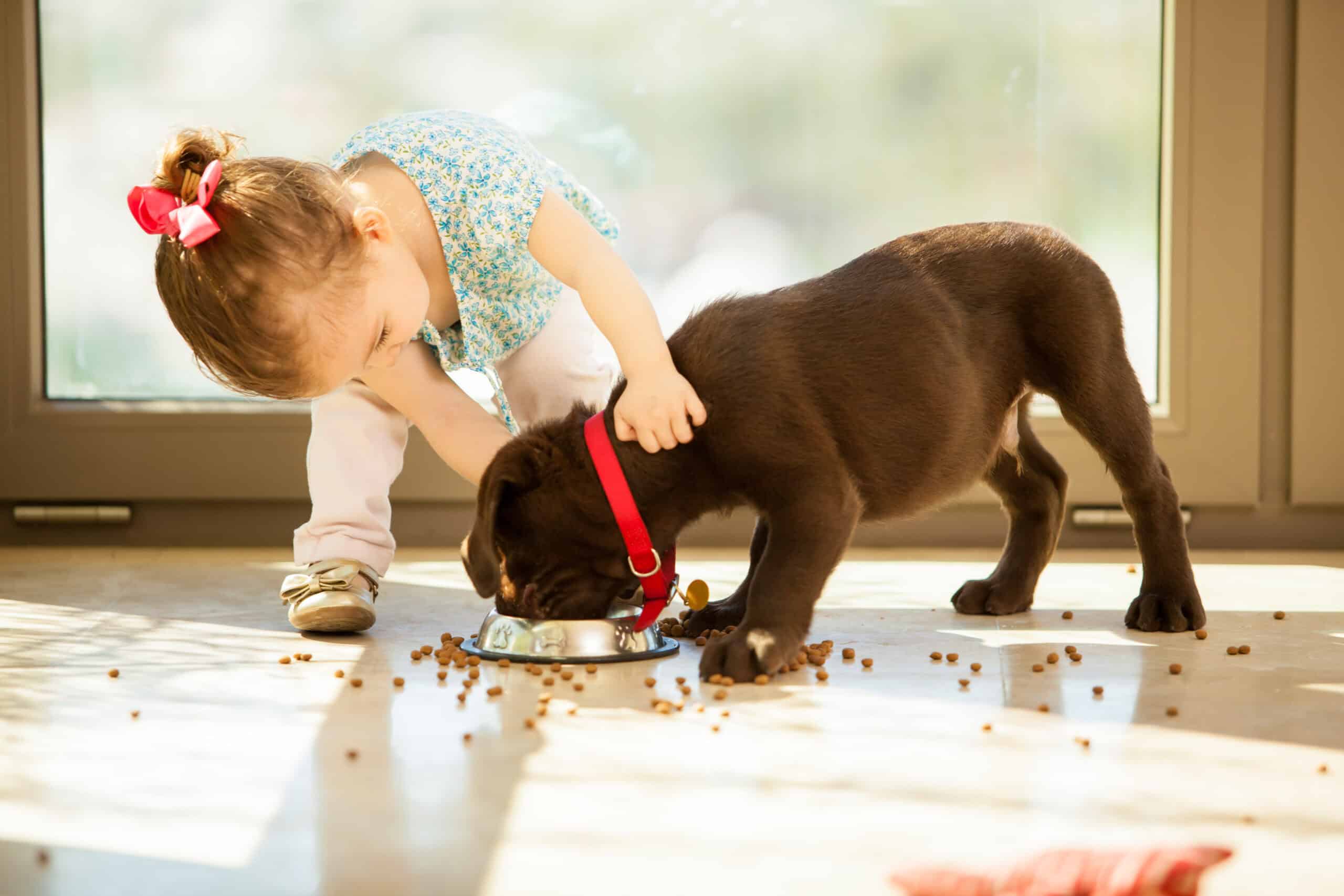
Because dogs are not much different to children – hear me out!
Like toddlers, dogs:
- Explore with their noses, paws, and mouths.
- Can slip, trip and, often, misjudge things, especially when they’re too busy playing.
- Have little fear of exploring new and interesting things, regardless of the potential hazards.
- Claim ownership of the things they really shouldn’t be anywhere near, but somehow managed to find.
So when considering the typical grooming environment, there’s so much potential harm that could be done if a groomer fails to risk-assess more than the obvious.
Child-proofing your grooming space isn’t about being overly cautious, or extreme, it’s actually about being professionally responsible and safe.
What makes the grooming environment all-the-more risky to dogs?
Dogs entering a salon or grooming room are often:
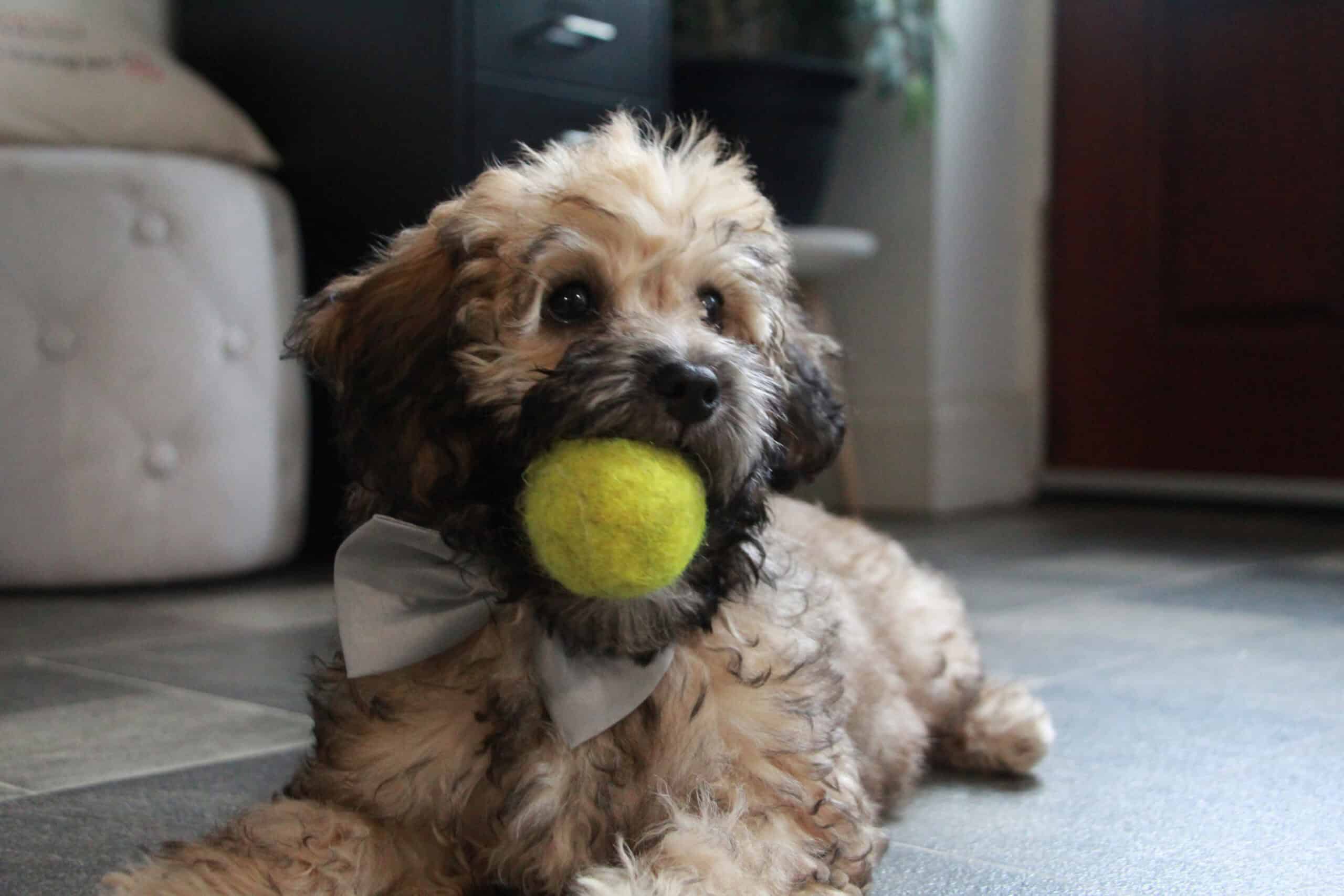
- Excited or overstimulated
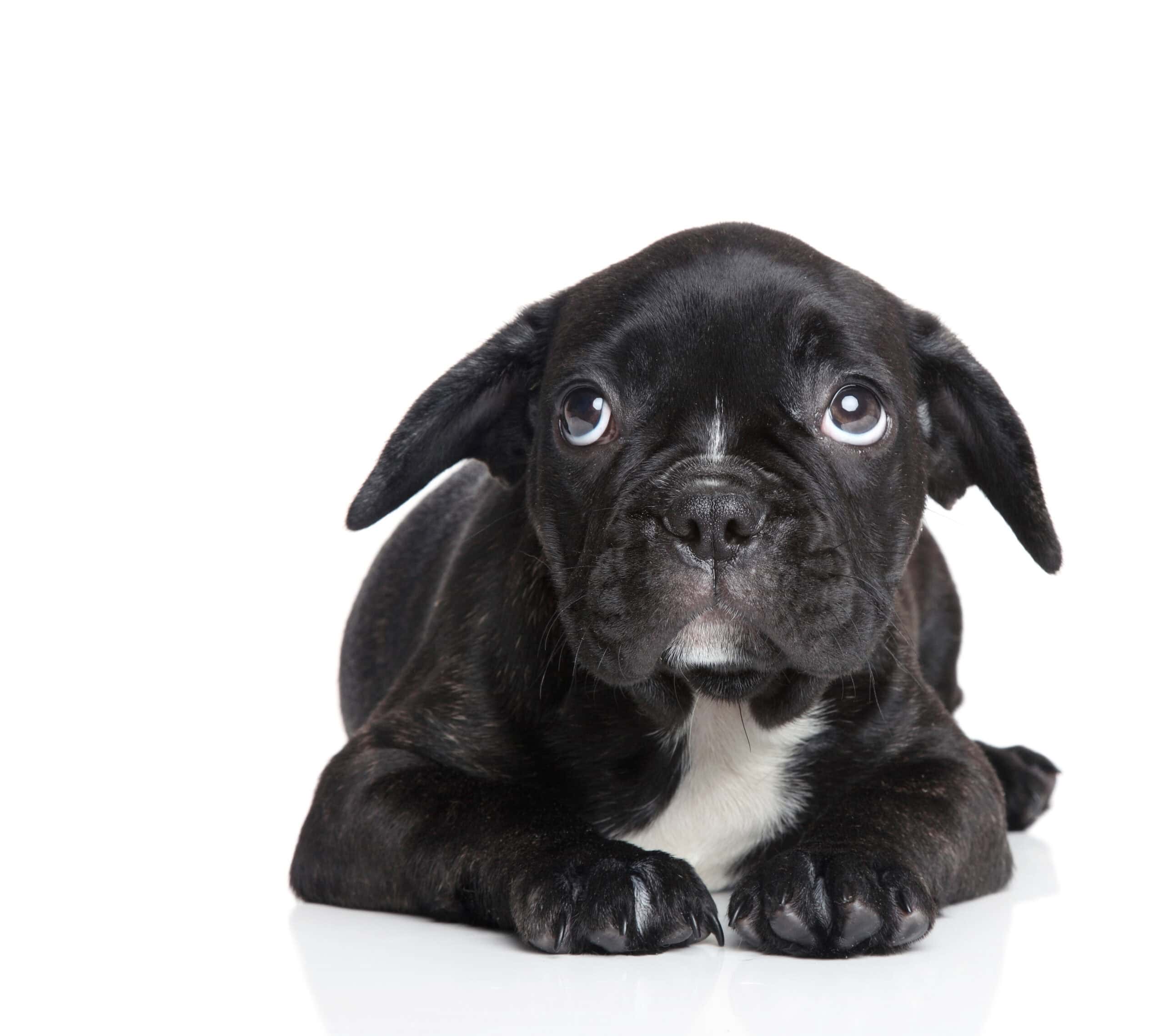
- Nervous or anxious
- Physically unstable (especially puppies, seniors or medical cases)
- Unfamiliar with the environment
- Being overly handled and/or restrained
All of these factors increase the likelihood of accidents.
A well-designed environment doesn’t just prevent injury, it also reduces stress and improves overall cooperation.
Safety and welfare always go hand in paw.
Seeing the room from the dog’s perspective
One of the most valuable habits you can develop is asking yourself, “what could go wrong here?” with EVERY decision you make.
In more conventional grooming curriculum, safety is often looked at through a human-focused lens rather than a dogs – while we are strongly encouraged to ensure our space is safe, seldom are we asked to think about what we can do to ensure a dog feels safe too.
Safety to a dog doesn’t look anything like “slip signs”, “toxic chemical labels”, and/or muzzle-wearing.
Safety to a dog looks more like having the freedom to move around, to explore, to rummage and forage, to have fun without feeling trapped or overwhelmed.
So how do we allow for this without risking accidents?
How do we not only prepare a dog for handling, but also make sure that, when they are given space to free roam, they can do so without injuring themselves?
I strongly encourage my students to take a look at their working environment from the height of the dog their working on – that may mean getting on all fours to observe the space from that level (and trust me, this can be incredibly insightful).
You want to pay attention to:
- How many items are reachable from your position
- How safe the surface feels to move around in
- How much noise there is at any given moment
- How many obstacles are obstructing you – visually and physically
- Where the escape routes are and whether they are secure
Once you have a strong idea of how the dog is seeing your space, you can begin to adapt your space to make it feel safer which can improve behaviour almost instantly.
Risk assessment isn’t being a kill-joy, it’s about caring (and you can never care too much).
It’s not about being paranoid, it’s about being prepared
I always try to remind students that being forward-thinking with risk-assessment and grooming layout isn’t about being paranoid but about being prepared.
Preparing for every potential outcome can potentially save a life, so you can’t afford to not be thorough.
As much as we can work towards understanding dogs by developing our ability to read them well, we must remember there are countless layers that contribute to what we see in the dog in front of us, and it’s not always easy to pick up on how they feel, or what they plan to do next.
Sometimes:
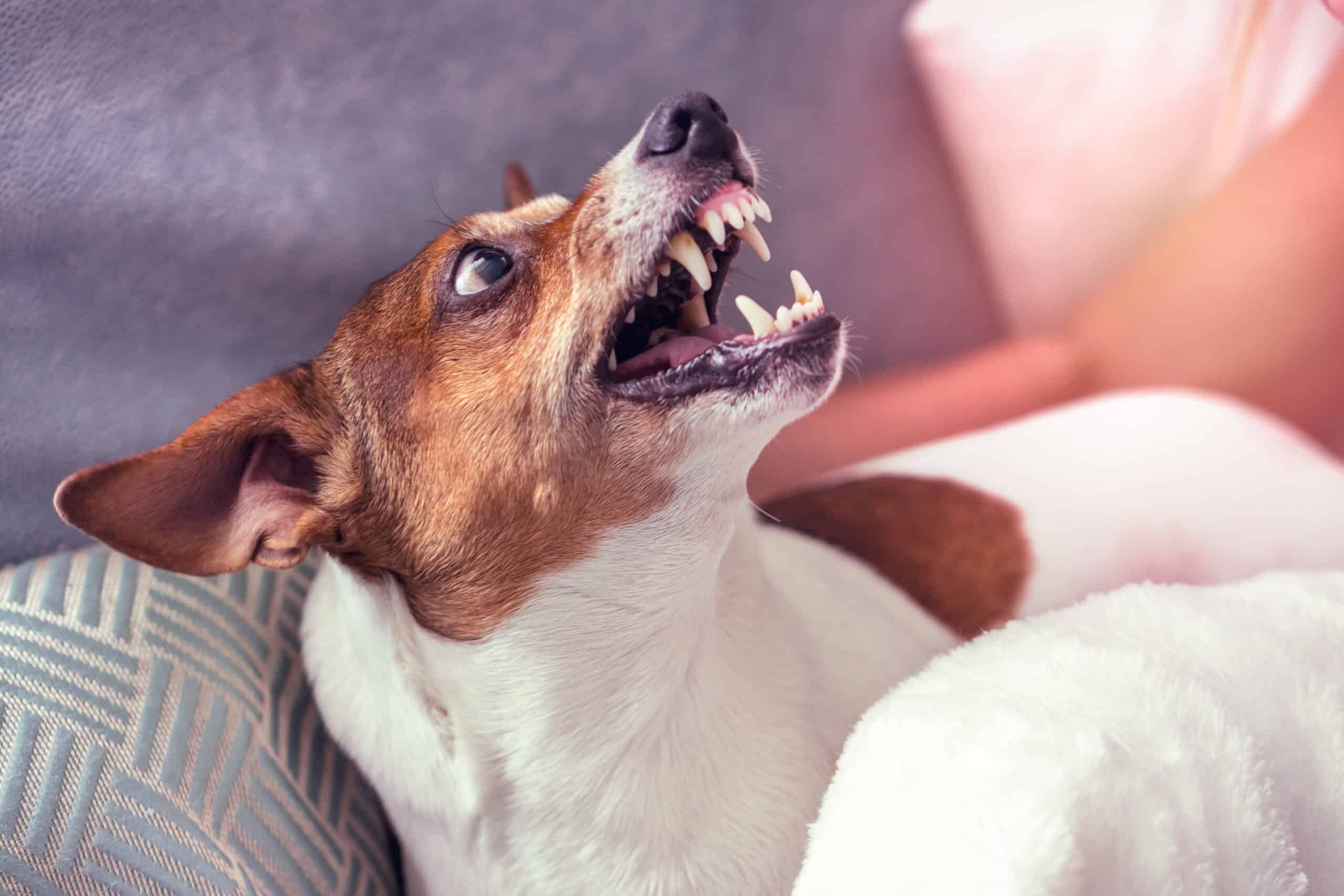
- Dogs can be unpredictable, especially when feeling poorly
- Environments change suddenly causing a sudden reaction
- Accidents happen quickly and how we are equipped to respond matters enormously
Responsible professionals don’t wait for incidents to occur before making improvements, they design environments that minimise the risks from the very start, and that’s something you can learn more about in my Accredited Behaviour Grooming Theory course.
Environmental safety is more than just physical
A safe grooming environment isn’t just about avoiding physical injury, it also has a direct influence on:
- Emotional wellbeing
- Confidence
- Trust (human:dog)
- Behaviour during grooming
- Long-term tolerance of procedures
When dogs feel safe both emotionally and physically, they cope better with grooming processes, and that benefits the groomer and all other individuals responsible in the care of a dog.
Child-proofing your grooming environment is one of the simplest ways to improve both safety and welfare.
It doesn’t require expensive renovations, just thoughtful awareness and small adjustments based on what a dog needs because at the end of the day, the dogs in our care rely entirely on us to create environments that protect them.
Free Resource and Further Learning
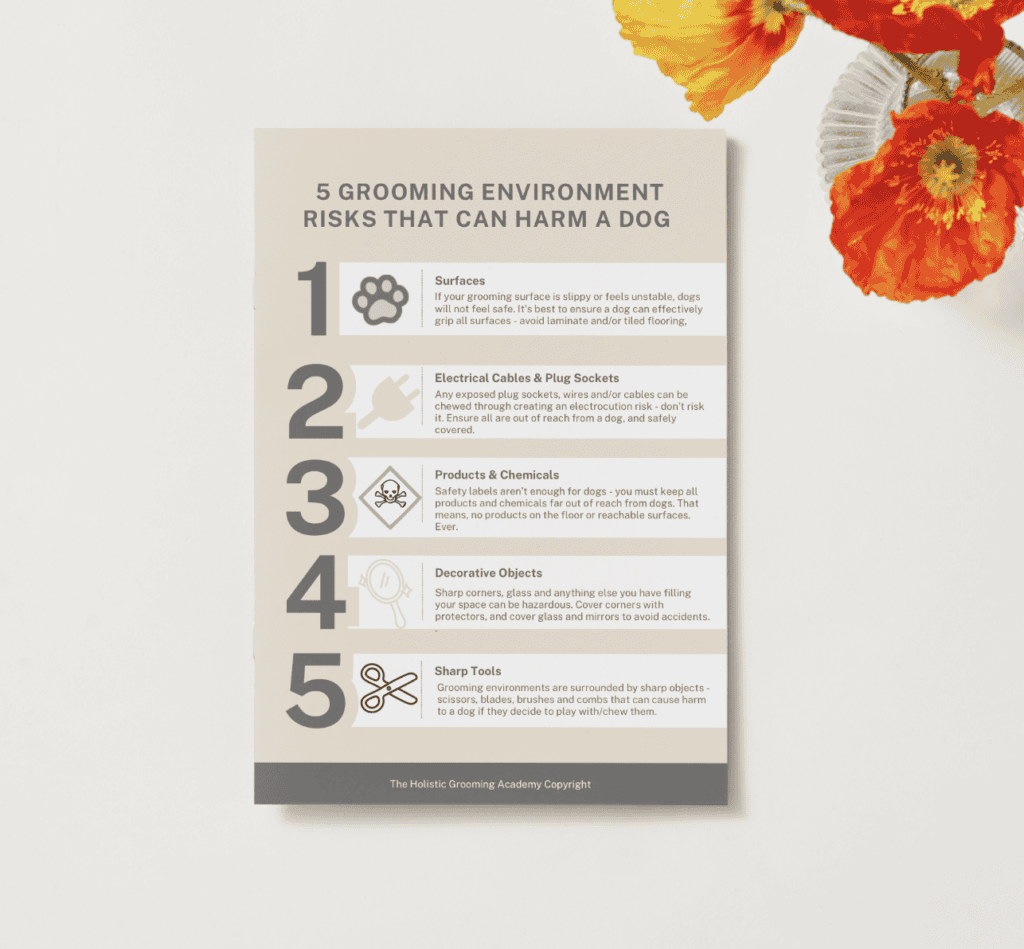
For a breakdown of the top 5 risks in a grooming environment and what to look out for, check out this print out here!
To learn more about The Holistic Grooming Academy, join our free community space on Skool here.